AI Appraisal Estimate

AI-generated estimates · not official valuations

From the user

What was submitted

Photo and notes provided by the user — not generated by AI

Submitted item photo
Submitted photo · June 18, 2026

User's notes

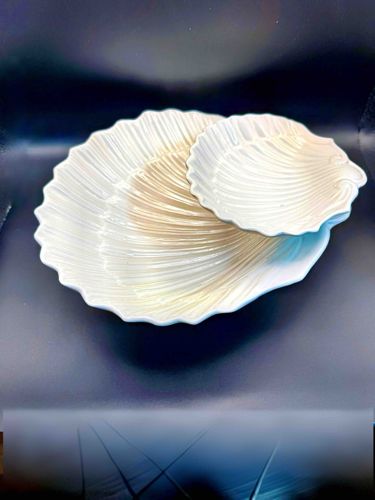
Vintage Italian scallop shell ceramic dish, hand‑painted and marked “Italy” on the base. Glossy gradient glaze from cream to blue, with detailed ridges mimicking a natural shell.

AI analysis below

AI appraisal

AI analysis & estimate

AI-Generated · Verify before acting

Everything below is generated by AI for informational purposes only. AI can make mistakes — the AI may misidentify items or misattribute them (artist, maker, brand, designer, origin, era). This is not an official valuation and should not be used for insurance, sale, tax, estate, legal, or lending purposes — or any decision requiring a certified appraisal. It is not an authoritative claim about any person, brand, or rights holder — do not share or rely on it as a factual statement about a third party. Always consult qualified professionals before making financial decisions.

Note

This analysis also relies on unverified notes provided by the user, which may be incomplete or inaccurate and could affect the result.

Read the full disclaimer

AI Identification

·Not independently authenticated·Verify before acting

Vintage Italian Hand-Painted Scallop Shell 2-Tier Ceramic Serving Dish

Vintage Decorative Ceramics

AI Estimated Value

·Not an official valuation·Verify before acting

$65.00 - $95.00

As of June 18, 2026

AI Item Analysis

·AI can make mistakes·Verify before acting
This is a vintage Italian ceramic serving dish designed in the shape of overlapping scallop shells. The piece is constructed from molded ceramic with a high-gloss, gradient glaze that transitions from a warm cream or off-white at the base of the shells to a soft, ethereal blue at the outer edges. The craftsmanship features intricate, radial ridges that mimic the natural texture of a pecten shell, providing both visual and tactile depth. It consists of a larger base shell with a smaller shell integrated above it, likely intended as a 'chip and dip' style tray or a tiered nut dish. Based on the provided context, the underside is marked 'Italy', which is a hallmark of mid-to-late 20th-century Italian majolica or novelty ceramics exported during the 1960s or 70s. The glaze appears consistent and well-applied with a notable luster, and there are no immediate signs of major structural damage like cracks or chips visible in the photo, though light surface crazing and minor foot-rim wear are typical for items of this age and material. The organic form and hand-painted gradients reflect the coastal aesthetic often produced in ceramics from regions like Bassano or the Amalfi Coast.
AI Appraisal Report

·AI can make mistakes·Verify before acting
I have examined the digital images of this vintage Italian ceramic tiered serving dish. The piece exhibits the classic hallmarks of mid-century Italian majolica, specifically characteristic of the high-export period of the 1960s and 1970s. The gradient glaze application from cream to ethereal blue is consistent with the coastal-inspired 'fantasia' styles produced in ceramic hubs like Bassano del Grappa. The molded ridges are crisp, suggesting the mold was in good condition at the time of firing, and the 'Italy' mark on the base confirms its origin as a decorative export ware. From a visual standpoint, the luster of the glaze remains high, and there is no visible evidence of significant chipping or structural fractures. However, light surface crazing is detectable, which is expected for earthenware of this vintage. In the current secondary market, there is a steady demand for 'Grandmillennial' and coastal-chic decor. While these pieces were mass-produced for the tourist and export market, their functional charm as 'chip and dip' trays keeps them popular. Comparables for similar multi-tiered Italian shell dishes typically realize between $45 and $110 depending on the complexity of the glaze and size. Limitations: This appraisal is based solely on high-resolution imagery. Without a physical inspection, I cannot rule out professional restorations, internal 'hairline' cracks not visible to the eye, or tactile inconsistencies in the glaze. A full authentication would require a hands-on examination to check for 'ring' resonance when tapped, a UV light test to identify overpainting or repairs, and ideally, original provenance or an importer’s foil label (such as Gumps or Raymor) which could further bolster the valuation toward the higher end of the range.

Get your items appraised

Instant estimates of your treasures with AI-powered appraisals

Browse More Appraisals