Neolithic/Prehistoric Flint Multi-Tool Side Scraper
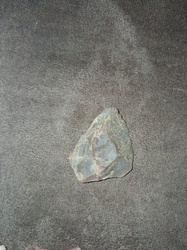
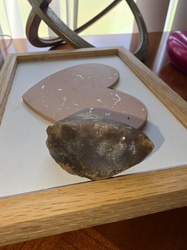
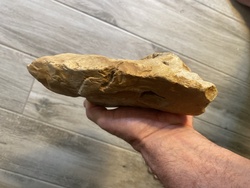
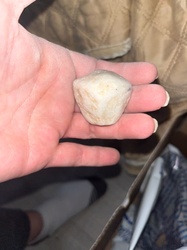
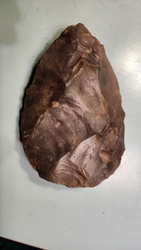
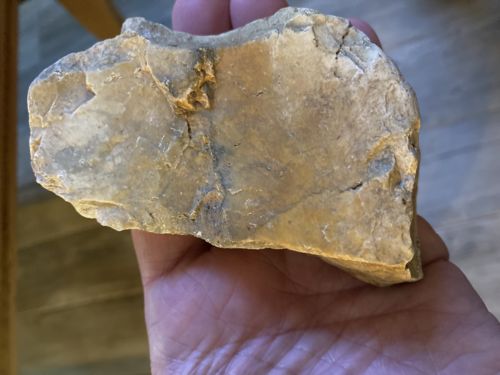
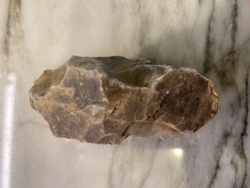
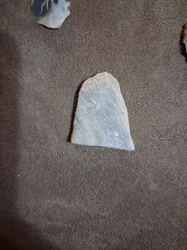
This is a hand-held prehistoric stone tool, measuring approximately 4 inches in length by 2.25 inches in width. The item is crafted from a high-quality, dense flint or chert material, displaying a characteristic matte-to-waxy luster. The color palette is a complex blend of earthy ochre, tan, and creamy grays, which is indicative of long-term environmental exposure and natural mineralization, often referred to as 'desert varnish' or patination. Structurally, the tool features a prominent dorsal ridge and clear evidence of conchoidal fracturing. One edge exhibits intentional unifacial retouching—a series of small, controlled flakes removed to create a durable, sharp scraping edge. The opposite side appears thicker and smoother, designed to fit comfortably within the palm of the hand for applied pressure during use, such as hide preparation or woodworking. The condition is consistent with an archaeological find; there are no modern mechanical fractures, but there is significant rounding of the chip edges and surface weathering that suggests an ancient date, potentially from the Neolithic or late Paleolithic periods. There are no modern maker's marks, but the quality of the pressure flaking along the worked edge indicates a high level of primitive craftsmanship and utility.
AI-Generated Appraisal Disclaimer
Estimated Value
$45 - $85
Basic Information
Category
Prehistoric Artifacts / Stone Age Tools
Appraised On
February 18, 2026
Estimated Value
$45 - $85
Additional Details Provided By Owner
User Provided Information
Stone age multi tool flint scraper tool measuring 4" x 2.25"
Item Description
This is a hand-held prehistoric stone tool, measuring approximately 4 inches in length by 2.25 inches in width. The item is crafted from a high-quality, dense flint or chert material, displaying a characteristic matte-to-waxy luster. The color palette is a complex blend of earthy ochre, tan, and creamy grays, which is indicative of long-term environmental exposure and natural mineralization, often referred to as 'desert varnish' or patination. Structurally, the tool features a prominent dorsal ridge and clear evidence of conchoidal fracturing. One edge exhibits intentional unifacial retouching—a series of small, controlled flakes removed to create a durable, sharp scraping edge. The opposite side appears thicker and smoother, designed to fit comfortably within the palm of the hand for applied pressure during use, such as hide preparation or woodworking. The condition is consistent with an archaeological find; there are no modern mechanical fractures, but there is significant rounding of the chip edges and surface weathering that suggests an ancient date, potentially from the Neolithic or late Paleolithic periods. There are no modern maker's marks, but the quality of the pressure flaking along the worked edge indicates a high level of primitive craftsmanship and utility.
Related Tags
Explore similar items and categories:
Get Your Items Appraised
Instant estimates of your treasures with AI-powered instant appraisals