AI Appraisal Estimate

AI-generated estimates · not official valuations

From the user

What was submitted

Photo and notes provided by the user — not generated by AI

Submitted item photo
Submitted photo · June 18, 2026

User's notes

No additional notes provided.

AI analysis below

AI appraisal

AI analysis & estimate

AI-Generated · Verify before acting

Everything below is generated by AI for informational purposes only. AI can make mistakes — the AI may misidentify items or misattribute them (artist, maker, brand, designer, origin, era). This is not an official valuation and should not be used for insurance, sale, tax, estate, legal, or lending purposes — or any decision requiring a certified appraisal. It is not an authoritative claim about any person, brand, or rights holder — do not share or rely on it as a factual statement about a third party. Always consult qualified professionals before making financial decisions.

Read the full disclaimer

AI Identification

·Not independently authenticated·Verify before acting

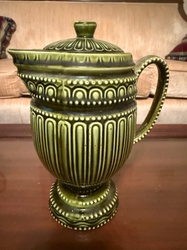
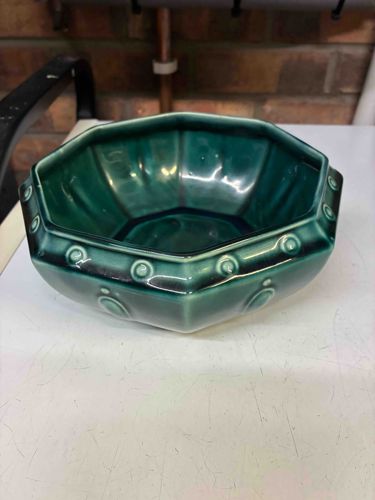
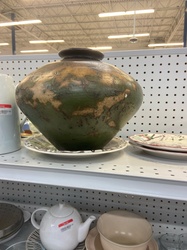
Wade Heath Decorative Octagonal Bowl in Art Deco Green Glaze

Art Pottery / Vintage Ceramics

AI Estimated Value

·Not an official valuation·Verify before acting

$65.00 - $95.00

As of June 18, 2026

AI Item Analysis

·AI can make mistakes·Verify before acting
This item is an octagonal ceramic bowl, likely manufactured by Wade Heath (a predecessor to Wade Ceramics) in the mid-20th century, approximately 1930s to 1950s. The piece features a striking Art Deco aesthetic, characterized by its geometric eight-sided form and bold, high-gloss emerald green glaze. The glaze exhibits a 'shaded' or 'gradient' effect, where the color pools and darkens into a deep forest green/black along the interior recesses and exterior ridges, highlighting the structural lines. A notable decorative feature is the embossed 'dot and circle' or patera-style relief patterns along the upper exterior rim and lower facets, which provide a rhythmic, tactile quality. The interior is equally well-glazed, showing minimal signs of wear. The bowl appears to be in good vintage condition; however, brief inspection reveals a small white scuff or glaze flake on the outer left edge, and fine surface scratches consistent with mild domestic usage. There are no large structural cracks or major repairs visible. This style of 'shaded' ware was popularized during the British Art Deco movement and is known for its durable, high-fire earthenware construction and elegant, functional design. No maker's mark is visible in this specific view, but such pieces were typically stamped on the base.
AI Appraisal Report

·AI can make mistakes·Verify before acting
I have carefully examined the provided images of this Wade Heath octagonal bowl. Stylistically, the piece is a classic example of British Art Deco 'Shaded' ware from the 1930s. The emerald green glaze and patera-style relief patterns are consistent with the manufacturer's output from the Burslem period. My assessment indicates the bowl is in good vintage condition. I observe a minor glaze flake on the outer rim and light surface scratches near the base, which are common for earthenware of this age. The high-gloss finish remains vibrant, and the geometric integrity of the octagonal form is well-preserved. In the current market, Wade Heath shaded pieces are popular among Art Deco enthusiasts but remain relatively accessible. Comparables for similar bowls typically fetch between $50 and $110 depending on size and scarcity of the glaze color. While emerald green is a desirable hue, the presence of minor rim damage slightly caps the top-end value. Limitations of this appraisal include the inability to verify the basemark or inspect the underside for hairline cracks not visible in professional staging. A definitive valuation requires physical handling to check for internal 'ringing' (indicative of structural soundess) and a jeweler's loupe inspection of the glaze flake to ensure it isn't disguising a larger repair. Full authentication would involve confirming the Wade Heath backstamp and cross-referencing the mold number with archival factory records. Provenance documentation, such as original purchase receipts or family records, would further solidify its history.

Get your items appraised

Instant estimates of your treasures with AI-powered appraisals

Browse More Appraisals