AI Appraisal Estimate

AI-generated estimates · not official valuations

From the user

What was submitted

Photo and notes provided by the user — not generated by AI

Submitted item photo
Submitted photo · May 25, 2026

User's notes

Hei cai shen

AI analysis below

AI appraisal

AI analysis & estimate

AI-Generated · Verify before acting

Everything below is generated by AI for informational purposes only. AI can make mistakes — the AI may misidentify items or misattribute them (artist, maker, brand, designer, origin, era). This is not an official valuation and should not be used for insurance, sale, tax, estate, legal, or lending purposes — or any decision requiring a certified appraisal. It is not an authoritative claim about any person, brand, or rights holder — do not share or rely on it as a factual statement about a third party. Always consult qualified professionals before making financial decisions.

Note

This analysis also relies on unverified notes provided by the user, which may be incomplete or inaccurate and could affect the result.

Read the full disclaimer

AI Identification

·Not independently authenticated·Verify before acting

Black Jambhala (Hei Cai Shen) Gau Amulet Pendant

Religious Artifacts & Jewelry

AI Estimated Value

·Not an official valuation·Verify before acting

$45.00 - $75.00

As of May 25, 2026

AI Item Analysis

·AI can make mistakes·Verify before acting
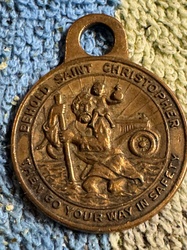
This is a circular Tibetan Buddhist Gau (shrine box) amulet pendant, specifically featuring the deity Black Jambhala (Hei Cai Shen), the god of wealth. The item is constructed from a copper-toned alloy or bronze, exhibiting a deep reddish-brown patina with darkened recessed areas that emphasize the decorative relief. The front face features a central circular viewing window protected by glass or acrylic, within which a relief of the deity is visible in a golden or brass finish. Surrounding the central aperture is an intricate filigree or cast border depicting traditional Himalayan floral and scrollwork motifs. A small suspension loop is attached to the top edge for wear on a cord or chain. The construction appears to be a two-part assembly, likely a decorative front plate fixed over a cylindrical vessel back. Condition-wise, the piece shows minor surface scratches and localized oxidation consistent with modern handling or mass production designed to emulate antique styles. The craftsmanship is industrial-grade casting rather than bench-made artisanal metalwork, suggesting it is a contemporary devotional piece rather than an ancient artifact. Its symbolic value remains high within the context of feng shui and Buddhist practice, intended to attract prosperity and remove financial obstacles.
AI Appraisal Report

·AI can make mistakes·Verify before acting
I have conducted a visual examination of the Black Jambhala (Hei Cai Shen) Gau. The item is a contemporary devotional amulet, commonly referred to as a Gau, constructed from a copper-based alloy with an applied patina to simulate age. My inspection reveals that the ornamentation is achieved through industrial casting processes rather than hand-chased repouss) work. The central icon of the deity is visible through a protective window, featuring a standard gold-toned finish. The overall condition is good, showing minor surface oxidation and superficial abrasions consistent with modern mass-produced ritual objects. The market for this specific type of item is driven by functional religious use and Feng Shui practice rather than collector interest in antiquities. Comparable items are widely available through liturgical supply stores and metaphysical retailers, typically retailing in the sub-$100 range. Its value is primarily derived from its symbolic representation and symbolic utility rather than rare metal content or historical significance. Limitations: This appraisal is based strictly on visual indicators. Without physical inspection, I cannot confirm the specific metal purity or the contents sealed within the Gau (which often contain mantras or sacred materials that can influence value to practitioners). To confirm authenticity as a vintage piece, provenance documentation or metallurgical analysis of the alloy would be necessary, though current visual evidence strongly suggests a late 20th or early 21st-century origin.

Get your items appraised

Instant estimates of your treasures with AI-powered appraisals

Browse More Appraisals