1929 German 10 Reichsmark Banknote
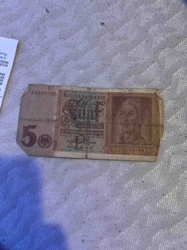
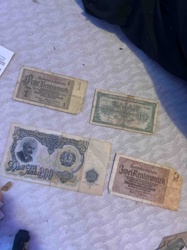
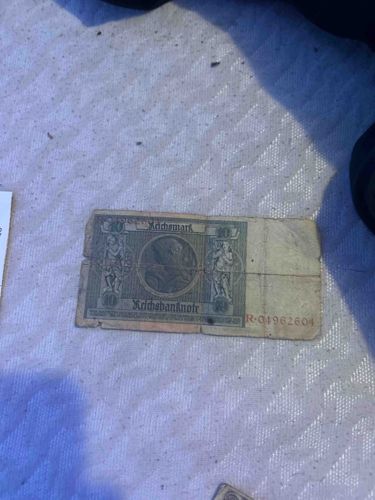
This item is a 10 Reichsmark banknote from Germany, featuring the distinctive 'Reichsbanknote' and '10 Reichsmark' lettering in Fraktur script. The design, originating in 1929 and used during the Weimar Republic and early Third Reich era, showcases a central portrait of Albrecht Thaer within a circular medallion. To the left and right are allegorical female figures representing agriculture and industry. The note is printed in a muted greenish-grey and brown ink on off-white paper. Notably, this specimen bears a serial number in red ink (R-04962604) in the lower right corner. The condition is heavily circulated, showing significant physical wear including several deep horizontal and vertical creases where the bill was previously folded into quarters. There are visible small tears and fraying along the edges and corners, as well as general environmental staining and discoloration across the surface. The paper appears thin and aged, with a distinct patina characteristic of currency from the interwar period. Despite the damage, the central graphics and typography remain legible, displaying the intricate engraving quality typical of the German Reichsbank's printing standards of the late 1920s.
AI-Generated Appraisal Disclaimer
Estimated Value
$5.00-$8.00
Basic Information
Category
Numismatics / Historical Currency
Appraised On
February 1, 2026
Estimated Value
$5.00-$8.00
Item Description
This item is a 10 Reichsmark banknote from Germany, featuring the distinctive 'Reichsbanknote' and '10 Reichsmark' lettering in Fraktur script. The design, originating in 1929 and used during the Weimar Republic and early Third Reich era, showcases a central portrait of Albrecht Thaer within a circular medallion. To the left and right are allegorical female figures representing agriculture and industry. The note is printed in a muted greenish-grey and brown ink on off-white paper. Notably, this specimen bears a serial number in red ink (R-04962604) in the lower right corner. The condition is heavily circulated, showing significant physical wear including several deep horizontal and vertical creases where the bill was previously folded into quarters. There are visible small tears and fraying along the edges and corners, as well as general environmental staining and discoloration across the surface. The paper appears thin and aged, with a distinct patina characteristic of currency from the interwar period. Despite the damage, the central graphics and typography remain legible, displaying the intricate engraving quality typical of the German Reichsbank's printing standards of the late 1920s.
Related Tags
Get Your Items Appraised
Instant estimates of your treasures with AI-powered instant appraisals