Prehistoric Lithic Hand Axe or Chopper Tool
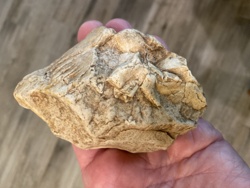
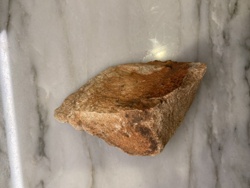
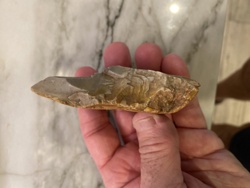
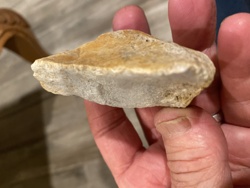
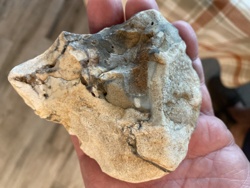
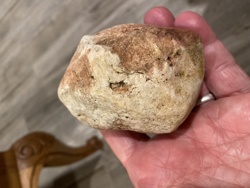
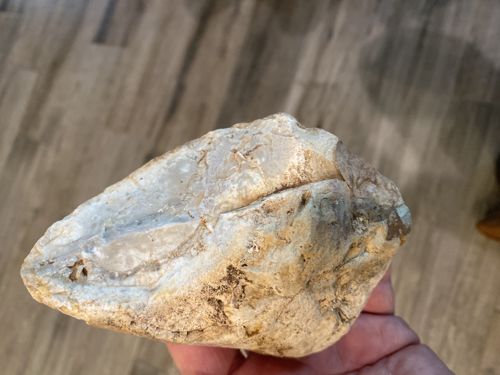
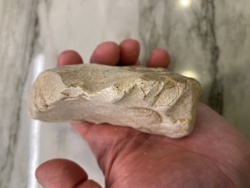
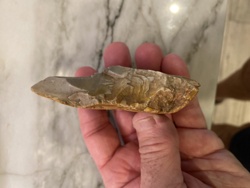
This item is a worked stone tool, identified as a hand axe or chopper, measuring approximately 4.5 inches by 3.5 inches. The artifact exhibits characteristic lithic reduction through bifacial flaking, resulting in a distinct teardrop or ovoid shape. It is composed of a light-colored chert or flint material, showing a variety of earthy tones including cream, tan, and light grey. The surface displays significant percussion scarring and conchoidal fractures, indicating it was intentionally shaped by humans rather than weathered naturally. There is a prominent dorsal ridge and a tapered bit end that likely served as the primary cutting edge, while the wider base (butt) is thickened to fit comfortably in the palm of the hand. Geographically linked to Guthrie, Oklahoma, this specimen likely dates to the Paleo-Indian or Archaic periods of North American prehistory. The condition is consistent with an archaeological surface find, showing heavy patination, some embedded soil in deeper crevices, and minor edge wear that may be a combination of ancient use-wear and modern post-depositional damage. The craftsmanship shows a high degree of intentionality, particularly in the thinning of the edges and the overall symmetry of the tool.
AI-Generated Appraisal Disclaimer
Estimated Value
$150 - $250
Basic Information
Category
Archaeological Artifacts / Native American Lithics
Appraised On
February 18, 2026
Estimated Value
$150 - $250
Additional Details Provided By Owner
User Provided Information
Stone age hand axe tool found in Guthrie, OK measuring 4.5"x 3.5"
Item Description
This item is a worked stone tool, identified as a hand axe or chopper, measuring approximately 4.5 inches by 3.5 inches. The artifact exhibits characteristic lithic reduction through bifacial flaking, resulting in a distinct teardrop or ovoid shape. It is composed of a light-colored chert or flint material, showing a variety of earthy tones including cream, tan, and light grey. The surface displays significant percussion scarring and conchoidal fractures, indicating it was intentionally shaped by humans rather than weathered naturally. There is a prominent dorsal ridge and a tapered bit end that likely served as the primary cutting edge, while the wider base (butt) is thickened to fit comfortably in the palm of the hand. Geographically linked to Guthrie, Oklahoma, this specimen likely dates to the Paleo-Indian or Archaic periods of North American prehistory. The condition is consistent with an archaeological surface find, showing heavy patination, some embedded soil in deeper crevices, and minor edge wear that may be a combination of ancient use-wear and modern post-depositional damage. The craftsmanship shows a high degree of intentionality, particularly in the thinning of the edges and the overall symmetry of the tool.
Related Tags
Explore similar items and categories:
Get Your Items Appraised
Instant estimates of your treasures with AI-powered instant appraisals