American Antique Salt-Glazed Stoneware Crock
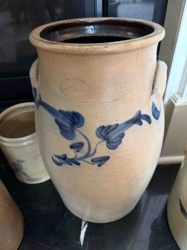
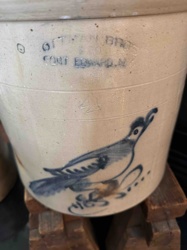
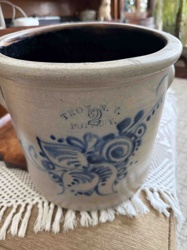
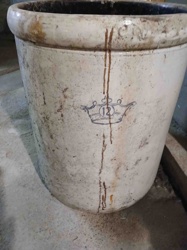
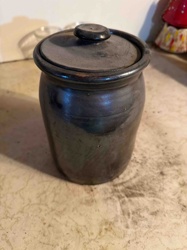
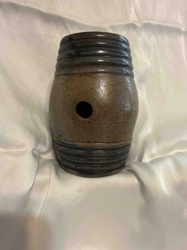
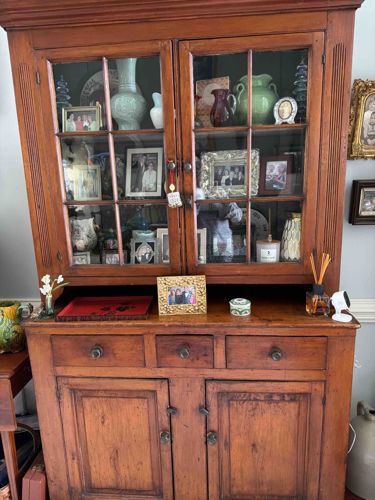
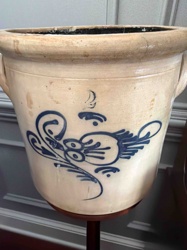
This item is an antique American salt-glazed stoneware crock, appearing to be a two-to-three-gallon storage jar or jug based on its scale relative to the secondary cabinet. Constructed from dense, durable high-fired stoneware, the vessel exhibits a classic ovoid or cylindrical form characteristic of 19th-century utilitarian pottery. The exterior features a traditional salt-glaze finish, which creates a 'bumpy' or orange-peel texture when salt is thrown into the kiln during firing. The color is a neutral grey-tan typical of the clay used in the Eastern United States or Midwest. While the primary angle is obscured, the piece appears to have a thick, rolled rim and may have applied handles on either side. Notable features include visible surface variations and potential salt-drip patterns that define its unique handmade character. Regarding condition, the piece shows a rich aged patina with minor surface scratches and possible small chips at the base or rim, which are common for pieces exceeding 100 years of age. There are no immediate signs of major structural cracks or modern repairs visible from this distance. These vessels were essential kitchen staples in the late 1800s for preserving meat, vegetables, or liquid, and this example represents high-quality American craftsmanship from the period.
AI-Generated Appraisal Disclaimer
Estimated Value
$350.00 - $550.00
Basic Information
Category
Antique American Stoneware
Appraised On
February 3, 2026
Estimated Value
$350.00 - $550.00
Additional Details Provided By Owner
User Provided Information
Original Crock from min 100 years
Item Description
This item is an antique American salt-glazed stoneware crock, appearing to be a two-to-three-gallon storage jar or jug based on its scale relative to the secondary cabinet. Constructed from dense, durable high-fired stoneware, the vessel exhibits a classic ovoid or cylindrical form characteristic of 19th-century utilitarian pottery. The exterior features a traditional salt-glaze finish, which creates a 'bumpy' or orange-peel texture when salt is thrown into the kiln during firing. The color is a neutral grey-tan typical of the clay used in the Eastern United States or Midwest. While the primary angle is obscured, the piece appears to have a thick, rolled rim and may have applied handles on either side. Notable features include visible surface variations and potential salt-drip patterns that define its unique handmade character. Regarding condition, the piece shows a rich aged patina with minor surface scratches and possible small chips at the base or rim, which are common for pieces exceeding 100 years of age. There are no immediate signs of major structural cracks or modern repairs visible from this distance. These vessels were essential kitchen staples in the late 1800s for preserving meat, vegetables, or liquid, and this example represents high-quality American craftsmanship from the period.
Get Your Items Appraised
Instant estimates of your treasures with AI-powered instant appraisals