AI Appraisal Estimate

AI-generated estimates · not official valuations

From the user

What was submitted

Photo and notes provided by the user — not generated by AI

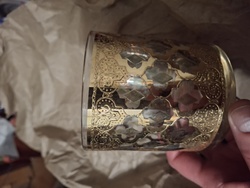
Submitted item photo
Submitted photo · June 6, 2026

User's notes

No additional notes provided.

AI analysis below

AI appraisal

AI analysis & estimate

AI-Generated · Verify before acting

Everything below is generated by AI for informational purposes only. AI can make mistakes — the AI may misidentify items or misattribute them (artist, maker, brand, designer, origin, era). This is not an official valuation and should not be used for insurance, sale, tax, estate, legal, or lending purposes — or any decision requiring a certified appraisal. It is not an authoritative claim about any person, brand, or rights holder — do not share or rely on it as a factual statement about a third party. Always consult qualified professionals before making financial decisions.

Read the full disclaimer

AI Identification

·Not independently authenticated·Verify before acting

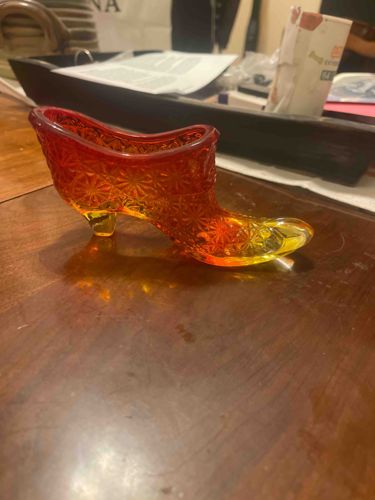
Carnival Glass Boot or Shoe Slipper

Decorative Glassware

AI Estimated Value

·Not an official valuation·Verify before acting

$40-70

As of June 6, 2026

AI Item Analysis

·AI can make mistakes·Verify before acting
This item is a decorative glass slipper, shaped like a boot with a small heel, featuring an iridescent, ombré coloration from a deep reddish-orange at the top opening and heel to a brighter yellow-orange towards the toe. The material is carnival glass, characterized by its distinctive iridescence and typically molded patterns. The entire exterior surface is intricately patterned with a repeating starburst or hobstar design, indicative of pressed glass manufacturing. The top rim of the boot is slightly flared and smooth, contrasting with the textured body. The heel is solid glass, matching the overall color gradient. Appears to be in good condition with no visible chips, cracks, or significant wear. The iridescence suggests a manufacturing period typically associated with the early 20th century to mid-20th century, specifically the height of carnival glass popularity. Its craftsmanship points to mass-produced decorative glassware, popular for collectors and as novelty items. No specific maker's marks are discernible from the image, but such pieces were produced by various glass companies during that era. It functions as a small decorative vanity piece, possibly for holding trinkets, pins, or merely as an ornamental object.
AI Appraisal Report

·AI can make mistakes·Verify before acting
Based on my visual examination of the provided image, this Carnival Glass Boot or Shoe Slipper appears to be in very good condition. The ombré reddish-orange to yellow-orange iridescence is vibrant, and the molded starburst/hobstar pattern is crisp, indicating minimal wear. I see no visible chips, cracks, or significant abrasions from the image, which is excellent for a piece of this age. Its authenticity as carnival glass is supported by the characteristic iridescence and pressed glass construction. In terms of market conditions, carnival glass slippers are relatively common decorative items. While popular, they are not exceedingly rare, and numerous patterns and colors exist from various manufacturers of the early to mid-20th century. Values are largely driven by condition, pattern rarity (less so for this common hobstar design), and the vibrancy of the iridescence. This particular colorway is attractive and appealing to collectors. Demand is steady among carnival glass enthusiasts and collectors of novelty glass. Factors impacting value positively include the excellent apparent condition and appealing iridescent coloring. The lack of a discernible maker's mark is typical for many carnival glass items and doesn't significantly depress value, given the commonality of the form. My primary limitation in this appraisal is the reliance solely on images. A full in-person examination would be crucial to confirm the absence of hairline cracks, fleabites, or internal flaws not visible in photographs. I would also use a loupe to inspect for polishing marks on the base or rim, which might indicate repairs. Scientific testing is not typically required for carnival glass authentication, but provenance documentation, if available, could add value by linking it to a known manufacturer or collection.

Get your items appraised

Instant estimates of your treasures with AI-powered appraisals

Browse More Appraisals