Prehistoric Biface Hand Axe or Scraper
Native American Artifacts / Lithic Tools

Prehistoric Biface Hand Axe or Scraper

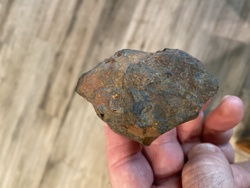
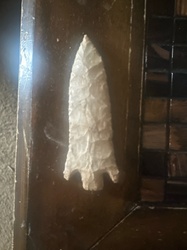
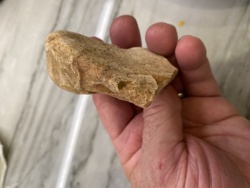
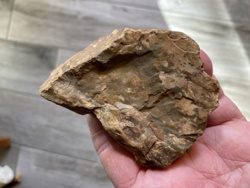
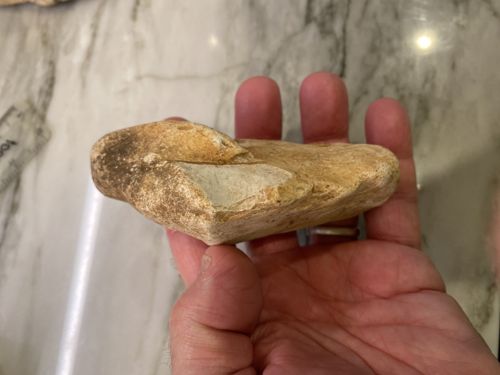
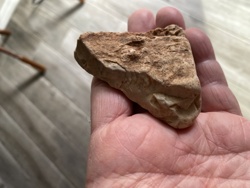
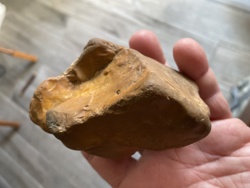
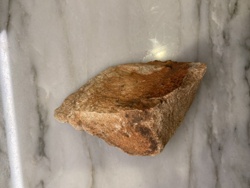
This is a prehistoric lithic tool, specifically a biface hand axe or large scraper, measuring approximately 4 inches in length and 2.75 inches in width. Found in Guthrie, Oklahoma, the artifact is fashioned from a dense, chert-like or flint-based stone indigenous to the region. The coloration is primarily a creamy tan and ochre with visible darker patina and mineral staining, particularly on the rounded butt end. The object displays characteristic conchoidal fracturing and percussion flaking along the edges, indicative of intentional human manipulation for use as a multi-purpose cutting or scraping tool. The construction shows a worked edge tapering to a blunt, ergonomic grip area. Notable condition details include smoothed edges from antiquity, suggested environmental wear, and a heavy 'desert varnish' or patina consistent with long-term exposure to Oklahoma soil. There are no modern maker's marks, as this is a primitive percussion-flaked tool. The piece exemplifies the utilitarian craftsmanship of Paleo-Indian or Archaic period hunter-gatherer cultures. Its heavy cross-section suggests it was designed for heavy-duty tasks such as hide processing or woodworking rather than as a projectile point.
Estimated Value

$45 - $85

Basic Information

Category

Native American Artifacts / Lithic Tools

Appraised On

February 18, 2026

Estimated Value

$45 - $85

Additional Details Provided By Owner

User Provided Information

Prospect prehistoric Bi face Hand axe scraper found in Guthrie OK measuring 4" x 2.75

Item Description

This is a prehistoric lithic tool, specifically a biface hand axe or large scraper, measuring approximately 4 inches in length and 2.75 inches in width. Found in Guthrie, Oklahoma, the artifact is fashioned from a dense, chert-like or flint-based stone indigenous to the region. The coloration is primarily a creamy tan and ochre with visible darker patina and mineral staining, particularly on the rounded butt end. The object displays characteristic conchoidal fracturing and percussion flaking along the edges, indicative of intentional human manipulation for use as a multi-purpose cutting or scraping tool. The construction shows a worked edge tapering to a blunt, ergonomic grip area. Notable condition details include smoothed edges from antiquity, suggested environmental wear, and a heavy 'desert varnish' or patina consistent with long-term exposure to Oklahoma soil. There are no modern maker's marks, as this is a primitive percussion-flaked tool. The piece exemplifies the utilitarian craftsmanship of Paleo-Indian or Archaic period hunter-gatherer cultures. Its heavy cross-section suggests it was designed for heavy-duty tasks such as hide processing or woodworking rather than as a projectile point.
Get Your Items Appraised

Instant estimates of your treasures with AI-powered instant appraisals

Browse More Appraisals