Pair of Vintage Naruko-style Kokeshi Dolls
Asian Antiques and Collectibles / Japanese Folk Art

Pair of Vintage Naruko-style Kokeshi Dolls

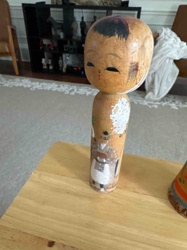
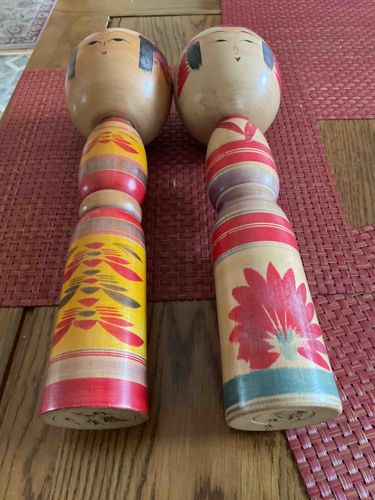
A well-preserved pair of traditional Japanese Kokeshi dolls, specifically identifying as the Naruko-style due to their distinct indented waists and flared bases. Hand-carved from wood, possibly Mizuki or Cherry, these dolls feature round heads with hand-painted facial features including narrow eyes, red lips, and black hair. The cylindrical bodies are lathe-turned and decorated with vibrant floral patterns in red, yellow, and green pigments. One doll features a prominent red chrysanthemum motif, while the other displays a series of layered petal designs. The bases are signed with Japanese ink calligraphy (kanji), identifying the artisan. The condition is good for their age, exhibiting a natural mellowing of the wood and some minor fading of the pigments. Some slight surface scuffing is visible, which is typical of mid-20th-century folk art. The craftsmanship demonstrates the precision of the Naruko school, particularly in the smooth joinery and the symmetrical application of the striped decorative bands. These dolls likely date from the Showa period (mid-20th century) and represent a classic example of Japanese wood-turning artistry.
Estimated Value

$150 - $250

Basic Information

Category

Asian Antiques and Collectibles / Japanese Folk Art

Appraised On

March 27, 2026

Estimated Value

$150 - $250

Item Description

A well-preserved pair of traditional Japanese Kokeshi dolls, specifically identifying as the Naruko-style due to their distinct indented waists and flared bases. Hand-carved from wood, possibly Mizuki or Cherry, these dolls feature round heads with hand-painted facial features including narrow eyes, red lips, and black hair. The cylindrical bodies are lathe-turned and decorated with vibrant floral patterns in red, yellow, and green pigments. One doll features a prominent red chrysanthemum motif, while the other displays a series of layered petal designs. The bases are signed with Japanese ink calligraphy (kanji), identifying the artisan. The condition is good for their age, exhibiting a natural mellowing of the wood and some minor fading of the pigments. Some slight surface scuffing is visible, which is typical of mid-20th-century folk art. The craftsmanship demonstrates the precision of the Naruko school, particularly in the smooth joinery and the symmetrical application of the striped decorative bands. These dolls likely date from the Showa period (mid-20th century) and represent a classic example of Japanese wood-turning artistry.
Get Your Items Appraised

Instant estimates of your treasures with AI-powered instant appraisals

Browse More Appraisals