AI Appraisal Estimate

AI-generated estimates · not official valuations

From the user

What was submitted

Photo and notes provided by the user — not generated by AI

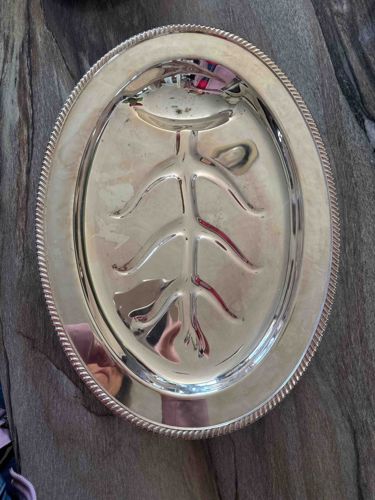
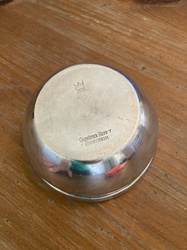
Submitted item photo
Submitted photo · June 20, 2026

User's notes

No additional notes provided.

AI analysis below

AI appraisal

AI analysis & estimate

AI-Generated · Verify before acting

Everything below is generated by AI for informational purposes only. AI can make mistakes — the AI may misidentify items or misattribute them (artist, maker, brand, designer, origin, era). This is not an official valuation and should not be used for insurance, sale, tax, estate, legal, or lending purposes — or any decision requiring a certified appraisal. It is not an authoritative claim about any person, brand, or rights holder — do not share or rely on it as a factual statement about a third party. Always consult qualified professionals before making financial decisions.

Read the full disclaimer

AI Identification

·Not independently authenticated·Verify before acting

Silver-Plated Tree-and-Well Oval Meat Platter

Antique and Vintage Silver-Plated Tableware

AI Estimated Value

·Not an official valuation·Verify before acting

$65.00 - $95.00

As of June 20, 2026

AI Item Analysis

·AI can make mistakes·Verify before acting
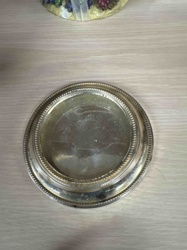
This is a large oval-shaped serving platter, specifically designed as a 'tree-and-well' meat dish. It is crafted from a silver-toned metal, likely silver-plated brass or copper (EPNS), featuring a high-polish reflective finish. The central plateau of the platter contains a deeply recessed 'tree' pattern—a branching system of channels designed to collect meat juices and fat from a roast. These channels lead to a deeper reservoir, or 'well,' at one end of the oval. Common for the mid-20th century, the rim of the platter is decorated with a classic gadroon or 'rope' edge, providing a formal aesthetic. The construction appears sturdy and heavy, indicating a solid base metal under the plating. Regarding condition, the piece shows significant surface tarnish and oxidation, manifesting as darkened or yellowish patches across the flat surfaces. There are visible light scratches from cleaning or use (scullery wear) and a small concentrated area of pitting or possibly plating loss near the top well. These platters were a staple of formal English and American dining service during the Georgian and Victorian revival periods, roughly dating this piece between 1940 and 1970. No specific maker's mark is visible from the top view, but such items were frequently produced by manufacturers like Sheffield, Reed & Barton, or International Silver.
AI Appraisal Report

·AI can make mistakes·Verify before acting
I have examined the digital representation of this mid-20th-century silver-plated tree-and-well meat platter. The item exhibits the classic gadroon border typical of the Neo-Georgian revival style popular between 1940 and 1970. Based on the visual evidence, the base metal is likely Electroplated Nickel Silver (EPNS) or copper. While the construction is robust, the condition is fair to good. I observe significant tarnish and oxidation which, while cleanable, may disguise deeper 'bleeding' (where the copper base shows through the silver). The pitting noted near the well suggests localized corrosion that typically requires professional replating to fully remediate. The market for silver-plated holloware has softened significantly as modern consumers pivot toward dishwasher-safe alternatives. While functional and aesthetically pleasing for formal dining, these mass-produced items are common. Comparable sales for unsigned mid-century platters in similar condition generally fall under $100. Pieces by premium makers like Reed & Barton or Christofle would command the higher end of the range, whereas anonymous Sheffield reproductions occupy the lower tier. Limitations: This appraisal is based solely on photographic evidence. I cannot verify the integrity of the plating, the presence of obscured hallmarks on the underside, or the exact weight and gauge of the metal. A physical inspection is required to determine if the 'pitting' is superficial or structural. To elevate this valuation, documentation of a prestige maker's mark or provenance linking the piece to a notable estate would be necessary. Scientific testing (acid or XRF) would be required only if there were suspicions of solid sterling silver content, though the visual characteristics strongly suggest a plated manufacture.

Get your items appraised

Instant estimates of your treasures with AI-powered appraisals

Browse More Appraisals