AI estimate as of November 6, 2025 · verify with a professional before acting
AI-Generated · Verify before acting
Everything on this page is generated by AI for informational purposes only. AI can make mistakes — the AI may misidentify items or misattribute them (artist, maker, brand, designer, origin, era). This is not an official valuation and should not be used for insurance, sale, tax, estate, legal, or lending purposes — or any decision requiring a certified appraisal. It is not an authoritative claim about any person, brand, or rights holder — do not share or rely on it as a factual statement about a third party. Always consult qualified professionals before making financial decisions.
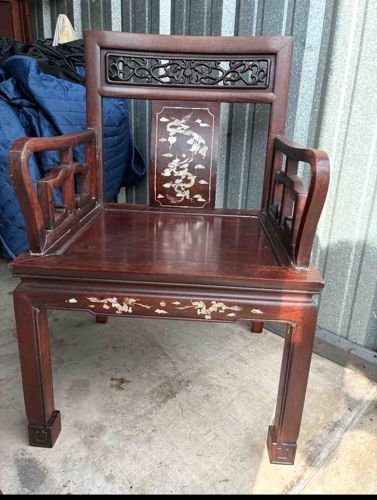
This is a single Chinese hardwood armchair, likely constructed from a dense, dark wood such as rosewood or hongmu, characterized by its rich, reddish-brown color and visible grain. The chair features a formal, rectangular silhouette with a straight back and solid flat arms. The overall construction appears sturdy and traditional, with mortise and tenon joinery typical of classical Chinese furniture. A prominent feature is the intricate mother-of-pearl inlay, which adorns several parts of the chair. The backrest central panel showcases a dynamic two-panel design featuring what appears to be a dragon or mythical creature amidst clouds and celestial elements, all meticulously rendered in iridescent shell. The top rail of the backrest also incorporates a finely carved openwork panel with intricate floral and geometric motifs. The apron below the seat is embellished with a continuous mother-of-pearl inlay depicting blossoms, possibly plum or cherry, indicative of traditional Chinese art. The chair legs are straight and square-cut, with subtle decorative embellishments at the bottom, suggesting a formal and refined aesthetic. Visible condition issues include some light surface wear, minor scratches, and potential fading of the wood's finish consistent with age and use. There are no obvious signs of major damage or repair, and the mother-of-pearl inlay appears largely intact, though a closer inspection would be needed to detect any small losses or lifting. The craftsmanship suggests a mid-to-late 20th-century production, though earlier examples from the late Qing Dynasty or early Republic period could also share similar stylistic elements. The chair’s design emphasizes both elegance and functionality, with good proportions and a relatively wide seat. The quality of the carving and inlay work indicates a respectable level of craftsmanship.
AI Appraisal Report
Upon my virtual examination of this Chinese hardwood armchair with mother-of-pearl inlay, I assess its condition as good, consistent with age and use. The visible construction, likely from rosewood or hongmu due to its rich coloration, appears sturdy with traditional mortise and tenon joinery. Surface wear, minor scratches, and potential finish fading are evident, but these are expected given its probable age. Crucially, the intricate mother-of-pearl inlay, a key decorative element featuring a dragon or mythical creature on the backrest and blossoms on the apron, appears largely intact from the images. I detect no obvious signs of major damage or repair, which positively impacts its value.
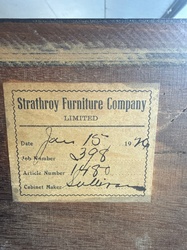
Authenticity is a consideration; based solely on imagery, I lean towards a mid-to-late 20th-century production, though stylistic elements could also point to earlier examples from the late Qing Dynasty or early Republic period. The craftsmanship of both carving and inlay suggests a respectable quality. Demand for traditional Chinese hardwood furniture with decorative inlay remains steady in niche markets, driven by collectors and interior designers seeking period-appropriate pieces. Comparables for such chairs, especially with well-preserved inlay, typically range from $500 to $1,500 depending on the wood, intricacy of inlay, and overall condition. This piece fits comfortably within the middle to upper-middle range of that spectrum.
Factors significantly impacting its value include the good preservation of the mother-of-pearl and the robust construction. Its formality and elegance lend themselves to various decorative settings. However, my assessment is limited by viewing images alone. For full authentication and a more precise valuation, an in-person examination would be necessary to confirm the wood type, thoroughly inspect the inlay for any subtle losses or lifting not visible, verify joinery integrity, and detect any professional repairs. Provenance documentation, if available, would also significantly enhance its authenticity and value.