AI Appraisal Estimate

AI-generated estimates · not official valuations

From the user

What was submitted

Photo and notes provided by the user — not generated by AI

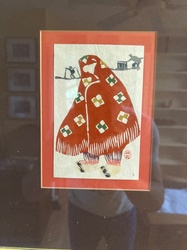
Submitted item photo
Submitted photo · June 14, 2026

User's notes

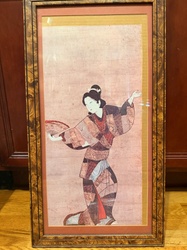
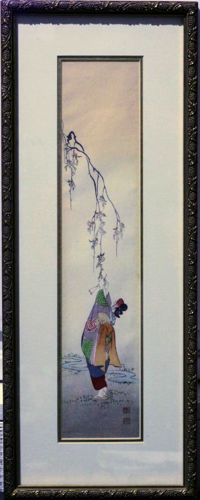
Unknown artist untitled, Asian artwork size 7 x 19 framed

AI analysis below

AI appraisal

AI analysis & estimate

AI-Generated · Verify before acting

Everything below is generated by AI for informational purposes only. AI can make mistakes — the AI may misidentify items or misattribute them (artist, maker, brand, designer, origin, era). This is not an official valuation and should not be used for insurance, sale, tax, estate, legal, or lending purposes — or any decision requiring a certified appraisal. It is not an authoritative claim about any person, brand, or rights holder — do not share or rely on it as a factual statement about a third party. Always consult qualified professionals before making financial decisions.

Note

This analysis also relies on unverified notes provided by the user, which may be incomplete or inaccurate and could affect the result.

Read the full disclaimer

AI Identification

·Not independently authenticated·Verify before acting

Japanese Bijin-ga Woodblock Print by Kitano Tsunetomi

Asian Fine Art / Japanese Prints

AI Estimated Value

·Not an official valuation·Verify before acting

$450 - $700

As of June 14, 2026

AI Item Analysis

·AI can make mistakes·Verify before acting
This is a vertical Japanese woodblock print (ukiyo-e/shin-hanga style) measuring approximately 7 x 19 inches, depicting a 'Bijin' (beautiful woman) reaching for a hanging branch of wisteria. The subject is dressed in an elegant, multi-layered kimono featuring a vibrant palette of purple, lime green, and burnt orange with intricate geometric and floral patterns. Her hair is styled in a traditional nihongami arrangement. The background is a soft, atmospheric wash suggestive of twilight or a misty garden, with subtle blue accents indicating water at her feet. Noteworthy are the structural seals located in the lower right corner, likely representing the artist Kitano Tsunetomi (1880–1947), known for his Taisho-era portrayals of women. The print exhibits high-quality craftsmanship, seen in the delicate linework of the wisteria tendrils and the precise registration of colors. The artwork is housed in a contemporary dark-toned, molded frame with a wide off-white mat. Visible condition includes minor foxing or age-toning to the paper, typical for early 20th-century prints, and slight undulation under the mat. The narrow, elongated 'otanzaku-ban' format is characteristic of decorative interior panels from the late Meiji to the early Showa period.
AI Appraisal Report

·AI can make mistakes·Verify before acting
I have carefully examined the provided digital documentation of this otanzaku-ban format woodblock print. The work is attributed to Kitano Tsunetomi, a pivotal figure of the Taisho-era Shin-hanga movement. The subject matter—a bijin in a landscape—is highly desirable for collectors of the period, and the elongated format suggests it was originally intended for decorative use in a traditional alcove. My visual analysis reveals a well-executed composition with sophisticated color registration, particularly the vibrant lime and violet hues of the kimono which appear well-preserved. Condition-wise, there is visible minor foxing and age-toning consistent with early 20th-century washi paper. The slight horizontal undulation suggests the print may be loosely mounted, which is preferable to being dry-mounted. The market for Tsunetomi remains stable, with high demand for his 'modern' takes on traditional beauty; however, the smaller format typically commands lower prices than his full-sized oban masterpieces. Limitations: This appraisal is based solely on digital imagery. Full authentication requires an in-person examination to verify the paper's watermark, fiber composition, and the 'bleed-through' of the pigments to the reverse side, which distinguishes an original woodblock from an offset lithographic reproduction. I would also need to examine the print outside of its frame to check for hidden margins, publisher marks, or severe trimming. Provenance documentation or a gallery bill of sale would further solidify its market value. Without tactile inspection of the ink's depth and the paper's texture, this remains a preliminary valuation based on the stylistic evidence and artist's attributed seals.

Get your items appraised

Instant estimates of your treasures with AI-powered appraisals

Browse More Appraisals