AI estimate as of October 6, 2025 · verify with a professional before acting
AI-Generated · Verify before acting
Everything on this page is generated by AI for informational purposes only. AI can make mistakes — the AI may misidentify items or misattribute them (artist, maker, brand, designer, origin, era). This is not an official valuation and should not be used for insurance, sale, tax, estate, legal, or lending purposes — or any decision requiring a certified appraisal. It is not an authoritative claim about any person, brand, or rights holder — do not share or rely on it as a factual statement about a third party. Always consult qualified professionals before making financial decisions.
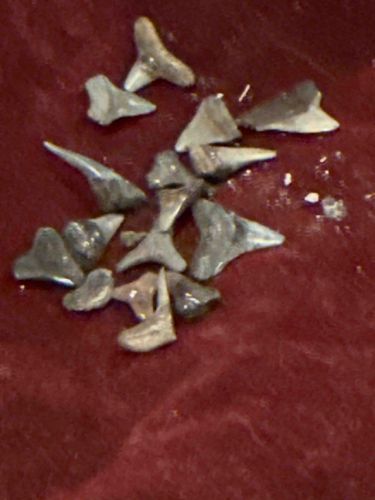
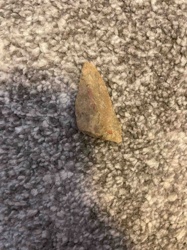
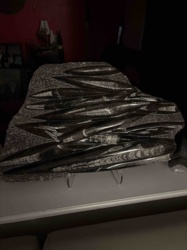
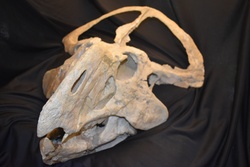
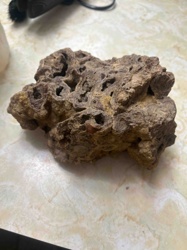
This collection comprises approximately 15 individual fossilized shark teeth, varying in size and shape. The dominant color palette consists of shades of gray, ranging from a lighter, almost off-white gray to a darker, charcoal gray, often with a subtle gradient or mottling on a single tooth. Some teeth exhibit a brownish-gray hue, particularly on their root structures, suggesting mineral staining from their burial environment. Physically, the teeth display typical characteristics of fossilized shark dentition, including generally triangular or pointed shapes, though some are more elongated and blade-like while others are broader and flatter. The roots, where present, are often bifurcated or distinctly separated from the enamel crown, indicating their attachment point in the shark's jaw. The overall construction is solid and stony, consistent with fossilization.
Observable condition issues include varying degrees of wear and chipping, common in fossil specimens that have been subject to natural erosion and deposition processes. Many teeth show minor chips along their edges or tips, and some have incomplete roots. The surfaces appear smooth in some areas, while others retain a more textured or porous feel, indicative of the fossilization process and lack of significant post-excavation polishing. No discernible manufacturing marks, signatures, or stamps are present, as these are natural fossils. Based on their appearance and common geological finds, these teeth likely date from the Cenozoic Era, potentially Miocene to Pliocene epochs, making them millions of years old. Their unique aspect lies in being a tangible remnant of prehistoric marine life, often appreciated by collectors for their aesthetic and scientific value. The craftsmanship is naturally occurring, showcasing the intricate design of shark teeth evolved for predation. The quality of each tooth varies with its completeness and level of preservation.
AI Appraisal Report
I have examined the provided image of this collection of approximately 15 fossilized shark teeth. Based on visual assessment, the teeth appear authentic, displaying characteristic morphology, color variations (grays, brownish-gray roots), and solid, stony construction consistent with genuine fossilized dentition. The varying degrees of wear, chipping, and incomplete roots are typical for natural fossil specimens and do not raise concerns about authenticity. There are no signs of modern tooling or artificial alteration. The smooth and textured areas are also consistent with natural fossilization.
Market conditions for common fossilized shark teeth collections are generally stable, with a broad collector base. This collection, while visually appealing, consists of what appear to be relatively common species, likely from the Cenozoic Era (Miocene to Pliocene), which are widely available. Comparables for similar collections of common, unidentifiable shark teeth of this size and condition typically range from $3 to $8 per tooth, depending on individual preservation and size. Demand for such collections is moderate to strong among amateur collectors, educational institutions, and those seeking decorative natural history items.
The primary factors impacting value here are the number of teeth, their relatively good preservation despite minor chipping, and the appeal of a varied collection. However, the lack of exceptionally large or rare specimens, and the inability to identify specific species (e.g., Megalodon, Otodus) significantly limit the top-end value. Without species identification, these are valued as generic fossil shark teeth. For full authentication and more precise dating, physical inspection by a paleontologist, and potentially microscopic or chemical analysis, would be beneficial. Without physical examination, I cannot definitively rule out highly skilled replicas, though the visual evidence strongly suggests authenticity.