AI Appraisal Estimate

AI-generated estimates · not official valuations

From the user

What was submitted

Photo and notes provided by the user — not generated by AI

Submitted item photo
Submitted photo · June 26, 2026

User's notes

No additional notes provided.

AI analysis below

AI appraisal

AI analysis & estimate

AI-Generated · Verify before acting

Everything below is generated by AI for informational purposes only. AI can make mistakes — the AI may misidentify items or misattribute them (artist, maker, brand, designer, origin, era). This is not an official valuation and should not be used for insurance, sale, tax, estate, legal, or lending purposes — or any decision requiring a certified appraisal. It is not an authoritative claim about any person, brand, or rights holder — do not share or rely on it as a factual statement about a third party. Always consult qualified professionals before making financial decisions.

Read the full disclaimer

AI Identification

·Not independently authenticated·Verify before acting

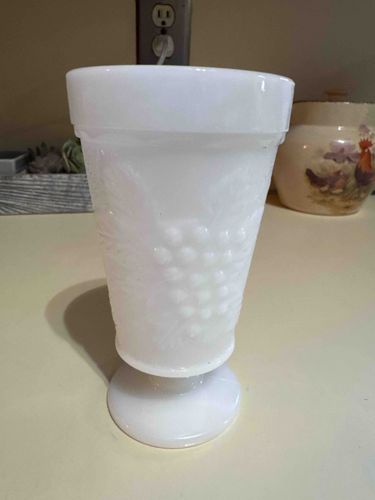
Milk Glass Grape Vine Pattern Goblet/Footed Tumbler

Decorative Glassware

AI Estimated Value

·Not an official valuation·Verify before acting

$10 - $25

As of June 26, 2026

AI Item Analysis

·AI can make mistakes·Verify before acting
This item is a white milk glass goblet or footed tumbler, likely from the mid-20th century, specifically known for its 'grape vine' or 'grape and cable' patterned textured surface. The piece is crafted from opaque white glass, which gives it a classic, soft appearance. Its form consists of a main body that tapers slightly inwards towards the bottom, resting on a pedestal base. The rim of the goblet is smooth and unadorned, suggesting practicality and simplicity. The primary decorative feature is the embossed design of grape clusters and intertwining grape leaves that encircle the body of the glass. This raised texture provides both visual interest and a tactile quality. The material appears to be in good condition, showing no obvious chips, cracks, or significant wear that would detract from its aesthetic. The milky white color is consistent throughout, indicating a well-preserved piece with no visible discoloration or staining. The construction suggests it was made using a mold, a common manufacturing technique for milk glass items of this era. While no specific maker's marks are visible in the provided image, the 'grape vine' pattern is a recognized design often associated with various milk glass manufacturers, including brands like Westmoreland or Fenton, though without a clearer view of the base or specific markings, attribution remains uncertain. The overall craftsmanship appears standard for mass-produced milk glass of the period, designed for decorative and utilitarian purposes.
AI Appraisal Report

·AI can make mistakes·Verify before acting
I have examined the image of this white milk glass goblet. The condition appears to be very good, with no visible chips, cracks, or significant wear. The 'grape vine' pattern is characteristic of milk glass from the mid-20th century. Based on the visual evidence, it appears authentic to its type and era. However, without a physical inspection, I cannot confirm the absence of hairline cracks or subtle manufacturing flaws. From a market perspective, milk glass, while popular for collecting, is relatively common, especially pieces like this goblet in standard patterns. The market for general milk glass items is stable but not experiencing high demand or rapid value appreciation. This specific 'grape vine' pattern is widely recognizable and was produced by multiple manufacturers. Its widespread availability prevents it from being considered rare. The primary factor impacting its value is its commonality. While its good condition maintains its appeal to collectors of vintage dinnerware and milk glass, it doesn't possess unique characteristics or a desirable maker's mark that would command a premium. To definitively attribute it to a specific manufacturer like Westmoreland or Fenton, I would need to examine the base for maker's marks, which are not visible in the provided image. Provenance documentation, though unlikely for a common item like this, would further solidify its history. Without physical examination, I cannot comment on the exact weight, feel, or subtle manufacturing nuances that could indicate specific production origin or quality.

Get your items appraised

Instant estimates of your treasures with AI-powered appraisals

Browse More Appraisals