Rough Ethiopian Welo Opal Specimen
Rocks, Fossils & Minerals

Rough Ethiopian Welo Opal Specimen

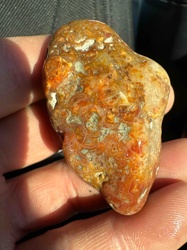
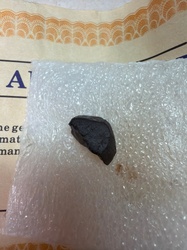
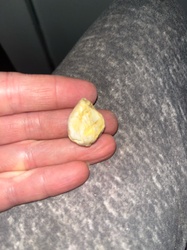
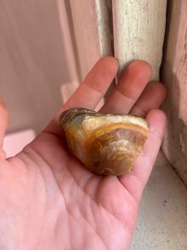
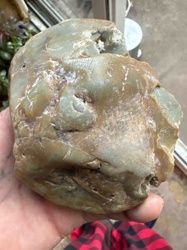
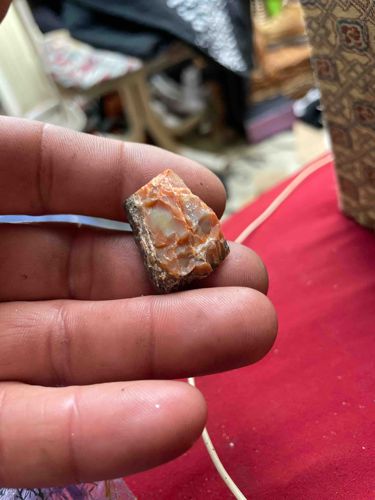
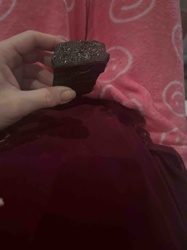
This is a small, rough specimen of precious opal, likely originating from the Welo province of Ethiopia. The stone is shown in its raw, unpolished state, still partially encased in its brown host rock (matrix). The specimen measures approximately 1.5 cm to 2 cm in length. It exhibits a distinct waxy to vitreous luster and a conchoidal fracture pattern characteristic of silicates. The primary body color is a warm, honey-orange to reddish-brown hue. Notably, the specimen displays 'play-of-color' or opalescence, with visible flashes of neon green and iridescent yellow-orange visible beneath the surface. The surface is irregular and jagged due to being a rough chip rather than a cut gemstone. There are no signs of man-made treatments visible to the naked eye, although Ethiopian opals are known for their hydrophane properties. The condition is raw and natural, with earth and matrix debris still attached to the backside and edges. No maker's marks exist as this is a natural geologist's or lapidary specimen. It represents high-quality rough material that could potentially be cut into a cabochon, given the intensity of the color flashes visible along the fractured planes.
Estimated Value

$40–$75

Basic Information

Category

Rocks, Fossils & Minerals

Appraised On

December 23, 2025

Estimated Value

$40–$75

Item Description

This is a small, rough specimen of precious opal, likely originating from the Welo province of Ethiopia. The stone is shown in its raw, unpolished state, still partially encased in its brown host rock (matrix). The specimen measures approximately 1.5 cm to 2 cm in length. It exhibits a distinct waxy to vitreous luster and a conchoidal fracture pattern characteristic of silicates. The primary body color is a warm, honey-orange to reddish-brown hue. Notably, the specimen displays 'play-of-color' or opalescence, with visible flashes of neon green and iridescent yellow-orange visible beneath the surface. The surface is irregular and jagged due to being a rough chip rather than a cut gemstone. There are no signs of man-made treatments visible to the naked eye, although Ethiopian opals are known for their hydrophane properties. The condition is raw and natural, with earth and matrix debris still attached to the backside and edges. No maker's marks exist as this is a natural geologist's or lapidary specimen. It represents high-quality rough material that could potentially be cut into a cabochon, given the intensity of the color flashes visible along the fractured planes.
Get Your Items Appraised

Instant estimates of your treasures with AI-powered instant appraisals

Browse More Appraisals