Madhubani (Mithila) Hand-Painted Silk Dupatta
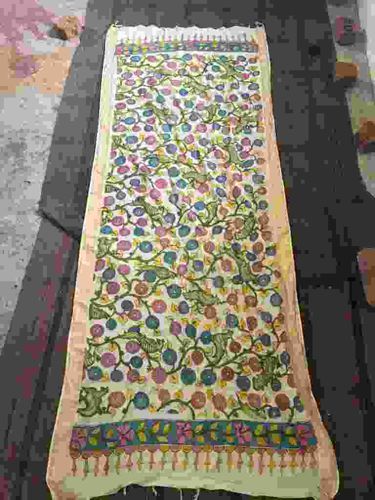
This item is a traditional hand-painted silk dupatta originating from the Mithila region of Bihar, India. The textile features intricate Madhubani painting (also known as Mithila art) characterized by dense, vibrant patterns. The central field is adorned with a recurring floral and vine motif interspersed with stylized peacocks or birds, rendered in a palette of teal, magenta, yellow, and green on a light cream or off-white ground. The borders exhibit a more structured geometric and floral pattern, framed by a soft peach-colored edge. The piece is finished with traditional fringe or 'jhallar' at the ends. The artwork displays the classic 'Kachni' (hatching) and 'Bharni' (filling) techniques typically performed by village artisans using natural dyes and pigments applied with bamboo sticks, nibs, or fingers. The fine weave suggests a Tussar or mulberry silk composition. Regarding condition, the textile appears well-preserved with no immediate signs of significant fraying or discoloration, though the slight irregularities in the line work are hallmarks of authentic hand-craftsmanship rather than machine printing. This style of art dates back centuries but this specific garment likely reflects contemporary 21st-century production for the artisanal market.
AI-Generated Appraisal Disclaimer
Estimated Value
$250 - $400
Basic Information
Category
Textiles and Ethnic Apparel
Appraised On
April 7, 2026
Estimated Value
$250 - $400
Item Description
This item is a traditional hand-painted silk dupatta originating from the Mithila region of Bihar, India. The textile features intricate Madhubani painting (also known as Mithila art) characterized by dense, vibrant patterns. The central field is adorned with a recurring floral and vine motif interspersed with stylized peacocks or birds, rendered in a palette of teal, magenta, yellow, and green on a light cream or off-white ground. The borders exhibit a more structured geometric and floral pattern, framed by a soft peach-colored edge. The piece is finished with traditional fringe or 'jhallar' at the ends. The artwork displays the classic 'Kachni' (hatching) and 'Bharni' (filling) techniques typically performed by village artisans using natural dyes and pigments applied with bamboo sticks, nibs, or fingers. The fine weave suggests a Tussar or mulberry silk composition. Regarding condition, the textile appears well-preserved with no immediate signs of significant fraying or discoloration, though the slight irregularities in the line work are hallmarks of authentic hand-craftsmanship rather than machine printing. This style of art dates back centuries but this specific garment likely reflects contemporary 21st-century production for the artisanal market.
Related Tags
Explore similar items and categories:
Get Your Items Appraised
Instant estimates of your treasures with AI-powered instant appraisals