AI Appraisal Estimate

AI-generated estimates · not official valuations

From the user

What was submitted

Photo and notes provided by the user — not generated by AI

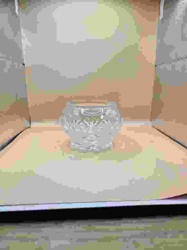
Submitted item photo
Submitted photo · May 25, 2026

User's notes

No additional notes provided.

AI analysis below

AI appraisal

AI analysis & estimate

AI-Generated · Verify before acting

Everything below is generated by AI for informational purposes only. AI can make mistakes — the AI may misidentify items or misattribute them (artist, maker, brand, designer, origin, era). This is not an official valuation and should not be used for insurance, sale, tax, estate, legal, or lending purposes — or any decision requiring a certified appraisal. It is not an authoritative claim about any person, brand, or rights holder — do not share or rely on it as a factual statement about a third party. Always consult qualified professionals before making financial decisions.

Read the full disclaimer

AI Identification

·Not independently authenticated·Verify before acting

Vintage Pressed Glass Spirits Decanter

Antiques & Collectibles - Glassware

AI Estimated Value

·Not an official valuation·Verify before acting

$25.00 - $45.00

As of May 25, 2026

AI Item Analysis

·AI can make mistakes·Verify before acting
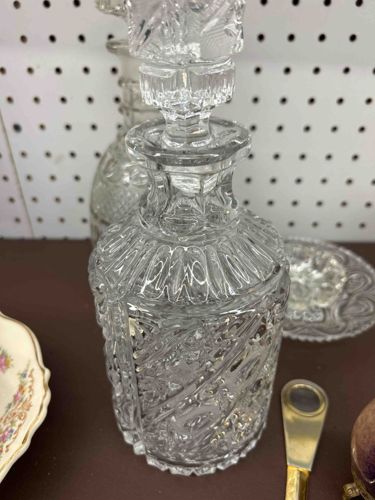
This item is a clear glass spirits decanter featuring a highly decorative pressed pattern. The piece is cylindrical in the body, transitioning into a sloped shoulder decorated with vertical thumbprint or flute motifs. The main body is characterized by a complex geometric pattern featuring diagonal bands, faceted starbursts, and diamond point textures common in mid-20th-century glassware. The neck is tapered with a flared rim, holding a square-topped multifaceted glass stopper that mimics the cutting style of the base. The material appears to be clear soda-lime glass rather than lead crystal, as evidenced by the lack of sharp edges on the pattern lines, which is indicative of a press-molded process. No visible maker's marks or signatures are apparent in the image, suggesting it may be a mass-produced piece from the 1950s-1970s. The condition appears fair to good; while the glass maintains its clarity, there is visible residue or 'clouding' on the interior lower half, common with aged decanters. The stopper shows some slight misalignment in the neck, and minor flea bites or chips may be present along the sharpest points of the pressed pattern. The base shows a serrated 'tooth' edge commonly found in EAPG (Early American Pattern Glass) revival styles.
AI Appraisal Report

·AI can make mistakes·Verify before acting
Based on my visual examination of this clear pressed glass spirits decanter, I have determined it to be a mass-produced mid-to-late 20th-century decorative piece, likely an EAPG (Early American Pattern Glass) revival style from the 1960s or 70s. The lack of sharp faceting indicates a mold-pressed production rather than hand-cutting, and the absence of a maker's mark suggests a high-volume manufacturer like Anchor Hocking or Indiana Glass. The condition is fair; while the exterior remains bright, the visible internal clouding (potentially mineral deposits or 'sick glass') significantly detracts from its utility and aesthetic value. The stopper appears original but fits loosely, often seen in soda-lime glass sets of this era. The current market for mid-century pressed glass is saturated, with high supply and moderate demand limited to casual collectors or interior decorators. Comparable items sell frequently at estate sales and online marketplaces for under $50. The primary value-limiting factors are the interior residue and the non-crystalline material composition. Notably, a definitive assessment of age and material cannot be confirmed through photographs alone. To finalize this appraisal, I would require an in-person inspection to perform a 'ring test' for lead content, check for UV fluorescence (which can indicate specific vintage glass chemical compositions), and utilize a loop to distinguish between molded seams and actual glass sickness. Provenance regarding the original purchase or previous ownership would also be necessary to rule out earlier 19th-century origins, though the design traits suggest a later revival.

Get your items appraised

Instant estimates of your treasures with AI-powered appraisals

Browse More Appraisals