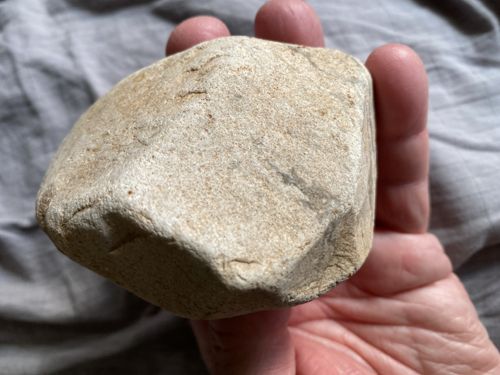
Paleo-Indian Chert Hand Axe/Hammerstone
Archaeological Artifacts / Native American Prehistoric Tools

Paleo-Indian Chert Hand Axe/Hammerstone

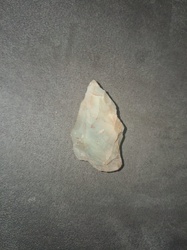
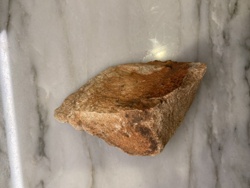
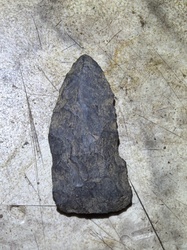
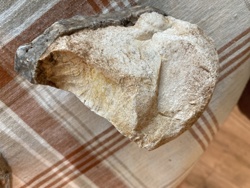
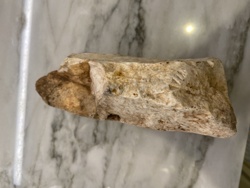
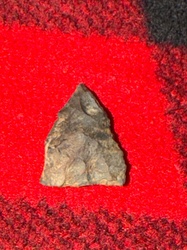
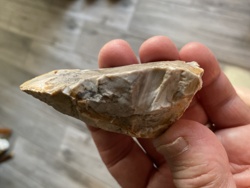
This is a prehistoric lithic tool, measuring approximately 3 inches by 2.5 inches, identified as a hand axe or multi-tool hammerstone. The object is composed of a light-colored, tan-to-beige chert material with a matte, grainy surface texture. Its physical construction displays intentional conchoidal fracturing and percussion flaking along the edges to create a functional grip and working surfaces. The tool exhibits a palm-sized, ergonomic shape designed for manual use without a handle. Notable features include visible battering and pitted scars on the distal ends, characteristic of heavy use in pounding or crushing tasks. The surface shows a significant layer of calcified patina and mineral staining, consistent with long-term burial in the Guthrie, Oklahoma region. There are no modern maker's marks, as this is an ancient artifact attributed to Paleo-Indian or early Archaic cultures. The condition is stable but shows ancient wear, with rounded edges that suggest considerable utility before it was discarded. The craftsmanship is utilitarian, reflecting late Pleistocene or early Holocene survival technology where raw stone was modified for high-impact durability.
Estimated Value

$40-$75

Basic Information

Category

Archaeological Artifacts / Native American Prehistoric Tools

Appraised On

February 20, 2026

Estimated Value

$40-$75

Additional Details Provided By Owner

User Provided Information

Paleo indian chert hand axe hammer stone tool found in Guthrie Ok 3"x 2.5"

Item Description

This is a prehistoric lithic tool, measuring approximately 3 inches by 2.5 inches, identified as a hand axe or multi-tool hammerstone. The object is composed of a light-colored, tan-to-beige chert material with a matte, grainy surface texture. Its physical construction displays intentional conchoidal fracturing and percussion flaking along the edges to create a functional grip and working surfaces. The tool exhibits a palm-sized, ergonomic shape designed for manual use without a handle. Notable features include visible battering and pitted scars on the distal ends, characteristic of heavy use in pounding or crushing tasks. The surface shows a significant layer of calcified patina and mineral staining, consistent with long-term burial in the Guthrie, Oklahoma region. There are no modern maker's marks, as this is an ancient artifact attributed to Paleo-Indian or early Archaic cultures. The condition is stable but shows ancient wear, with rounded edges that suggest considerable utility before it was discarded. The craftsmanship is utilitarian, reflecting late Pleistocene or early Holocene survival technology where raw stone was modified for high-impact durability.
Get Your Items Appraised

Instant estimates of your treasures with AI-powered instant appraisals

Browse More Appraisals