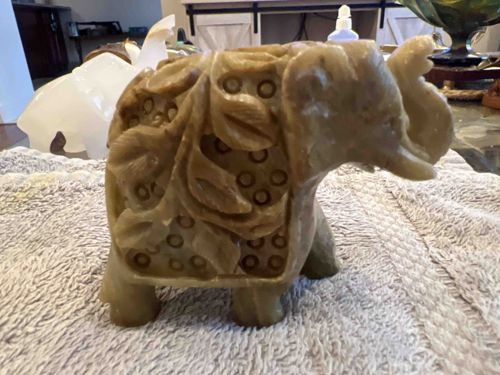
Hand-Carved Soapstone Jali Elephant Figurine
This item is a decorative elephant figurine hand-carved from soapstone, likely of Indian origin. The piece features a prominent jali (openwork) technique, consisting of a reticulated floral and leaf motif across the body's side panel. Within these decorative cutouts, a smaller, solid elephant is often visible (typical of this style, though hidden here). The soapstone exhibits a tan to olive-green hue with natural mineral veining and a soft, matte finish characteristic of the talc-rich stone. Measuring approximately 4-5 inches in length, the elephant is depicted with a raised trunk, a symbol of good luck. Notable features include high-relief leaf carvings and small circular puncture marks that form a textured background. The craftsmanship shows manual tool marks, particularly in the recessed areas. Condition appears good with minor surface abrasions and natural stone inclusions; the soft nature of soapstone makes it prone to small chips, especially on delicate trunk edges. It likely dates to the late 20th century, representing a common artisanal export from Agra, India.
AI-Generated Appraisal Disclaimer
Estimated Value
$45-65
Basic Information
Category
Collectibles & Decorative Arts
Appraised On
May 6, 2026
Estimated Value
$45-65
Item Description
This item is a decorative elephant figurine hand-carved from soapstone, likely of Indian origin. The piece features a prominent jali (openwork) technique, consisting of a reticulated floral and leaf motif across the body's side panel. Within these decorative cutouts, a smaller, solid elephant is often visible (typical of this style, though hidden here). The soapstone exhibits a tan to olive-green hue with natural mineral veining and a soft, matte finish characteristic of the talc-rich stone. Measuring approximately 4-5 inches in length, the elephant is depicted with a raised trunk, a symbol of good luck. Notable features include high-relief leaf carvings and small circular puncture marks that form a textured background. The craftsmanship shows manual tool marks, particularly in the recessed areas. Condition appears good with minor surface abrasions and natural stone inclusions; the soft nature of soapstone makes it prone to small chips, especially on delicate trunk edges. It likely dates to the late 20th century, representing a common artisanal export from Agra, India.
Related Tags
Explore similar items and categories:
Get Your Items Appraised
Instant estimates of your treasures with AI-powered instant appraisals