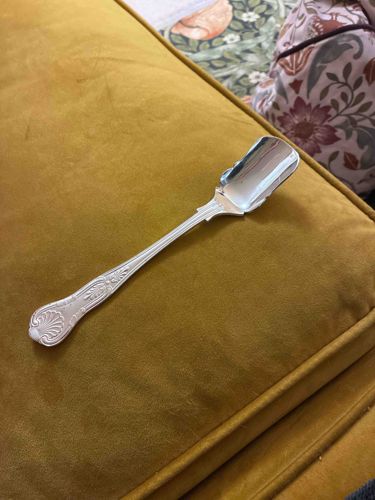
Silver Caddy Spoon in King's Pattern
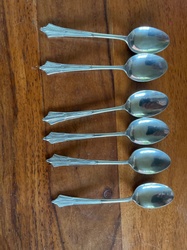
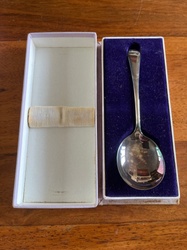
This item is a decorative silver caddy spoon, traditionally used for measuring loose tea from a tea caddy. The spoon features a distinctive 'King's Pattern' handle, characterized by a scalloped shell terminal and classic anthemion foliage motifs on a flared stem. The bowl of the spoon is rectangular with rounded corners and a slight shovel-like curve, designed for efficient scooping. Made from polished metal, likely sterling silver or high-grade silver plate, it exhibits a high-luster finish. The construction shows a seamless integration between the decorated handle and the functional bowl. While specific hallmarks are not visible in the primary image, they would typically be located on the reverse of the stem or within the bowl base. The piece appears to be in excellent antique or vintage condition, showing minimal surface scratches consistent with careful use and light atmospheric patina in the recessed areas of the pattern. Based on the style, it likely dates to the late 19th or early 20th century, representing Victorian or Edwardian craftsmanship. The crispness of the shell motif indicates a high-quality casting or die-striking process typical of established silversmiths.
AI-Generated Appraisal Disclaimer
Estimated Value
$125 - $185
Basic Information
Category
Antique Silverware / Flatware
Appraised On
February 4, 2026
Estimated Value
$125 - $185
Item Description
This item is a decorative silver caddy spoon, traditionally used for measuring loose tea from a tea caddy. The spoon features a distinctive 'King's Pattern' handle, characterized by a scalloped shell terminal and classic anthemion foliage motifs on a flared stem. The bowl of the spoon is rectangular with rounded corners and a slight shovel-like curve, designed for efficient scooping. Made from polished metal, likely sterling silver or high-grade silver plate, it exhibits a high-luster finish. The construction shows a seamless integration between the decorated handle and the functional bowl. While specific hallmarks are not visible in the primary image, they would typically be located on the reverse of the stem or within the bowl base. The piece appears to be in excellent antique or vintage condition, showing minimal surface scratches consistent with careful use and light atmospheric patina in the recessed areas of the pattern. Based on the style, it likely dates to the late 19th or early 20th century, representing Victorian or Edwardian craftsmanship. The crispness of the shell motif indicates a high-quality casting or die-striking process typical of established silversmiths.
Related Tags
Explore similar items and categories:
Get Your Items Appraised
Instant estimates of your treasures with AI-powered instant appraisals