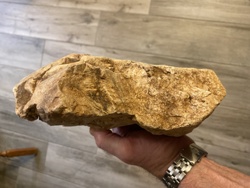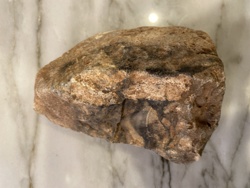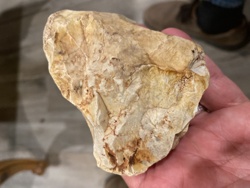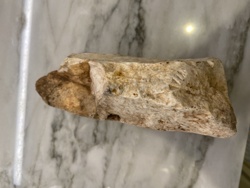
Lower Paleolithic Chert Hand Axe Scraper Tool (Possible Zoomorphic Figure)
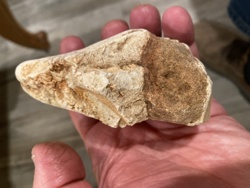
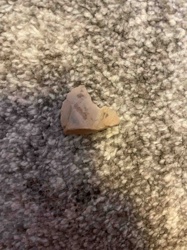
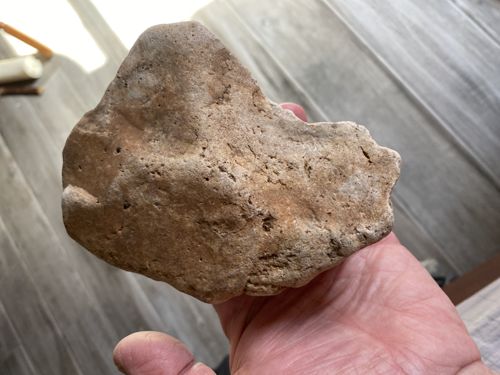
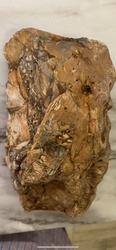
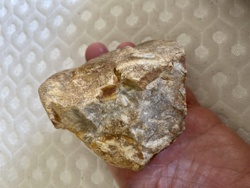
This specimen is a lithic artifact measuring approximately 5 inches by 4 inches, discovered in Guthrie, Oklahoma. It is constructed from chert, a hard, sedimentary rock known for its microcrystalline structure that allows for controlled fracturing. The object exhibits a distinctive sub-triangular or cordiform shape, characteristic of Lower Paleolithic stone tools such as hand axes or heavy-duty scrapers. The material displays a natural tan to light brown earthy coloration with a heavily weathered, pitted surface texture. Notable features include peripheral flaking and deliberate shaping along the margins, indicating percussion-based reduction. The surface shows significant patina and mineral buildup, consistent with long-term burial or environmental exposure. There are no modern tool marks or recent fractures visible; instead, the edges appear dulled and smoothed by time, suggesting archaic use as a cutting or scraping implement. The specific profile of the stone has been interpreted as 'portable rock art' representing a bird's head, which is a subjective zoomorphic identification often associated with early hominid symbolic behavior. The craftsmanship reflects a bifacial reduction technique where stone was removed from both sides to create a functional edge. Its condition is ancient and stable, with natural erosion and geological pitting across the dorsal and ventral faces, though the primary structural integrity remains intact. The artifact represents a piece of prehistoric technology used for processing hides or woodworking, potentially dating back to the earliest human inhabitants of the North American Plains.
AI-Generated Appraisal Disclaimer
Estimated Value
$150 - $350
Basic Information
Category
Archaeological Artifact/Prehistoric Lithic Tool
Appraised On
February 19, 2026
Estimated Value
$150 - $350
Additional Details Provided By Owner
User Provided Information
Lower Paleolithic chert hand axe scraper tool portable rock art bird head found in Guthrie OK 5" x 4"
Item Description
This specimen is a lithic artifact measuring approximately 5 inches by 4 inches, discovered in Guthrie, Oklahoma. It is constructed from chert, a hard, sedimentary rock known for its microcrystalline structure that allows for controlled fracturing. The object exhibits a distinctive sub-triangular or cordiform shape, characteristic of Lower Paleolithic stone tools such as hand axes or heavy-duty scrapers. The material displays a natural tan to light brown earthy coloration with a heavily weathered, pitted surface texture. Notable features include peripheral flaking and deliberate shaping along the margins, indicating percussion-based reduction. The surface shows significant patina and mineral buildup, consistent with long-term burial or environmental exposure. There are no modern tool marks or recent fractures visible; instead, the edges appear dulled and smoothed by time, suggesting archaic use as a cutting or scraping implement. The specific profile of the stone has been interpreted as 'portable rock art' representing a bird's head, which is a subjective zoomorphic identification often associated with early hominid symbolic behavior. The craftsmanship reflects a bifacial reduction technique where stone was removed from both sides to create a functional edge. Its condition is ancient and stable, with natural erosion and geological pitting across the dorsal and ventral faces, though the primary structural integrity remains intact. The artifact represents a piece of prehistoric technology used for processing hides or woodworking, potentially dating back to the earliest human inhabitants of the North American Plains.
Related Tags
Explore similar items and categories:
Get Your Items Appraised
Instant estimates of your treasures with AI-powered instant appraisals