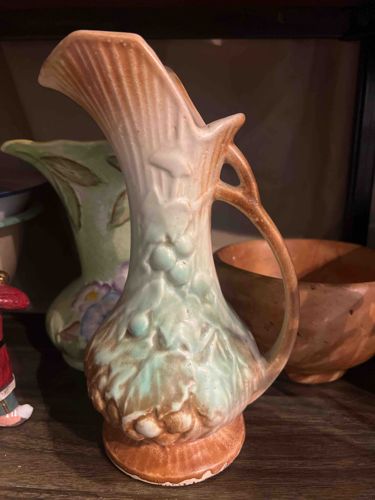
Roseville Pottery Bushberry Ewer 1-6
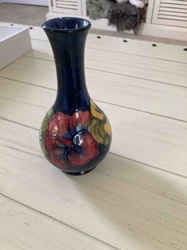
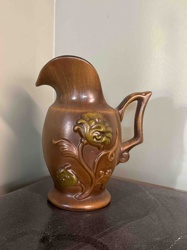
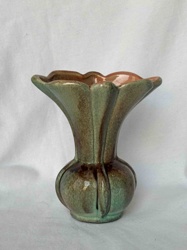
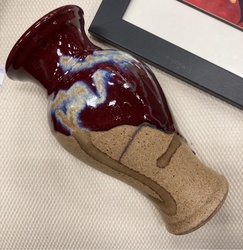
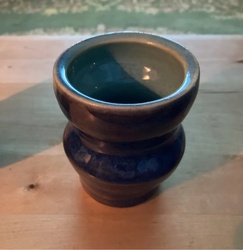
This is a vintage ceramic ewer from the Roseville Pottery 'Bushberry' pattern, which was originally introduced circa 1941. The piece features a distinct Art Deco meets Mid-Century organic style, characterized by a bulbous base that tapers into a slender neck with a flared, fan-like spout and a large, integrated handle. The body is decorated with high-relief molded 'bushberries' and serrated leaves, typical of the line. The color palette consists of a matte-finished terracotta brown at the base and handle, blending into a soft sage green and cream-tan toward the top. The textures are heavily ribbed at the neck and base, mimicking natural plant structures. In terms of condition, there is visible white chipping and glaze loss along the bottom foot ring, and the surface appears to have accumulated dust or light residue consistent with long-term display. There is some minor crazing visible in the lighter glaze areas, which is standard for American art pottery of this age. While the maker's mark is not visible in the photo, it would likely be marked with the raised 'Roseville U.S.A.' mark and shape number '1-6' on the underside.
AI-Generated Appraisal Disclaimer
Estimated Value
$100.00-$140.00
Basic Information
Category
Art Pottery
Appraised On
January 10, 2026
Estimated Value
$100.00-$140.00
Item Description
This is a vintage ceramic ewer from the Roseville Pottery 'Bushberry' pattern, which was originally introduced circa 1941. The piece features a distinct Art Deco meets Mid-Century organic style, characterized by a bulbous base that tapers into a slender neck with a flared, fan-like spout and a large, integrated handle. The body is decorated with high-relief molded 'bushberries' and serrated leaves, typical of the line. The color palette consists of a matte-finished terracotta brown at the base and handle, blending into a soft sage green and cream-tan toward the top. The textures are heavily ribbed at the neck and base, mimicking natural plant structures. In terms of condition, there is visible white chipping and glaze loss along the bottom foot ring, and the surface appears to have accumulated dust or light residue consistent with long-term display. There is some minor crazing visible in the lighter glaze areas, which is standard for American art pottery of this age. While the maker's mark is not visible in the photo, it would likely be marked with the raised 'Roseville U.S.A.' mark and shape number '1-6' on the underside.
Related Tags
Get Your Items Appraised
Instant estimates of your treasures with AI-powered instant appraisals