Prehistoric Chert Bifacial Tool / Hand Axe Scraper
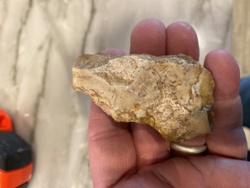
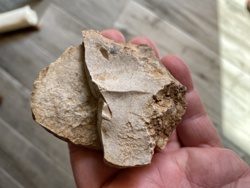
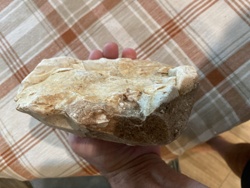
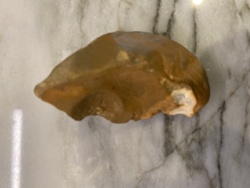
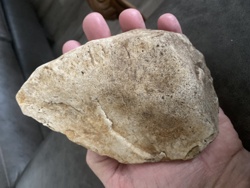
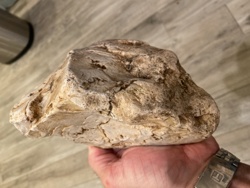
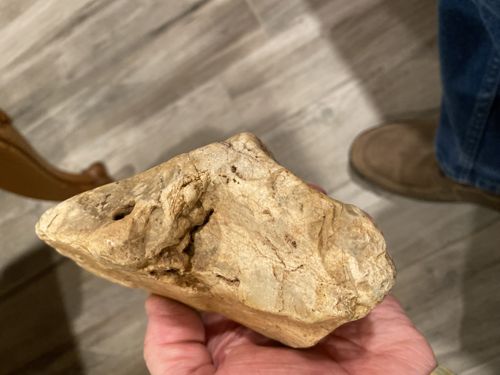
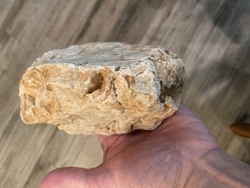
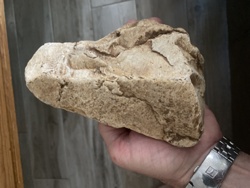
This specimen is a prehistoric lithic tool, identified as a bifacial hand axe or large scraper, measuring approximately 5.5 inches by 4 inches. It is crafted from a light tan to beige chert or flint material, characteristic of the lithic resources found in the Oklahoma region. The tool exhibits large, percussion-flaked scars across its surface, indicating an early stage of manufacture (preform) or a heavy-duty utilitarian design. The construction shows distinct bifacial thinning with a somewhat irregular, sinuous edge consistent with ancient knapping techniques. The surface displays a significant degree of natural patina and mineral staining, which suggests a long period of environmental exposure or burial and serves as a primary indicator of its age. Notable features include a prominent central ridge and various indentations that may have been intended for ergonomic grip during manual use. In terms of condition, the piece shows heavy weathering and several natural fissures or vugs within the stone matrix. There is no evidence of modern mechanical grinding or metal tool marks. While the craftsmanship is rugged and lacks the fine pressure flaking of more advanced projectile points, it demonstrates a functional mastery of lithic reduction suited for heavy cutting or scraping tasks. Given its provenance in Guthrie, OK, it likely dates to the Archaic or Woodland periods of North American prehistory, representing a substantial example of a multifunctional daily tool.
AI-Generated Appraisal Disclaimer
Estimated Value
$45.00 - $75.00
Basic Information
Category
Prehistoric Artifacts / Lithic Tools
Appraised On
February 18, 2026
Estimated Value
$45.00 - $75.00
Additional Details Provided By Owner
User Provided Information
Prehistoric chert bi face hand axe scraper tool found in Guthrie,OK. The measurements are 5.5" x 4"
Item Description
This specimen is a prehistoric lithic tool, identified as a bifacial hand axe or large scraper, measuring approximately 5.5 inches by 4 inches. It is crafted from a light tan to beige chert or flint material, characteristic of the lithic resources found in the Oklahoma region. The tool exhibits large, percussion-flaked scars across its surface, indicating an early stage of manufacture (preform) or a heavy-duty utilitarian design. The construction shows distinct bifacial thinning with a somewhat irregular, sinuous edge consistent with ancient knapping techniques. The surface displays a significant degree of natural patina and mineral staining, which suggests a long period of environmental exposure or burial and serves as a primary indicator of its age. Notable features include a prominent central ridge and various indentations that may have been intended for ergonomic grip during manual use. In terms of condition, the piece shows heavy weathering and several natural fissures or vugs within the stone matrix. There is no evidence of modern mechanical grinding or metal tool marks. While the craftsmanship is rugged and lacks the fine pressure flaking of more advanced projectile points, it demonstrates a functional mastery of lithic reduction suited for heavy cutting or scraping tasks. Given its provenance in Guthrie, OK, it likely dates to the Archaic or Woodland periods of North American prehistory, representing a substantial example of a multifunctional daily tool.
Get Your Items Appraised
Instant estimates of your treasures with AI-powered instant appraisals