Rajasthani Pichwai Painting of Lord Krishna and the Gopis
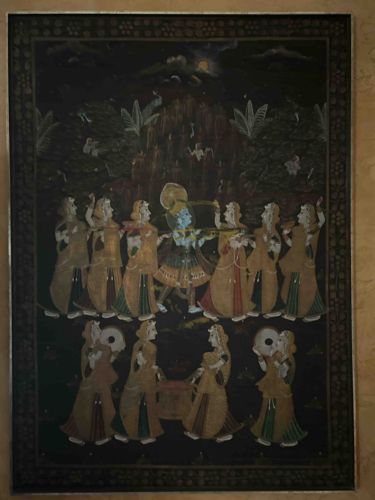
This is a hand-painted Pichwai, a traditional Indian art form originating from Rajasthan, typically used as temple hangings. The central figure is Lord Krishna, identifiable by his blue skin, yellow dhoti, and ornate crown, surrounded by a circle of Gopis (cowherd maidens). The scene represents the Sharad Purnima or 'Raas Leela' under a dark night sky featuring a glowing moon and stylized celestial elements. The figures are arranged in two tiers: the upper tier shows Krishna interacting with several Gopis, while the lower tier depicts Gopis playing traditional percussion instruments like the dholak and manjira. The color palette is rich but muted, dominated by dark indigos, earthy reds, terracottas, and significant use of metallic gold leaf for jewelry and garment borders. The entire composition is framed by an intricate floral 'hasgi' or border pattern typical of the Nathdwara style. In terms of condition, the piece shows a consistent patina with some visible darkening or oxidation of the pigments, likely due to age. There are slight vertical creases and minor pigment loss at the edges, suggesting it was once folded or stored without a frame. The craftsmanship is high, evidenced by the delicate facial features and the meticulous application of gold detailing on the clothing. This piece likely dates to the late 19th or early 20th century.
AI-Generated Appraisal Disclaimer
Estimated Value
$4,500 - $6,500
Basic Information
Category
Indian Fine Art & Religious Textiles
Appraised On
February 3, 2026
Estimated Value
$4,500 - $6,500
Item Description
This is a hand-painted Pichwai, a traditional Indian art form originating from Rajasthan, typically used as temple hangings. The central figure is Lord Krishna, identifiable by his blue skin, yellow dhoti, and ornate crown, surrounded by a circle of Gopis (cowherd maidens). The scene represents the Sharad Purnima or 'Raas Leela' under a dark night sky featuring a glowing moon and stylized celestial elements. The figures are arranged in two tiers: the upper tier shows Krishna interacting with several Gopis, while the lower tier depicts Gopis playing traditional percussion instruments like the dholak and manjira. The color palette is rich but muted, dominated by dark indigos, earthy reds, terracottas, and significant use of metallic gold leaf for jewelry and garment borders. The entire composition is framed by an intricate floral 'hasgi' or border pattern typical of the Nathdwara style. In terms of condition, the piece shows a consistent patina with some visible darkening or oxidation of the pigments, likely due to age. There are slight vertical creases and minor pigment loss at the edges, suggesting it was once folded or stored without a frame. The craftsmanship is high, evidenced by the delicate facial features and the meticulous application of gold detailing on the clothing. This piece likely dates to the late 19th or early 20th century.
Get Your Items Appraised
Instant estimates of your treasures with AI-powered instant appraisals