AI Appraisal Estimate

AI-generated estimates · not official valuations

From the user

What was submitted

Photo and notes provided by the user — not generated by AI

Submitted item photo
Submitted photo · May 25, 2026

User's notes

No additional notes provided.

AI analysis below

AI appraisal

AI analysis & estimate

AI-Generated · Verify before acting

Everything below is generated by AI for informational purposes only. AI can make mistakes — the AI may misidentify items or misattribute them (artist, maker, brand, designer, origin, era). This is not an official valuation and should not be used for insurance, sale, tax, estate, legal, or lending purposes — or any decision requiring a certified appraisal. It is not an authoritative claim about any person, brand, or rights holder — do not share or rely on it as a factual statement about a third party. Always consult qualified professionals before making financial decisions.

Read the full disclaimer

AI Identification

·Not independently authenticated·Verify before acting

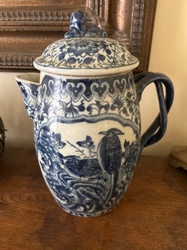
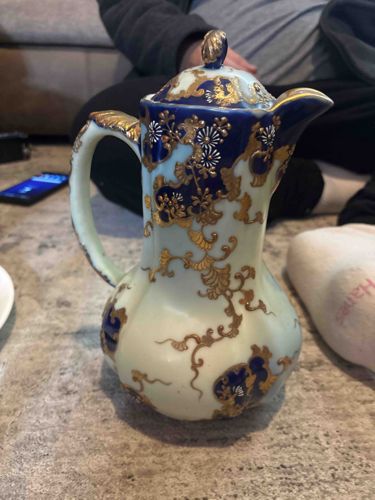
Antique Japanese Ryosai Sumida Gaware or Satsuma Style Chocolate Pot

Antique Ceramics / Asian Export Porcelain

AI Estimated Value

·Not an official valuation·Verify before acting

$450.00 - $650.00

As of May 25, 2026

AI Item Analysis

·AI can make mistakes·Verify before acting
This is a tall, porcelain or fine earthenware chocolate pot featuring a distinct 'Flow Blue' or cobalt glaze application with heavy moriage and gilded detailing. The vessel possesses a bulbous body that tapers into a slender neck with a flared pouring lip and a decorative, scrolled handle. The base color is a pale celadon or off-white. The decoration consists of deep cobalt blue cloud-like patches heavily accented with raised gold (moriage) enameled flowers, likely chrysanthemums, and elaborate gilded scrollwork and vine motifs trailing down the body. The lid is domed with a matching cobalt and gold shell-form finial. In terms of condition, there is visible rubbing and wear to the gold gilding on the handle and edges of the spout, consistent with age and frequent handling. There is a slight patina of dust in the recessed areas of the moriage, but no significant cracks or large chips are immediately apparent. The craftsmanship indicates a late 19th-century to early 20th-century (Meiji era or early Showa) origin, specifically designed for the Western export market as evidenced by the chocolate pot form. The intricate application of the raised gold and the depth of the cobalt blue are indicators of high-quality decorative ceramic production, common in regions like Yokohama or the Satsuma workshops.

AI Appraisal Report

·AI can make mistakes·Verify before acting
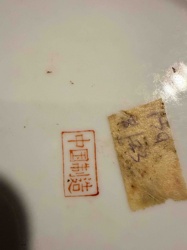
Based on my visual examination, this is a fine example of late Meiji-era (circa 1890–1910) Japanese export ware. While the form is colloquially associated with Sumida Gaware due to the thick glaze application, the technical execution—specifically the heavy raised gilding (moriage) and cobalt blue 'flow' grounds—aligns more closely with Yokohama or Satsuma 'brocade' styles produced for the Victorian tea and chocolate market. The craftsmanship on the chrysanthemum motifs is superior, showing the high-relief texture prized by Western collectors of the era. The condition appears fair to good; however, the visible rubbing on the handle and spout points to frequent historical use, which slightly suppresses the value compared to a pristine cabinet piece. The absence of a visible maker's mark (such as 'Dai Nippon' or a specific kiln seal) means value is driven primarily by aesthetic merit rather than provenance. The market for Asian export ceramics remains stable, though buyers currently favor earlier 18th-century pieces or signed Meiji masterworks. As this is a digital appraisal, I must note that authenticity cannot be 100% verified without physical inspection. A hands-on examination is required to check for 'ringing' (to detect hairline cracks), UV-light testing for professional restorations to the spout or finial, and tactile verification of the moriage to ensure it is period-correct enamel rather than modern cold-paint. Verification of a base mark would also be necessary to solidify a more aggressive valuation.

Get your items appraised

Instant estimates of your treasures with AI-powered appraisals

Browse More Appraisals