Prehistoric Biface Pear-Shaped Hand Axe
Archaeological Artifact / Stone Tool

Prehistoric Biface Pear-Shaped Hand Axe

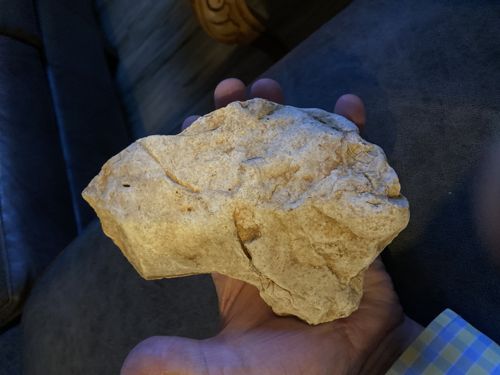
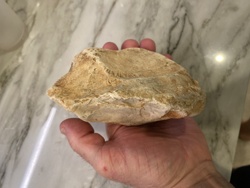
This specimen is a prehistoric stone biface hand axe, characterized by its distinctive pear-shaped or ovate geometry. Measuring approximately 7 inches by 4.5 inches, the artifact is crafted from a light tan to buff-colored lithic material, appearing to be a high-quality chert, flint, or similar sedimentary silicate common to the Oklahoma region. The construction displays clear evidence of intentional percussion flaking on both primary faces (bifacial), resulting in a tapered tip and a thicker, rounded base designed to fit comfortably in the human palm. The surface exhibits a heavy desert varnish or mineralized patina consistent with prolonged environmental exposure and significant age. Notable features include multiple flake scars and hinge fractures along the working edges, though the edges show rounding and smoothing from post-depositional weathering or potentially river-wear. There are visible stress fractures and inclusions within the stone, along with some modern surface scuffing perhaps related to its recovery in Guthrie, OK. The craftsmanship is utilitarian yet sophisticated, showing a deliberate reduction strategy to create a multi-purpose cutting and scraping tool. While it lacks formal maker's marks, the technology is representative of early indigenous lithic industries, potentially dating back several thousand years depending on the specific cultural complex of the region.
Estimated Value

$450 - $700

Basic Information

Category

Archaeological Artifact / Stone Tool

Appraised On

February 18, 2026

Estimated Value

$450 - $700

Additional Details Provided By Owner

User Provided Information

Prospect Prehistoric stone Bi face pear shaped hand axe found in Guthrie OK measuring 7" x 4.5"

Item Description

This specimen is a prehistoric stone biface hand axe, characterized by its distinctive pear-shaped or ovate geometry. Measuring approximately 7 inches by 4.5 inches, the artifact is crafted from a light tan to buff-colored lithic material, appearing to be a high-quality chert, flint, or similar sedimentary silicate common to the Oklahoma region. The construction displays clear evidence of intentional percussion flaking on both primary faces (bifacial), resulting in a tapered tip and a thicker, rounded base designed to fit comfortably in the human palm. The surface exhibits a heavy desert varnish or mineralized patina consistent with prolonged environmental exposure and significant age. Notable features include multiple flake scars and hinge fractures along the working edges, though the edges show rounding and smoothing from post-depositional weathering or potentially river-wear. There are visible stress fractures and inclusions within the stone, along with some modern surface scuffing perhaps related to its recovery in Guthrie, OK. The craftsmanship is utilitarian yet sophisticated, showing a deliberate reduction strategy to create a multi-purpose cutting and scraping tool. While it lacks formal maker's marks, the technology is representative of early indigenous lithic industries, potentially dating back several thousand years depending on the specific cultural complex of the region.
Get Your Items Appraised

Instant estimates of your treasures with AI-powered instant appraisals

Browse More Appraisals