Megalodon Shark Tooth Fossil
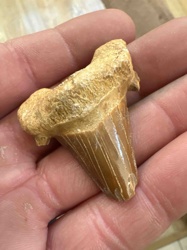
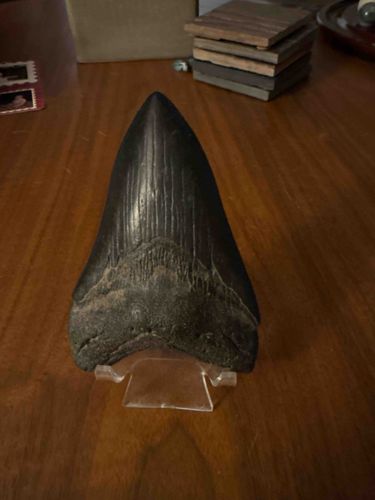
This is a fossilized tooth from the Otodus megalodon, an extinct species of megatooth shark that lived approximately 23 to 3.6 million years ago during the Miocene and Pliocene epochs. The specimen exhibits a deep charcoal to black coloration, which indicates it was likely mineralized in a phosphate-rich sediment environment, a common occurrence for fossils found in regions like the southeastern United States. The tooth is large and triangular with a prominent, robust root and a well-defined chevron (the V-shaped area between the root and the blade). The enameloid surface of the blade shows characteristic vertical striations and retains much of its original structure, though the serrations along the cutting edges appear somewhat worn or weathered from natural processes. The root is dense and shows typical porous texture with some minor abrasions and surface loss on the lower lobes. There are no signs of modern restoration or artificial polishing visible in the image, suggesting a raw, authentic state. The tooth is presented on a clear acrylic display stand, highlighting its significant size and historical value as a apex predator relic.
AI-Generated Appraisal Disclaimer
Estimated Value
$450 - $600
Basic Information
Category
Fossils & Paleontology
Appraised On
December 18, 2025
Estimated Value
$450 - $600
Item Description
This is a fossilized tooth from the Otodus megalodon, an extinct species of megatooth shark that lived approximately 23 to 3.6 million years ago during the Miocene and Pliocene epochs. The specimen exhibits a deep charcoal to black coloration, which indicates it was likely mineralized in a phosphate-rich sediment environment, a common occurrence for fossils found in regions like the southeastern United States. The tooth is large and triangular with a prominent, robust root and a well-defined chevron (the V-shaped area between the root and the blade). The enameloid surface of the blade shows characteristic vertical striations and retains much of its original structure, though the serrations along the cutting edges appear somewhat worn or weathered from natural processes. The root is dense and shows typical porous texture with some minor abrasions and surface loss on the lower lobes. There are no signs of modern restoration or artificial polishing visible in the image, suggesting a raw, authentic state. The tooth is presented on a clear acrylic display stand, highlighting its significant size and historical value as a apex predator relic.
Related Tags
Get Your Items Appraised
Instant estimates of your treasures with AI-powered instant appraisals