AI estimate as of October 8, 2025 · verify with a professional before acting
AI-Generated · Verify before acting
Everything on this page is generated by AI for informational purposes only. AI can make mistakes — the AI may misidentify items or misattribute them (artist, maker, brand, designer, origin, era). This is not an official valuation and should not be used for insurance, sale, tax, estate, legal, or lending purposes — or any decision requiring a certified appraisal. It is not an authoritative claim about any person, brand, or rights holder — do not share or rely on it as a factual statement about a third party. Always consult qualified professionals before making financial decisions.
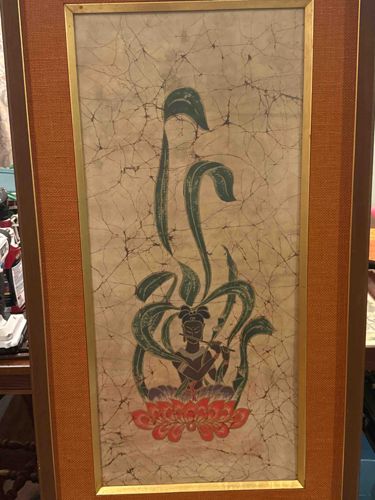
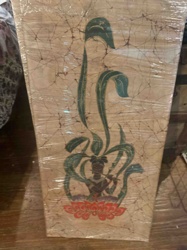
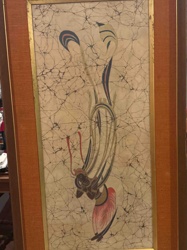
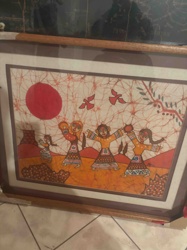
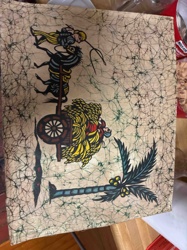
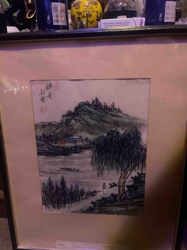
This item is a framed piece of batik art depicting what appears to be the Hindu deity Krishna, seated in a meditative or relaxed posture, playing a flute. The central figure is rendered in dark brown and black tones, with details highlighted in lighter shades. The figure is seated upon a prominent red and orange lotus flower, indicative of purity and spiritual awakening in many Eastern traditions. Surrounding the figure and extending upwards are stylized green, leaf-like or flame-like elements, creating an ethereal aura or flowing garments/hair. The background of the batik features the characteristic delicate crackle pattern, a hallmark of the wax-resist dyeing technique, on a light beige or cream-colored fabric base. This crackle effect is a natural result of the wax cracking during dyeing, allowing dye to seep into the fine lines. The artwork is housed in a rectangular wooden frame with a warm, reddish-brown tone, possibly cherry or similar wood. Inside the outer frame, there's a shimmering gold-colored metallic or brass-toned inner border, providing a contrast and highlighting the artwork. The overall frame construction appears sturdy, and the artwork is presented vertically. The fabric itself shows signs of age with the crackle pattern and slight discoloration, but no obvious tears or significant damage are visible. The craftsmanship suggests a handmade piece, typical of traditional batik art, possibly from Southeast Asia or India, likely dating from the mid to late 20th century. The colors are rich but slightly muted, consistent with natural dyes or aged fabric.
AI Appraisal Report
Based on my visual examination of the provided image, this framed batik art depicting Krishna playing the flute appears to be an authentic, handmade piece. The characteristic crackle pattern visible in the background is a strong indicator of the traditional wax-resist dyeing technique, and the slight discoloration is consistent with the aging of natural fibers and dyes. The vibrant yet somewhat muted colors, along with the detailed depiction of Krishna and the lotus, suggest a competent artisan. The overall condition appears good, with no obvious tears or significant damage, though slight fading or age-related discoloration is present.
Market conditions for traditional batik art vary, with pieces from master artisans or with significant historical provenance fetching higher prices. This piece, while aesthetically pleasing, does not immediately present specific indicators of a master's hand or unique rarity from the image alone. Comparable framed batik pieces of similar size and artistic quality, especially those depicting religious or cultural iconography, typically retail between $200 and $500. Demand for such pieces is steady among collectors of ethnic art and religious iconography.
Factors impacting value include the skillful execution, the appealing subject matter, and the generally good condition. The sturdy wooden frame and gold-toned inner border enhance its display value. However, without in-person examination, I cannot definitively ascertain the specific type of fabric or dyes used, which could marginally affect value. Full authentication and a more precise valuation would benefit greatly from an in-person inspection to assess fabric quality, dye permanence, and the exact age more accurately. Additionally, provenance documentation (e.g., origin, artist, date of creation) would significantly enhance its value by establishing its history and potential rarity.