Paleo-Indian Flint Scraper Flake Tool
Archaeological Artifacts / Native American Prehistoric Tools

Paleo-Indian Flint Scraper Flake Tool

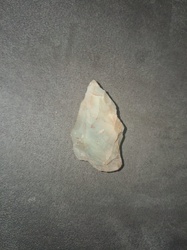
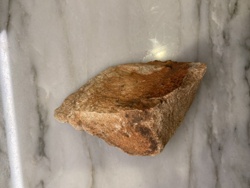
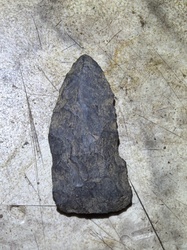
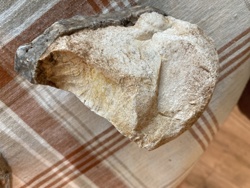
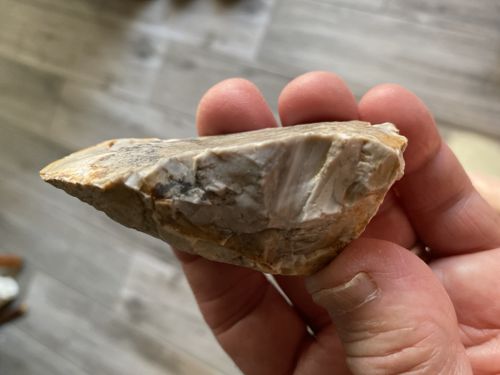
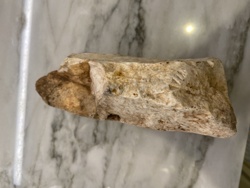
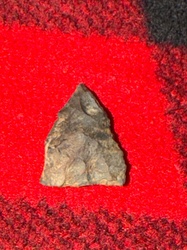
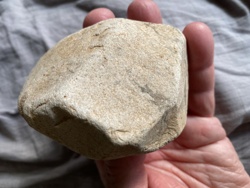
This artifact is a Paleo-Indian flint scraper or hand tool, measuring approximately 3 inches in length by 1.25 inches in width. It is expertly knapped from a high-quality lithic material, appearing to be a mottled chert or flint with variegated tones of earthy tan, cream, and grey. The item exhibits classic unifacial flaking along the working edge, a diagnostic feature of scraper tools used for processing hides or wood. The dorsal surface shows distinct bulbs of percussion and ripple marks consistent with intentional percussion flaking. Its profile reveals a steep, retouching edge designed for durability and grip during manual tasks. The patina suggests significant age, with softened edges and mineral staining consistent with long-term burial in the Oklahoma soil where it was recovered near Guthrie. There are no modern fracture marks, indicating the tool has remained largely intact since its original discard. The craftsmanship reflects the sophisticated stone-working techniques of early North American indigenous cultures, likely dating to the Paleo-Indian or Early Archaic period. The tool retains a robust form and efficient ergonomic shape, fitting naturally within the hand for heavy-duty scraping operations.
Estimated Value

$45.00 - $75.00

Basic Information

Category

Archaeological Artifacts / Native American Prehistoric Tools

Appraised On

February 20, 2026

Estimated Value

$45.00 - $75.00

Additional Details Provided By Owner

User Provided Information

Paleo Indian flint scraper hand axe flake tool found in Guthrie OK 3" x 1.25

Item Description

This artifact is a Paleo-Indian flint scraper or hand tool, measuring approximately 3 inches in length by 1.25 inches in width. It is expertly knapped from a high-quality lithic material, appearing to be a mottled chert or flint with variegated tones of earthy tan, cream, and grey. The item exhibits classic unifacial flaking along the working edge, a diagnostic feature of scraper tools used for processing hides or wood. The dorsal surface shows distinct bulbs of percussion and ripple marks consistent with intentional percussion flaking. Its profile reveals a steep, retouching edge designed for durability and grip during manual tasks. The patina suggests significant age, with softened edges and mineral staining consistent with long-term burial in the Oklahoma soil where it was recovered near Guthrie. There are no modern fracture marks, indicating the tool has remained largely intact since its original discard. The craftsmanship reflects the sophisticated stone-working techniques of early North American indigenous cultures, likely dating to the Paleo-Indian or Early Archaic period. The tool retains a robust form and efficient ergonomic shape, fitting naturally within the hand for heavy-duty scraping operations.
Get Your Items Appraised

Instant estimates of your treasures with AI-powered instant appraisals

Browse More Appraisals