AI Appraisal Estimate

AI-generated estimates · not official valuations

From the user

What was submitted

Photo and notes provided by the user — not generated by AI

Submitted item photo
Submitted photo · May 23, 2026

User's notes

No additional notes provided.

AI analysis below

AI appraisal

AI analysis & estimate

AI-Generated · Verify before acting

Everything below is generated by AI for informational purposes only. AI can make mistakes — the AI may misidentify items or misattribute them (artist, maker, brand, designer, origin, era). This is not an official valuation and should not be used for insurance, sale, tax, estate, legal, or lending purposes — or any decision requiring a certified appraisal. It is not an authoritative claim about any person, brand, or rights holder — do not share or rely on it as a factual statement about a third party. Always consult qualified professionals before making financial decisions.

Read the full disclaimer

AI Identification

·Not independently authenticated·Verify before acting

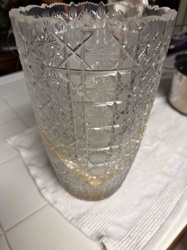
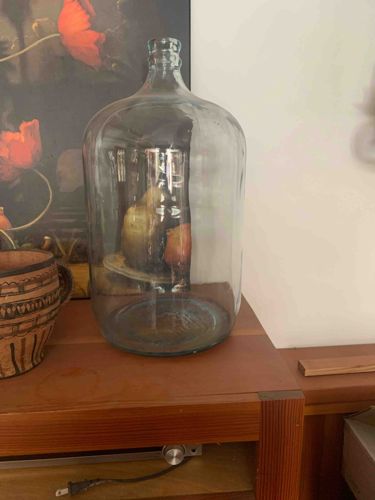
Vintage Clear Glass Demijohn Carboy

Antique and Vintage Glassware

AI Estimated Value

·Not an official valuation·Verify before acting

$40 - $80

As of May 23, 2026

AI Item Analysis

·AI can make mistakes·Verify before acting
This is a large-scale vintage glass demijohn, also known as a carboy, typically used for the fermentation or storage of wine, cider, or spirits. The vessel is constructed from thick, transparent glass with a slight bluish-grey or 'aquamarine' tint, which is characteristic of mid-20th-century industrial glass production. It features a bulbous, cylindrical body that tapers upward into sloping shoulders and terminates in a short, narrow neck with a reinforced, rounded collar rim. The construction suggests a machine-blown process rather than a hand-blown technique, as evidenced by the uniformity of the walls and the precision of the neck finish. In terms of condition, the glass appears structurally sound with no major cracks or chips visible at the base or rim, though there is a noticeable amount of internal haze and surface dust indicative of its age and previous use. Tiny air bubbles, or 'seeds', are trapped within the glass, which is common in secondary-grade industrial glassware of this period. Based on the style and typical manufacturing history of such utilitarian items, this piece likely dates from the 1940s to the 1970s. It lacks a visible maker's mark on the front, though stamps are often found on the base of such vessels. The item's scale and rustic aesthetic make it a desirable piece for both functional home brewing and decorative interior design.
AI Appraisal Report

·AI can make mistakes·Verify before acting
Based on my visual examination of this vintage glass demijohn, I date this piece to the mid-20th century, likely between 1940 and 1970. The vessel exhibits the classic aquamarine or bluish-grey tint typical of soda-lime glass used in industrial mass production during this era. The uniformity of the walls and the precise, reinforced collar rim suggest a machine-blown origin rather than earlier hand-blown techniques, which places it firmly in the vintage rather than antique category. The presence of 'seeds' (small air bubbles) within the glass is a charming characteristic of utilitarian glassware of this period but confirms it was production-grade rather than fine crystal. Condition is the primary value driver here. The glass appears structurally sound with no visible cracks or chips, which is excellent. However, the significant internal haze and residue detract from its clarity. While this can often be cleaned, etched staining (known as 'sickness') is permanent and would lower the value toward the bottom of my estimate. Without physically handling the item, I cannot determine if the haze is surface-level or permanent etching. The market for these carboys remains steady, driven largely by the farmhouse and rustic industrial interior design trends rather than collector scarcity. They are common items, readily available at estate sales and antique malls. While useful for home brewing, their primary current value is decorative. To refine this valuation, I would need to inspect the base for maker's marks (such as Owens-Illinois or simplistic volume markings) and attempt to clean a small section of the interior to verify the glass clarity.

Get your items appraised

Instant estimates of your treasures with AI-powered appraisals

Browse More Appraisals