Paleolithic Chert Hand Axe Scraper
Archaeological Artifact / Lithic Tool

Paleolithic Chert Hand Axe Scraper

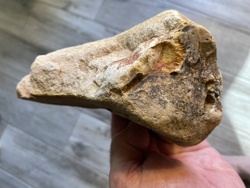
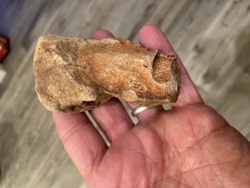
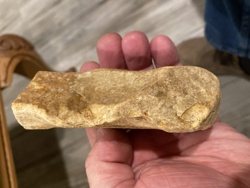
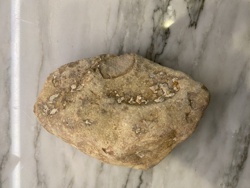
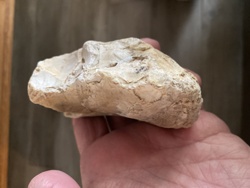
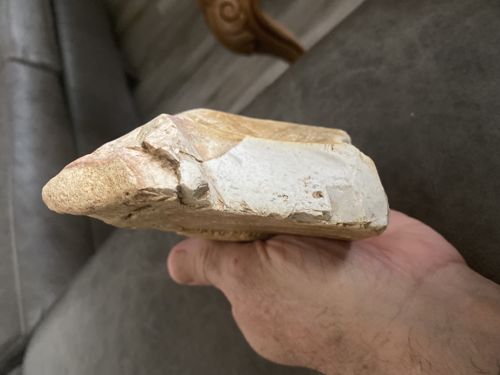
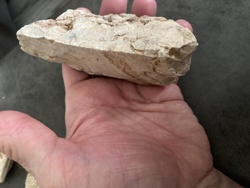
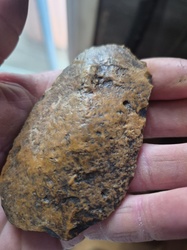
This is a prehistoric lithic tool, measuring approximately 4.5 inches by 4 inches, discovered in Guthrie, Oklahoma. The artifact is fashioned from a substantial piece of locally sourced chert, characterized by its earthy tan, buff, and off-white color palette. The physical construction shows evidence of intentional percussion flaking to create a functional, sharp-edged tool. One side features a tapered, more pointed working end, while the body remains thick enough to be comfortably gripped in the palm, suggesting it functioned as a multi-use hand axe or heavy-duty scraper. The surface exhibits a prominent patina and significant weathering, consistent with long-term environmental exposure. Notable features include several distinct flake scars where material was removed to refine the edge and shape the profile. In terms of condition, the piece shows naturally softened edges due to geological aging (water or wind erosion) and some minor modern-era pitting, but remains structurally intact without major fractures. The craftsmanship indicates a utilitarian focus, typical of the Paleolithic or Early Archaic periods. The lack of a prepared hafting area confirms its primary use as a handheld instrument. The material's microcrystalline structure provided the necessary hardness for butchering, skinning, or woodworking tasks required by early inhabitants of the Great Plains region.
Estimated Value

$75.00 - $125.00

Basic Information

Category

Archaeological Artifact / Lithic Tool

Appraised On

February 19, 2026

Estimated Value

$75.00 - $125.00

Additional Details Provided By Owner

User Provided Information

Paleolithic chert hand axe scraper tool found in Guthrie OK measuring 4.5" x 4"

Item Description

This is a prehistoric lithic tool, measuring approximately 4.5 inches by 4 inches, discovered in Guthrie, Oklahoma. The artifact is fashioned from a substantial piece of locally sourced chert, characterized by its earthy tan, buff, and off-white color palette. The physical construction shows evidence of intentional percussion flaking to create a functional, sharp-edged tool. One side features a tapered, more pointed working end, while the body remains thick enough to be comfortably gripped in the palm, suggesting it functioned as a multi-use hand axe or heavy-duty scraper. The surface exhibits a prominent patina and significant weathering, consistent with long-term environmental exposure. Notable features include several distinct flake scars where material was removed to refine the edge and shape the profile. In terms of condition, the piece shows naturally softened edges due to geological aging (water or wind erosion) and some minor modern-era pitting, but remains structurally intact without major fractures. The craftsmanship indicates a utilitarian focus, typical of the Paleolithic or Early Archaic periods. The lack of a prepared hafting area confirms its primary use as a handheld instrument. The material's microcrystalline structure provided the necessary hardness for butchering, skinning, or woodworking tasks required by early inhabitants of the Great Plains region.
Get Your Items Appraised

Instant estimates of your treasures with AI-powered instant appraisals

Browse More Appraisals