Scoliid Wasp (Megascolia maculata)
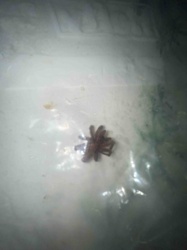
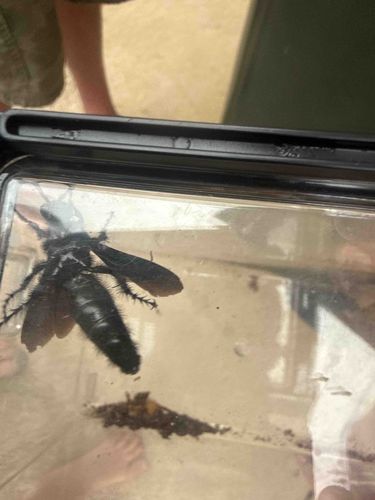
This specimen is a large member of the Scoliidae family, specifically resembling the Megascolia maculata, commonly known as the Mammoth Wasp. The insect is characterized by its substantial size, appearing to be approximately 4-5 centimeters in length. Its body is primarily a deep, jet black with a robust, hairy exoskeleton. The abdomen is elongated and segmented, showing a slight iridescent sheen Typical of the species. Its wings are dark and smoky, exhibiting a leathery texture with visible venation. The legs are notably spiny, adapted for digging in soil to find beetle larvae. This biological specimen is currently housed behind a clear, hard plastic or acrylic barrier, which appears to be part of a viewing container or habitat. The container has a black frame at the top. Condition-wise, the specimen appears intact and alive, showing no signs of anatomical damage. There is some organic debris, possibly soil or waste, visible at the bottom of the enclosure. The quality of the specimen is high, with all appendages, including the antennae and delicate wing tips, appearing undamaged and fully formed. This is a naturally occurring biological entity and not a manufactured item, though its presence in the container suggests it is being used for education or observation.
AI-Generated Appraisal Disclaimer
Estimated Value
$45.00 - $85.00
Basic Information
Category
Entomological Specimen
Appraised On
February 11, 2026
Estimated Value
$45.00 - $85.00
Item Description
This specimen is a large member of the Scoliidae family, specifically resembling the Megascolia maculata, commonly known as the Mammoth Wasp. The insect is characterized by its substantial size, appearing to be approximately 4-5 centimeters in length. Its body is primarily a deep, jet black with a robust, hairy exoskeleton. The abdomen is elongated and segmented, showing a slight iridescent sheen Typical of the species. Its wings are dark and smoky, exhibiting a leathery texture with visible venation. The legs are notably spiny, adapted for digging in soil to find beetle larvae. This biological specimen is currently housed behind a clear, hard plastic or acrylic barrier, which appears to be part of a viewing container or habitat. The container has a black frame at the top. Condition-wise, the specimen appears intact and alive, showing no signs of anatomical damage. There is some organic debris, possibly soil or waste, visible at the bottom of the enclosure. The quality of the specimen is high, with all appendages, including the antennae and delicate wing tips, appearing undamaged and fully formed. This is a naturally occurring biological entity and not a manufactured item, though its presence in the container suggests it is being used for education or observation.
Get Your Items Appraised
Instant estimates of your treasures with AI-powered instant appraisals