Middle Paleolithic Mousterian Scraper Multi-tool
Archaeological Artifacts / Lithic Tools

Middle Paleolithic Mousterian Scraper Multi-tool

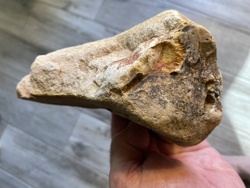
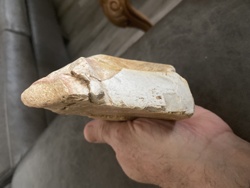
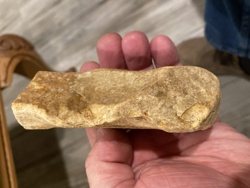
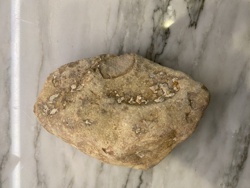
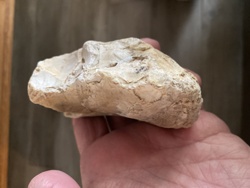
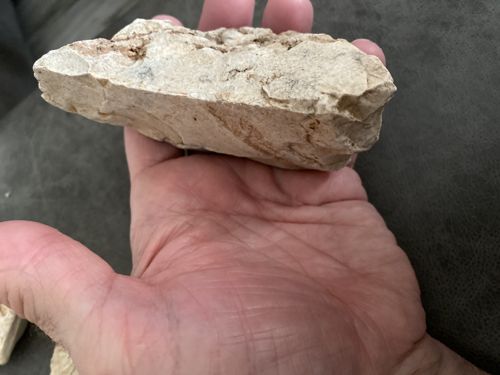
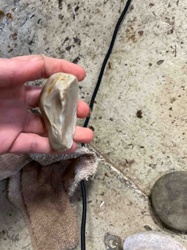
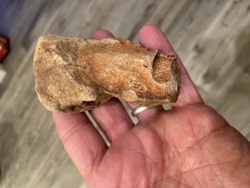
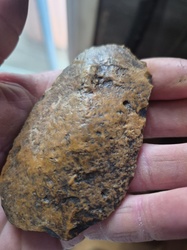
This artifact is a prehistoric stone tool measuring approximately 4 inches in length by 2 inches in width, exhibiting characteristics consistent with the Middle Paleolithic Mousterian lithic industrial complex. The item is crafted from a light tan to beige chert or flint material, showing a matte, untreated surface texture likely resulting from long-term environmental exposure. Physically, the tool features a thick, robust cross-section with a relatively flat ventral face and a more irregular, flaked dorsal surface. One edge displays intentional unifacial retouching, creating a steep, durable working edge suitable for scraping hides or woodworking. The opposite edge appears thicker, serving as a 'backed' surface to allow for safe handheld use without injury to the user. Notable features include small concavities along the margin which may have served as notches for organic material processing. The condition shows significant ancient patina and mineralization, with no signs of recent modern breakage. The craftsmanship represents a transition in early human technology, focusing on flakes specialized for multi-functional utility. There are no maker's marks, as is standard for tools of this antiquity, which generally dates between 160,000 to 40,000 years ago. Its provenance in Guthrie, Oklahoma, suggests it is an American find that mimics the European Mousterian typology often utilized in comparative lithic analysis.
Estimated Value

$150 - $300

Basic Information

Category

Archaeological Artifacts / Lithic Tools

Appraised On

February 20, 2026

Estimated Value

$150 - $300

Additional Details Provided By Owner

User Provided Information

Middle Paleolithic Mousterian scraper multi tool found in Guthrie OK measuring 4" x 2"

Item Description

This artifact is a prehistoric stone tool measuring approximately 4 inches in length by 2 inches in width, exhibiting characteristics consistent with the Middle Paleolithic Mousterian lithic industrial complex. The item is crafted from a light tan to beige chert or flint material, showing a matte, untreated surface texture likely resulting from long-term environmental exposure. Physically, the tool features a thick, robust cross-section with a relatively flat ventral face and a more irregular, flaked dorsal surface. One edge displays intentional unifacial retouching, creating a steep, durable working edge suitable for scraping hides or woodworking. The opposite edge appears thicker, serving as a 'backed' surface to allow for safe handheld use without injury to the user. Notable features include small concavities along the margin which may have served as notches for organic material processing. The condition shows significant ancient patina and mineralization, with no signs of recent modern breakage. The craftsmanship represents a transition in early human technology, focusing on flakes specialized for multi-functional utility. There are no maker's marks, as is standard for tools of this antiquity, which generally dates between 160,000 to 40,000 years ago. Its provenance in Guthrie, Oklahoma, suggests it is an American find that mimics the European Mousterian typology often utilized in comparative lithic analysis.
Get Your Items Appraised

Instant estimates of your treasures with AI-powered instant appraisals

Browse More Appraisals