AI Appraisal Estimate

AI-generated estimates · not official valuations

From the user

What was submitted

Photo and notes provided by the user — not generated by AI

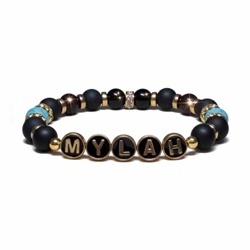
Submitted item photo
Submitted photo · June 30, 2026

User's notes

No additional notes provided.

AI analysis below

AI appraisal

AI analysis & estimate

AI-Generated · Verify before acting

Everything below is generated by AI for informational purposes only. AI can make mistakes — the AI may misidentify items or misattribute them (artist, maker, brand, designer, origin, era). This is not an official valuation and should not be used for insurance, sale, tax, estate, legal, or lending purposes — or any decision requiring a certified appraisal. It is not an authoritative claim about any person, brand, or rights holder — do not share or rely on it as a factual statement about a third party. Always consult qualified professionals before making financial decisions.

Read the full disclaimer

AI Identification

·Not independently authenticated·Verify before acting

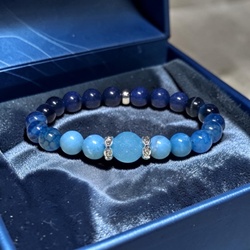
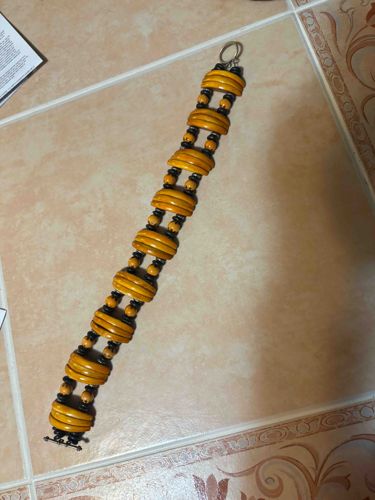
Vintage African Tagua Nut and Heishe Bead Statement Bracelet

Jewelry & Personal Accessories

AI Estimated Value

·Not an official valuation·Verify before acting

$45.00-$75.00

As of June 30, 2026

AI Item Analysis

·AI can make mistakes·Verify before acting
This is a wide, multi-strand statement bracelet featuring biological materials. The primary components are large, curved segments of vegetable ivory, likely harvested from the Tagua nut (Phytelephas macrocarpa) or similar tropical palm seeds. These segments are dyed a vibrant ochre-yellow or mustard hue, revealing a natural, fine-grained texture similar to animal ivory. There are approximately nine of these large yellow stations, each composed of three parallel curved bars. These stations are interconnected by two parallel cord lines strung with small black heishe or coconut shell spacers and round wooden or seed beads. The construction utilizes a ladder-style architecture, giving it a flat, cuff-like appearance. At one terminal end, there is a simple metal ring clasp, while the opposite end features a toggle-style bar for closure. The item is likely of late 20th-century origin, potentially 1970s-1990s, and is representative of artisanal or ethno-centric jewelry popular during the folk-revival movements. Condition-wise, the piece appears well-preserved with no visible chips to the organic segments, though there is minor surface wear consistent with age and light use. The dye appears consistent across all segments, and the structural integrity of the cordage seems intact.
AI Appraisal Report

·AI can make mistakes·Verify before acting
Based on my visual examination of this multi-strand ladder-style bracelet, I have identified the primary material as vegetable ivory, derived from the Tagua nut. The honey-yellow dye application is consistent with 1970s and 80s artisanal production, likely originating from an African or South American workshop catering to the global folk-revival market. The 'heishe' spacers appear to be fashioned from coconut shell, and the structural integrity of the cordage remains surprisingly robust for its age. The condition is excellent; the absence of cracks or 'veining' in the tagua segments suggests it was stored in a stable environment, as organic seeds are prone to desiccation. In the current secondary market, there is a steady demand for 'Eco-Ivory' and sustainable vintage jewelry. However, because these pieces were mass-produced for the export trade, they lack the rarity associated with high-end designer costume jewelry or unique indigenous artifacts. Comparables typically sell within the $40 to $80 range on platforms like Etsy or specialized vintage boutiques. Limitations: This appraisal is based on photographic evidence. A physical inspection is necessary to verify the material density and rule out synthetic polymers (plastics) through a thermal test or microscopic grain analysis. Furthermore, I cannot definitively confirm if the cordage has dry rot without tactile tension testing. Provenance documentation regarding the specific regional origin would be required to elevate the valuation into a 'collectible artifact' category.

Get your items appraised

Instant estimates of your treasures with AI-powered appraisals

Browse More Appraisals