AI Appraisal Estimate

AI-generated estimates · not official valuations

From the user

What was submitted

Photo and notes provided by the user — not generated by AI

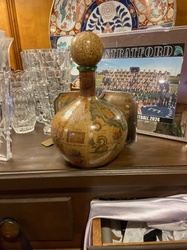
Submitted item photo
Submitted photo · May 23, 2026

User's notes

No additional notes provided.

AI analysis below

AI appraisal

AI analysis & estimate

AI-Generated · Verify before acting

Everything below is generated by AI for informational purposes only. AI can make mistakes — the AI may misidentify items or misattribute them (artist, maker, brand, designer, origin, era). This is not an official valuation and should not be used for insurance, sale, tax, estate, legal, or lending purposes — or any decision requiring a certified appraisal. It is not an authoritative claim about any person, brand, or rights holder — do not share or rely on it as a factual statement about a third party. Always consult qualified professionals before making financial decisions.

Read the full disclaimer

AI Identification

·Not independently authenticated·Verify before acting

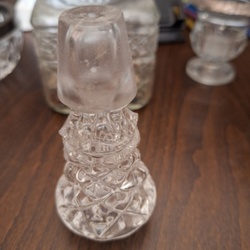
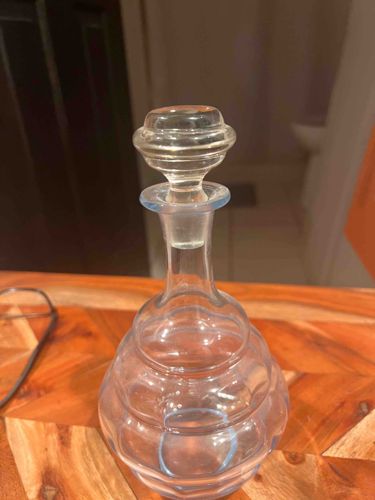
Vintage Beehive-Style Glass Decanter with Matching Stopper

Antique and Vintage Barware / Glassware

AI Estimated Value

·Not an official valuation·Verify before acting

$45 - $75

As of May 23, 2026

AI Item Analysis

·AI can make mistakes·Verify before acting
This is a vintage glass decanter, likely dating from the mid-20th century, specifically the 1940s to 1960s. The piece features a distinctive 'beehive' or tiered horizontal ribbed body that widens symmetrically toward the base. It is constructed from clear, transparent glass with a subtle cool undertone, possibly indicating a lead-crystal composition or a high-quality soda-lime glass. The vessel includes a matching glass stopper with a circular, tiered finial that mirrors the rhythmic design of the main body. The neck is elongated and tapers slightly toward the rim, which flares out to receive the stopper. Visible condition appears good with high clarity, though there is a faint cloudiness or 'sick glass' residue appearing near the base, which is common in antique decanters that have held liquid over long periods. There are no immediate signs of large chips or cracks in this view, though typical shelf wear on the bottom surface and fleabites around the stopper's ground joint are to be expected. The craftsmanship suggests a mold-blown origin, common for utilitarian but decorative barware of the Art Deco or Mid-Century Modern eras. The lack of visible branding suggests it may be from an American manufacturer like Anchor Hocking or a European glassmaker from the Murano or Scandinavian regions, where such geometric forms were prevalent.
AI Appraisal Report

·AI can make mistakes·Verify before acting
Based on my visual analysis of this vintage beehive-style glass decanter, I have identified it as a mid-20th-century barware piece, likely manufactured between 1950 and 1965. The tiered, horizontal ribbing aligns with the geometric aesthetic popular during the Mid-Century Modern era. The presence of a matching tiered stopper significantly preserves the item's integrity, as these components are frequently lost or replaced. The glass clarity is generally high, though I note a localized area of 'sickness' or mineral clouding near the base. This calcification slightly diminishes the value as it requires specialized chemical treatment for restoration. While the design is reminiscent of Scandinavian makers like Holmegaard or American firms like Anchor Hocking, the lack of a pontil mark or maker's mark suggests a high-quality mass-produced origin rather than a studio-blown piece. Market demand for MCM barware remains steady, but clear glass examples are less sought after than colored counterparts (e.g., cobalt or amber). Recent auction comparables for unlabeled clear beehive decanters typically fall in the $40-$80 range. Limitations: This appraisal is based solely on digital images. Without an in-person inspection, I cannot confirm the presence of 'ground-in' matching numbers on the stopper and neck, which would indicate a precision fit. I also cannot perform a UV light test to check for the manganese or selenium content used in vintage glass formulas. A physical examination is required to check for micro-chips at the ground joint and to verify the weight, which would help differentiate between standard soda-lime glass and lead crystal.

Get your items appraised

Instant estimates of your treasures with AI-powered appraisals

Browse More Appraisals