AI Appraisal Estimate

AI-generated estimates · not official valuations

From the user

What was submitted

Photo and notes provided by the user — not generated by AI

Submitted item photo
Submitted photo · May 27, 2026

User's notes

No additional notes provided.

AI analysis below

AI appraisal

AI analysis & estimate

AI-Generated · Verify before acting

Everything below is generated by AI for informational purposes only. AI can make mistakes — the AI may misidentify items or misattribute them (artist, maker, brand, designer, origin, era). This is not an official valuation and should not be used for insurance, sale, tax, estate, legal, or lending purposes — or any decision requiring a certified appraisal. It is not an authoritative claim about any person, brand, or rights holder — do not share or rely on it as a factual statement about a third party. Always consult qualified professionals before making financial decisions.

Read the full disclaimer

AI Identification

·Not independently authenticated·Verify before acting

Cut Glass Stemware Goblets

Drinkware / Stemware

AI Estimated Value

·Not an official valuation·Verify before acting

$5 - $15 per stem

As of May 27, 2026

AI Item Analysis

·AI can make mistakes·Verify before acting
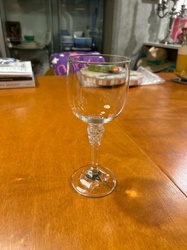
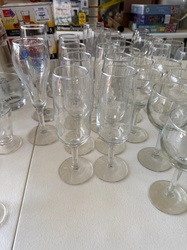
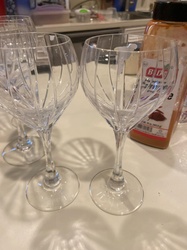
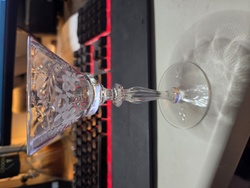
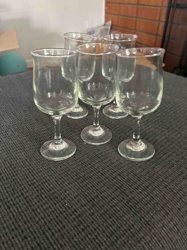
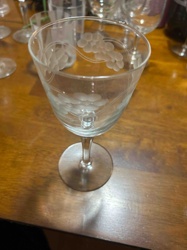
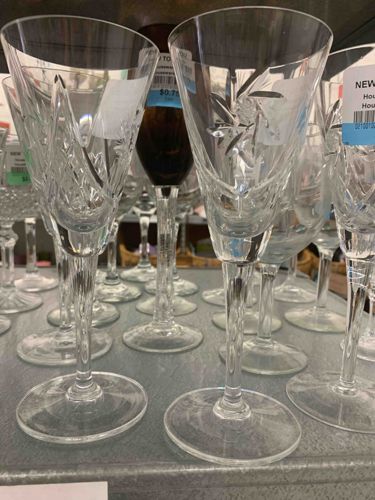
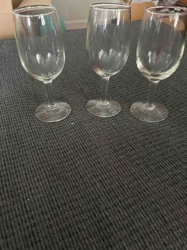
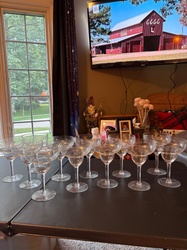
The items are a collection of clear glass stemware, specifically wine or water goblets, with intricate cut or etched patterns. Each goblet features a bowl, a stem, and a circular foot. The bowls are relatively deep and have a slightly tapered shape, flaring out towards the rim. The glass appears to be lead crystal or a high-quality glass, indicated by the brilliance and the way light refracts through the faceted cuts. The most prominent feature is the decorative cutting on the bowls. The goblet on the left exhibits a series of deep, angular cuts creating a prismatic effect, likely in a diamond or starburst pattern. The goblet on the right, while similar in form, displays a more etched or lighter cut floral or star pattern, possibly a variation of a starburst or a stylized flower with radiating rays. The stems on both glasses are slender and clear, connecting the bowl to the foot. The circular feet are plain and clear, providing stability. There are no visible chips or cracks, suggesting good overall condition. However, some minor surface wear or dust might be present due to their display environment (likely a retail shelf). No clear manufacturer's marks or signatures are discernible from the image, but the quality of the cutting suggests a production period likely from the mid-20th century to late 20th century, a common era for such detailed glassware. The precision of the cuts and the clarity of the glass indicate a good level of craftsmanship. The varied patterns suggest they might be from different sets or a collection of mixed patterns, common in thrift or antique stores. Visible pricing labels on some items indicate they are likely second-hand.
AI Appraisal Report

·AI can make mistakes·Verify before acting
Upon visual examination of the images provided, I have assessed this collection of cut glass stemware goblets. The items appear to be well-crafted, likely from the mid to late 20th century, a prolific era for quality crystal glassware. The condition seems good, with no visible chips or cracks. The goblets feature intricate patterns, with the one on the left displaying a deep diamond cut and the one on the right a lighter, etched starburst or floral motif. This variation suggests the pieces may be from different sets or manufacturers. The market for secondhand cut glass stemware is generally modest unless the pieces can be attributed to a high-end maker like Baccarat, Waterford, or Steuben. Without manufacturer's marks, which are not visible in the images, these goblets are valued as decorative glassware. Current market comparables for unmarked, good-quality cut crystal goblets place them in the range of $5 to $15 per stem in secondary retail or online marketplace settings. Demand is steady but not high, as modern tastes often favor simpler designs. The primary factor limiting the value is the lack of a discernible maker's mark or signature. A full appraisal would require an in-person examination to search for acid-etched marks on the base, which is the standard method for authenticating pieces from major manufacturers. Physical inspection would also allow for testing the lead content (a key indicator of true crystal) and confirming the absence of any subtle damage not visible in photographs. Provenance or original packaging would significantly aid in verification and could substantially increase value.

Get your items appraised

Instant estimates of your treasures with AI-powered appraisals

Browse More Appraisals