Hand-Painted Terracotta Vase Featuring Lord Krishna
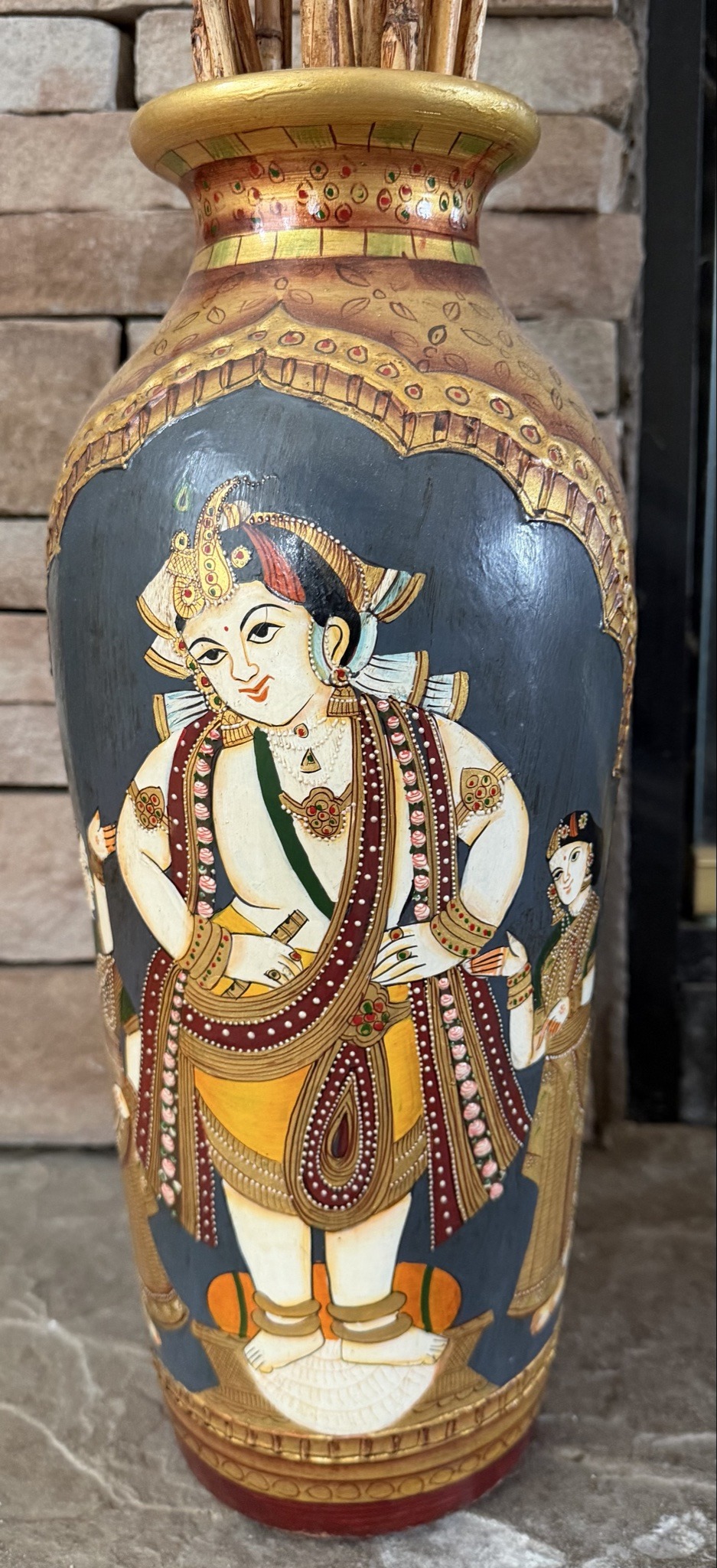
This is a decorative, tall-form terracotta or earthenware vase featuring a central hand-painted illustration of the Hindu deity Lord Krishna, likely in the Krishna-Vilas or Shrinathji style. The vase is constructed from fired clay, finished with a matte charcoal-grey background that makes the figure pop. The primary figure is depicted with traditional iconography, including an ornate crown, a flute (bansuri) tucked into his waistband, and elaborate jewelry depicted with raised white and gold beadwork (pointillism technique). To his side, a smaller gopi (female devotee) is visible. The color palette consists of rich reds, yellows, and metallic gold accents. The neck and rim are highlighted with a heavy gold-toned finish and geometric patterns including red circular motifs. The construction shows signs of handcrafted quality, particularly in the tactile, raised paint used for the jewelry and garment borders. In terms of condition, there is visible chipping and wear on the gold-painted rim and base, and some surface scratches are present on the black-painted field. The style suggests a late 20th-century or early 21st-century origin, likely produced in an artisanal workshop in North India (such as Rajasthan or Gujarat). The craftsmanship is of high decorative quality, utilizing both flat painting and embossed textural elements.
AI-Generated Appraisal Disclaimer
Estimated Value
$50 - $100
Basic Information
Category
Decorative Arts / Asian Ceramics
Appraised On
April 27, 2026
Estimated Value
$50 - $100
Item Description
This is a decorative, tall-form terracotta or earthenware vase featuring a central hand-painted illustration of the Hindu deity Lord Krishna, likely in the Krishna-Vilas or Shrinathji style. The vase is constructed from fired clay, finished with a matte charcoal-grey background that makes the figure pop. The primary figure is depicted with traditional iconography, including an ornate crown, a flute (bansuri) tucked into his waistband, and elaborate jewelry depicted with raised white and gold beadwork (pointillism technique). To his side, a smaller gopi (female devotee) is visible. The color palette consists of rich reds, yellows, and metallic gold accents. The neck and rim are highlighted with a heavy gold-toned finish and geometric patterns including red circular motifs. The construction shows signs of handcrafted quality, particularly in the tactile, raised paint used for the jewelry and garment borders. In terms of condition, there is visible chipping and wear on the gold-painted rim and base, and some surface scratches are present on the black-painted field. The style suggests a late 20th-century or early 21st-century origin, likely produced in an artisanal workshop in North India (such as Rajasthan or Gujarat). The craftsmanship is of high decorative quality, utilizing both flat painting and embossed textural elements.
Get Your Items Appraised
Instant estimates of your treasures with AI-powered instant appraisals