AI Appraisal Estimate

AI-generated estimates · not official valuations

From the user

What was submitted

Photo and notes provided by the user — not generated by AI

Submitted item photo
Submitted photo · June 13, 2026

User's notes

Johnson Bros Made in England

AI analysis below

AI appraisal

AI analysis & estimate

AI-Generated · Verify before acting

Everything below is generated by AI for informational purposes only. AI can make mistakes — the AI may misidentify items or misattribute them (artist, maker, brand, designer, origin, era). This is not an official valuation and should not be used for insurance, sale, tax, estate, legal, or lending purposes — or any decision requiring a certified appraisal. It is not an authoritative claim about any person, brand, or rights holder — do not share or rely on it as a factual statement about a third party. Always consult qualified professionals before making financial decisions.

Note

This analysis also relies on unverified notes provided by the user, which may be incomplete or inaccurate and could affect the result.

Read the full disclaimer

AI Identification

·Not independently authenticated·Verify before acting

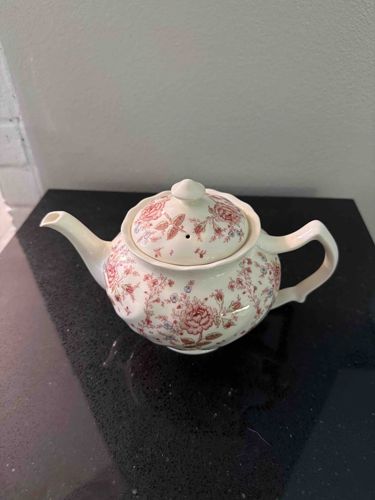
Johnson Brothers Rose Chintz Teapot

Antique/Vintage Dining & Entertaining

AI Estimated Value

·Not an official valuation·Verify before acting

$45.00 - $65.00

As of June 13, 2026

AI Item Analysis

·AI can make mistakes·Verify before acting
This is a vintage earthenware teapot manufactured by Johnson Brothers in England, featuring the iconic 'Rose Chintz' pattern. The piece is characterized by a cream-colored body adorned with a pink/red floral transferware design depicting clusters of roses and delicate foliage. The teapot exhibits a classic bulbous form with a scalloped or fluted rim and a matching domed lid topped with a decorative finial. The handle is elegantly curved with a comfortable grip, while the spout is tapered for a clean pour. Based on the pattern and contextual information, this piece likely dates from the mid-20th century. The glaze appears bright and reflective, showing high-quality craftsmanship typical of Staffordshire pottery. The condition appears excellent with no visible chips, heavy crazing, or staining on the exterior surfaces. The lid fits securely and includes a steam vent hole. Though the bottom mark is not shown, it would typically include the circular 'Johnson Bros Made in England' stamp. This refined examples of English transferware is highly collectible for its timeless romantic aesthetic and durable construction.
AI Appraisal Report

·AI can make mistakes·Verify before acting
Based on my examination of the high-resolution images and descriptive data, I have assessed this Johnson Brothers 'Rose Chintz' teapot. The piece reflects the classic pink floral transferware production characteristic of the mid-20th-century Staffordshire potteries. Visually, the glaze retains its brilliance, and the earthenware body displays no evidence of the heavy crazing or tea staining common in utilitarian pieces of this age. The lid and finial appear intact, which is critical for value as these components are frequently damaged. Authenticity is supported by the reported backstamp, which aligns with Johnson Brothers' standard marking conventions from the 1930s to the 1960s. The 'Rose Chintz' pattern remains one of the most popular transferware designs globally, ensuring a stable secondary market. However, because this was a mass-produced item with a long production run, it is not considered rare. Current market demand is driven by replacement seekers and 'shabby chic' collectors. Comparables on platforms such as replacements.com or specialized auctions typically range from $40 to $80 depending on the specific age of the mark and pristine condition. My valuation reflects a retail replacement value in a boutique or vintage market setting. Please note that this appraisal is based solely on digital images. A physical inspection is required to definitively rule out professional restorations, hairline fractures hidden under the scalloped rim, or internal spout residue. Full authentication would involve microscopic glaze analysis and verification of the physical hallmark to confirm the exact decade of manufacture, as later production moved away from the original English factories.

Get your items appraised

Instant estimates of your treasures with AI-powered appraisals

Browse More Appraisals