Lower Paleolithic Biface Hand Axe Chert Tool
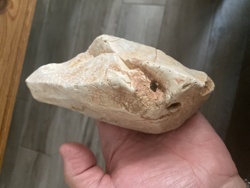
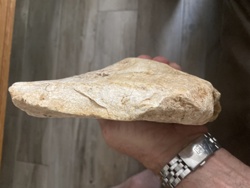
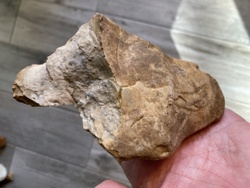
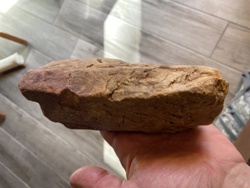
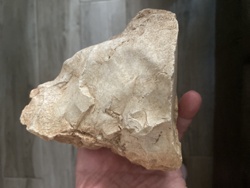
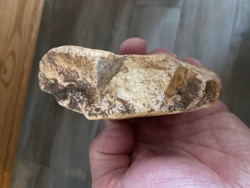
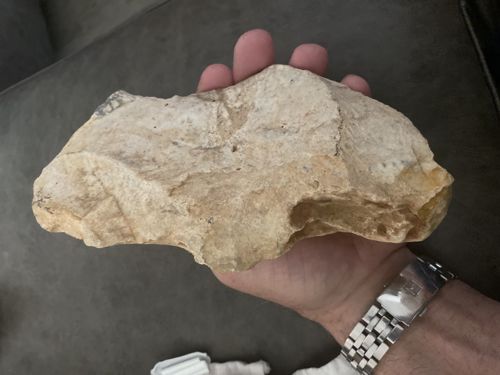
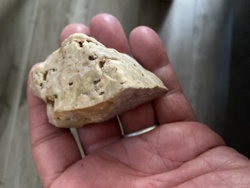
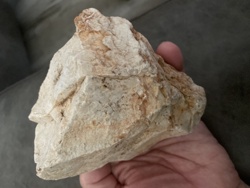
This item is a large bifacial hand axe measuring approximately 7.5 inches in length and 4 inches in width. Constructed from a light-tan to buff-colored chert, the object exhibits significant percussion flaking across its surfaces, characteristic of Lower Paleolithic lithic technology. The tool features a teardrop-shaped profile with a relatively thick, bulbous base for handheld grip and a tapered, sharper working edge. The material displays a dull luster and a heavy mineralized patina, suggesting long-term environmental exposure. There are visible step fractures and minor hinge fractures along the perimeter, indicating hard-hammer percussion techniques. Several deep indentations and intentional flake scars suggest use as a multi-purpose scraping and cutting tool. The surface shows some localized smoothing which may be attributed to either fluvial wear or extensive prehistoric handling. While the owner identifies this as 'portable rock art' or an 'effigy', the primary structural evidence points toward a functional lithic core tool. The item appears to be in its original excavated state without modern restoration, though there are minor edge nicks that may be post-depositional.
AI-Generated Appraisal Disclaimer
Estimated Value
$150 - $350
Basic Information
Category
Prehistoric Lithic Artifacts
Appraised On
February 19, 2026
Estimated Value
$150 - $350
Additional Details Provided By Owner
User Provided Information
Lower Paleolithic chert bi face hand axe scraper portable rock art effigy tool found in Guthrie OK measuring 7.5" x4"
Item Description
This item is a large bifacial hand axe measuring approximately 7.5 inches in length and 4 inches in width. Constructed from a light-tan to buff-colored chert, the object exhibits significant percussion flaking across its surfaces, characteristic of Lower Paleolithic lithic technology. The tool features a teardrop-shaped profile with a relatively thick, bulbous base for handheld grip and a tapered, sharper working edge. The material displays a dull luster and a heavy mineralized patina, suggesting long-term environmental exposure. There are visible step fractures and minor hinge fractures along the perimeter, indicating hard-hammer percussion techniques. Several deep indentations and intentional flake scars suggest use as a multi-purpose scraping and cutting tool. The surface shows some localized smoothing which may be attributed to either fluvial wear or extensive prehistoric handling. While the owner identifies this as 'portable rock art' or an 'effigy', the primary structural evidence points toward a functional lithic core tool. The item appears to be in its original excavated state without modern restoration, though there are minor edge nicks that may be post-depositional.
Get Your Items Appraised
Instant estimates of your treasures with AI-powered instant appraisals