AI Appraisal Estimate

AI-generated estimates · not official valuations

From the user

What was submitted

Photo and notes provided by the user — not generated by AI

Submitted item photo
Submitted photo · June 17, 2026

User's notes

No additional notes provided.

AI analysis below

AI appraisal

AI analysis & estimate

AI-Generated · Verify before acting

Everything below is generated by AI for informational purposes only. AI can make mistakes — the AI may misidentify items or misattribute them (artist, maker, brand, designer, origin, era). This is not an official valuation and should not be used for insurance, sale, tax, estate, legal, or lending purposes — or any decision requiring a certified appraisal. It is not an authoritative claim about any person, brand, or rights holder — do not share or rely on it as a factual statement about a third party. Always consult qualified professionals before making financial decisions.

Read the full disclaimer

AI Identification

·Not independently authenticated·Verify before acting

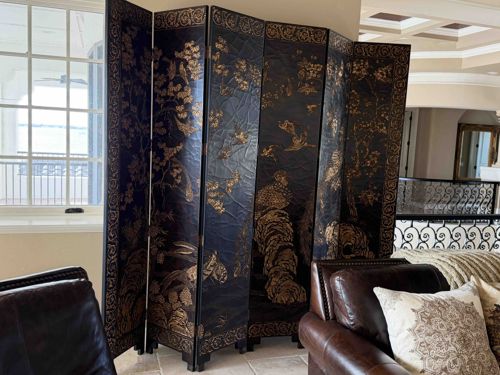
Six-Panel Chinese Lacquer Coromandel Floor Screen

Antique & Vintage Furniture / Decorative Arts

AI Estimated Value

·Not an official valuation·Verify before acting

$450 - $650

As of June 17, 2026

AI Item Analysis

·AI can make mistakes·Verify before acting
This is a large, six-panel decorative floor screen featuring traditional Chinese Coromandel lacquer techniques. The screen is characterized by its deep black lacquer ground, often constructed from a wooden core covered in a mixture of glue and clay before being lacquered. The surface showcases an incised and hand-painted scene in a monochrome or light-gold palette, depicting stylized mountain landscapes, cherry or plum blossom trees, and soaring birds. Each panel is framed by an intricate scrollwork border in a matching gold-tone pigment. The folding screen is hinged with metal hardware allowing for a zigzag freestanding configuration. Given the style and finish, it likely dates to the mid-to-late 20th century, following the Qing Dynasty aesthetic popular in Chinoiserie interior design. Notable physical features include the 'textured' appearance of the background, which suggests a possible embossed leather or heavy paper application over wood, rather than traditional flat lacquer. The condition appears fair to good; there is visible surface rippling or undulating of the material on several panels (particularly the third, fourth, and fifth), which may indicate environmental humidity damage or aging of the underlying substrate. The bottom edges show minor scuffing consistent with floor contact. The craftsmanship is highly decorative, aimed at creating a grand visual impact in a large room.
AI Appraisal Report

·AI can make mistakes·Verify before acting
I have completed a visual examination of the six-panel Chinese-style floor screen. While the piece mimics traditional Coromandel lacquerwork of the Qing Dynasty, my analysis indicates it is a late 20th-century decorative production. The 'rippling' and 'undulating' observed on the central panels are critical indicators; they suggest the surface is likely an embossed paper or synthetic material applied over a wood or composite substrate, rather than the incised 'kuancai' lacquer seen in high-end antiques. This physical distortion, likely caused by humidity affecting the adhesive layer, negatively impacts the value as it suggests structural instability. The market for this type of decorative screen is currently stable but driven by interior design trends rather than collector rarity. Similar mid-to-late century 'Chinoiserie' screens frequently sell at auction for mid-hundreds, depending on size and visual appeal. The gold-on-black palette remains desirable for traditional decor, which supports the current valuation despite the condition issues. I must note that this appraisal is based on photographic evidence. A physical inspection is required to determine if the substrate is solid wood or engineered board. Furthermore, I cannot definitively confirm the age of the pigments without spectroscopic analysis. To increase the certainty of this valuation, one would need to inspect the joinery of the hinges and the weight of the panels to differentiate between a mass-produced export item and a boutique artisanal piece.

Get your items appraised

Instant estimates of your treasures with AI-powered appraisals

Browse More Appraisals