AI Appraisal Estimate

AI-generated estimates · not official valuations

From the user

What was submitted

Photo and notes provided by the user — not generated by AI

Submitted item photo
Submitted photo · May 25, 2026

User's notes

No additional notes provided.

AI analysis below

AI appraisal

AI analysis & estimate

AI-Generated · Verify before acting

Everything below is generated by AI for informational purposes only. AI can make mistakes — the AI may misidentify items or misattribute them (artist, maker, brand, designer, origin, era). This is not an official valuation and should not be used for insurance, sale, tax, estate, legal, or lending purposes — or any decision requiring a certified appraisal. It is not an authoritative claim about any person, brand, or rights holder — do not share or rely on it as a factual statement about a third party. Always consult qualified professionals before making financial decisions.

Read the full disclaimer

AI Identification

·Not independently authenticated·Verify before acting

Jew's Harp (Khomus)

Musical Instruments

AI Estimated Value

·Not an official valuation·Verify before acting

$45.00 - $70.00

As of May 25, 2026

AI Item Analysis

·AI can make mistakes·Verify before acting
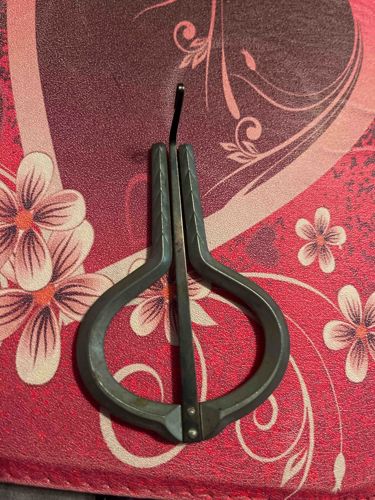
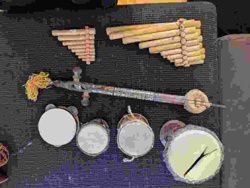
This is a traditional musical instrument known as a Jew's harp, specifically a metal frame style often referred to as a drymba or khomus. The instrument consists of a robust, heart or lyre-shaped outer frame made of a dark-toned metal, likely forged steel or a similar alloy, which possesses a matte, slightly oxidized charcoal finish. A thin, flexible metal tongue, or lamella, is securely riveted to the base of the frame with two visible circular fasteners and extends through the center, terminating in an upwardly curved trigger or 'trigger-hook' at the top. The arms of the frame feature subtle, decorative horizontal scoring or textured ridges that aid in grip. In terms of condition, the item shows signs of age-appropriate wear, including minor surface patina, slight discoloration along the length of the central reed, and small scuffs on the frame edges. The construction appears sturdy and functional, reflecting a piece intended for play rather than purely decorative purposes. This style of instrument belongs to the idiophone category, where sound is produced by the vibration of the central reed while held against the player's teeth or lips, using the mouth cavity as a resonator. This particular design is common in Eastern European and Central Asian folk traditions from the mid-20th century to the contemporary era.
AI Appraisal Report

·AI can make mistakes·Verify before acting
I have examined this metal frame khomus via provided imagery. The instrument displays a lyre-shaped frame with a robust forged steel construction and a matte charcoal finish. The presence of dual-rivet fasteners on the lamella suggests a contemporary or mid-20th-century artisan manufacture, likely from the Sakha (Yakutia) region or Eastern Europe, given the structural geometry. The condition is fair to good; while the frame remains sturdy, visible surface oxidation and patina on the reed indicate it has been played and exposed to moisture. Such wear suggests the metal may have lost some original 'spring' tension, which affects acoustic resonance. Market conditions for mass-produced or modern artisan Jew's harps remain stable but niche, with higher values reserved for renowned modern masters like Christopher Potkin or Ivan Khristoforov. Comparables for standard forged models typically sell within the $30 to $80 range. Rarity is low for this specific pattern, though it remains a desirable 'player's instrument.' Authenticity as a handmade folk instrument is highly probable, but visual inspection cannot confirm the specific alloy composition or the precise harmonic quality of the vibration. To provide a definitive valuation, I would require an in-person acoustic test to check for 'buzzing' or cracks in the tongue, as well as provenance documentation or maker’s marks often stamped on the inner trigger. Scientific testing of the metal’s carbon content would be necessary to determine if it is true historical forged steel.

Get your items appraised

Instant estimates of your treasures with AI-powered appraisals

Browse More Appraisals