Rhodonite Mineral Specimen
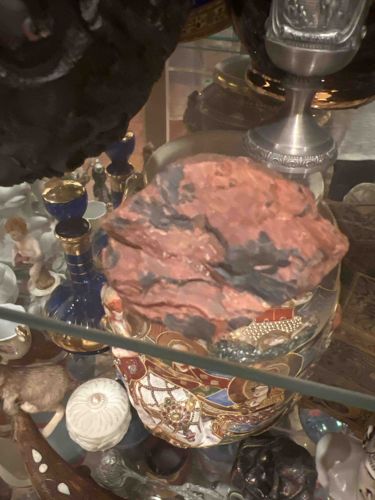
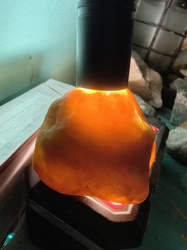
This item is a raw, unpolished mineral specimen of Rhodonite, characterized by its distinctive pink-to-reddish body color interspersed with black dendritic inclusions of manganese oxide. The specimen is roughly palm-sized with a jagged, irregular natural fracture surface, suggesting it was broken from a larger matrix rather than being tumbled or cut. The primary color is a dusty rose or salmon pink, while the black inclusions appear in veined and mottled patterns across the top surface. There is no visible evidence of artificial stabilization or polishing, preserving its natural matte luster. The condition appears to be stable, though the edges represent natural fractures which can be prone to minor crumbling if handled roughly. It is currently positioned atop a decorative ceramic bowl (likely Satsuma-style porcelain) within a glass display case, surrounded by various antiques and collectibles. While there are no manufacturer marks, the color and mineralogy suggest origin from significant deposit sites which could include Russia, Australia, or Brazil. The quality of the pink saturation is moderate, and the abundance of black veining is typical for high-manganese silicate specimens of this type.
AI-Generated Appraisal Disclaimer
Estimated Value
$65-95
Basic Information
Category
Minerals and Collectible Gemstones
Appraised On
February 8, 2026
Estimated Value
$65-95
Item Description
This item is a raw, unpolished mineral specimen of Rhodonite, characterized by its distinctive pink-to-reddish body color interspersed with black dendritic inclusions of manganese oxide. The specimen is roughly palm-sized with a jagged, irregular natural fracture surface, suggesting it was broken from a larger matrix rather than being tumbled or cut. The primary color is a dusty rose or salmon pink, while the black inclusions appear in veined and mottled patterns across the top surface. There is no visible evidence of artificial stabilization or polishing, preserving its natural matte luster. The condition appears to be stable, though the edges represent natural fractures which can be prone to minor crumbling if handled roughly. It is currently positioned atop a decorative ceramic bowl (likely Satsuma-style porcelain) within a glass display case, surrounded by various antiques and collectibles. While there are no manufacturer marks, the color and mineralogy suggest origin from significant deposit sites which could include Russia, Australia, or Brazil. The quality of the pink saturation is moderate, and the abundance of black veining is typical for high-manganese silicate specimens of this type.
Get Your Items Appraised
Instant estimates of your treasures with AI-powered instant appraisals