AI Appraisal Estimate

AI-generated estimates · not official valuations

From the user

What was submitted

Photo and notes provided by the user — not generated by AI

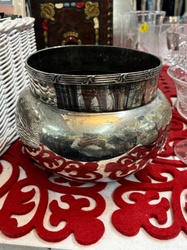
Submitted item photo
Submitted photo · June 18, 2026

User's notes

No additional notes provided.

AI analysis below

AI appraisal

AI analysis & estimate

AI-Generated · Verify before acting

Everything below is generated by AI for informational purposes only. AI can make mistakes — the AI may misidentify items or misattribute them (artist, maker, brand, designer, origin, era). This is not an official valuation and should not be used for insurance, sale, tax, estate, legal, or lending purposes — or any decision requiring a certified appraisal. It is not an authoritative claim about any person, brand, or rights holder — do not share or rely on it as a factual statement about a third party. Always consult qualified professionals before making financial decisions.

Read the full disclaimer

AI Identification

·Not independently authenticated·Verify before acting

Victorian Era Silver-Plated Chafing Dish or Warming Stand

Antique Silver & Silver-Plated Hollowware

AI Estimated Value

·Not an official valuation·Verify before acting

$125 - $225

As of June 18, 2026

AI Item Analysis

·AI can make mistakes·Verify before acting
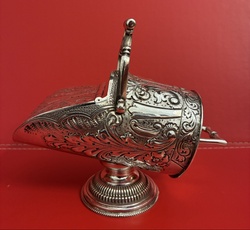
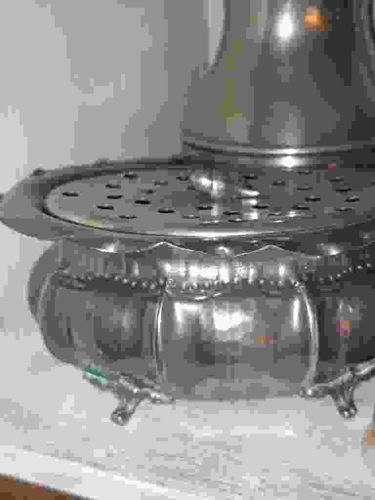
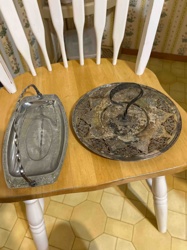
This item is an ornate, silver-plated warming stand or chafing dish base, likely dating from the late 19th-century Victorian era. The piece features a squat, bulbous body with pronounced lobed or melon-style vertical ribbing, a classic motif of the period. It stands on small, decorative cast feet that appear to be of a stylized claw or acanthus leaf design. The upper portion includes a perforated lid or grate with a series of symmetrical circular vents, topped by a small, finial-style handle for easy lifting. The construction indicates a multi-part assembly typical of hollowware, featuring a rolled rim and a decorative beaded or gadrooned border along the upper edge of the bowl. While specific maker's marks are not visible in the image, the craftsmanship suggests a mass-produced but high-quality piece from a manufacturer such as Reed & Barton or Meriden Britannia Co. The physical condition shows significant tarnishing and a deep patina consistent with age, particularly in the recessed areas between the lobes. There are signs of surface wear and potential thinning of the silver plate (bleeding), where the base metal may be showing through. No major dents or structural repairs are immediately apparent, though the surface exhibits the fine scratches typical of historical use. This style transition between high Victorian and early Edwardian aesthetics makes it a quintessential piece of antique formal dining service.
AI Appraisal Report

·AI can make mistakes·Verify before acting
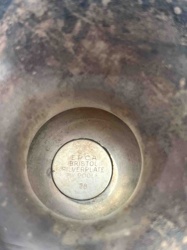
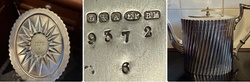
I have conducted a visual examination of the Victorian silver-plated warming stand. The item exhibits stylistic hallmarks of the Late Victorian era (c. 1880–1900), specifically the melon-lobed body and gadrooned borders popularized by American manufacturers like Meriden Britannia and Reed & Barton. Based on the provided imagery, the construction appears consistent with period plating techniques. However, the condition is a significant primary factor: heavy sulfidation (tarnish) and apparent 'bleeding' of the silver plate to the base metal reduces the value compared to mint specimens. To the piece's credit, the structural integrity remains intact with no visible catastrophic dents or loss of feet. The market for Victorian silver plate is currently soft, as modern 'grandmillennial' trends favor usable items over high-maintenance hollowware. Comparables for similar unpolished, silver-on-copper or EPNS (Electroplated Nickel Silver) warming stands reflect a cautious secondary market. Rarity is low, as these were mass-produced for the growing middle class of the 19th century. Note that this appraisal is based solely on digital images. A definitive valuation would require in-person inspection to identify maker's marks, which are likely stamped on the underside, and to determine the extent of base-metal exposure through a chemical test or microscopic analysis. Furthermore, verifying if the internal spirit burner or accessory pans are missing is crucial, as incomplete sets significantly diminish collector interest. Provenance documentation regarding family lineage or original purchase receipts would be required to elevate this from a decorative antique to a documented historical piece.

Get your items appraised

Instant estimates of your treasures with AI-powered appraisals

Browse More Appraisals