AI Appraisal Estimate

AI-generated estimates · not official valuations

From the user

What was submitted

Photo and notes provided by the user — not generated by AI

Submitted item photo
Submitted photo · June 17, 2026

User's notes

No additional notes provided.

AI analysis below

AI appraisal

AI analysis & estimate

AI-Generated · Verify before acting

Everything below is generated by AI for informational purposes only. AI can make mistakes — the AI may misidentify items or misattribute them (artist, maker, brand, designer, origin, era). This is not an official valuation and should not be used for insurance, sale, tax, estate, legal, or lending purposes — or any decision requiring a certified appraisal. It is not an authoritative claim about any person, brand, or rights holder — do not share or rely on it as a factual statement about a third party. Always consult qualified professionals before making financial decisions.

Read the full disclaimer

AI Identification

·Not independently authenticated·Verify before acting

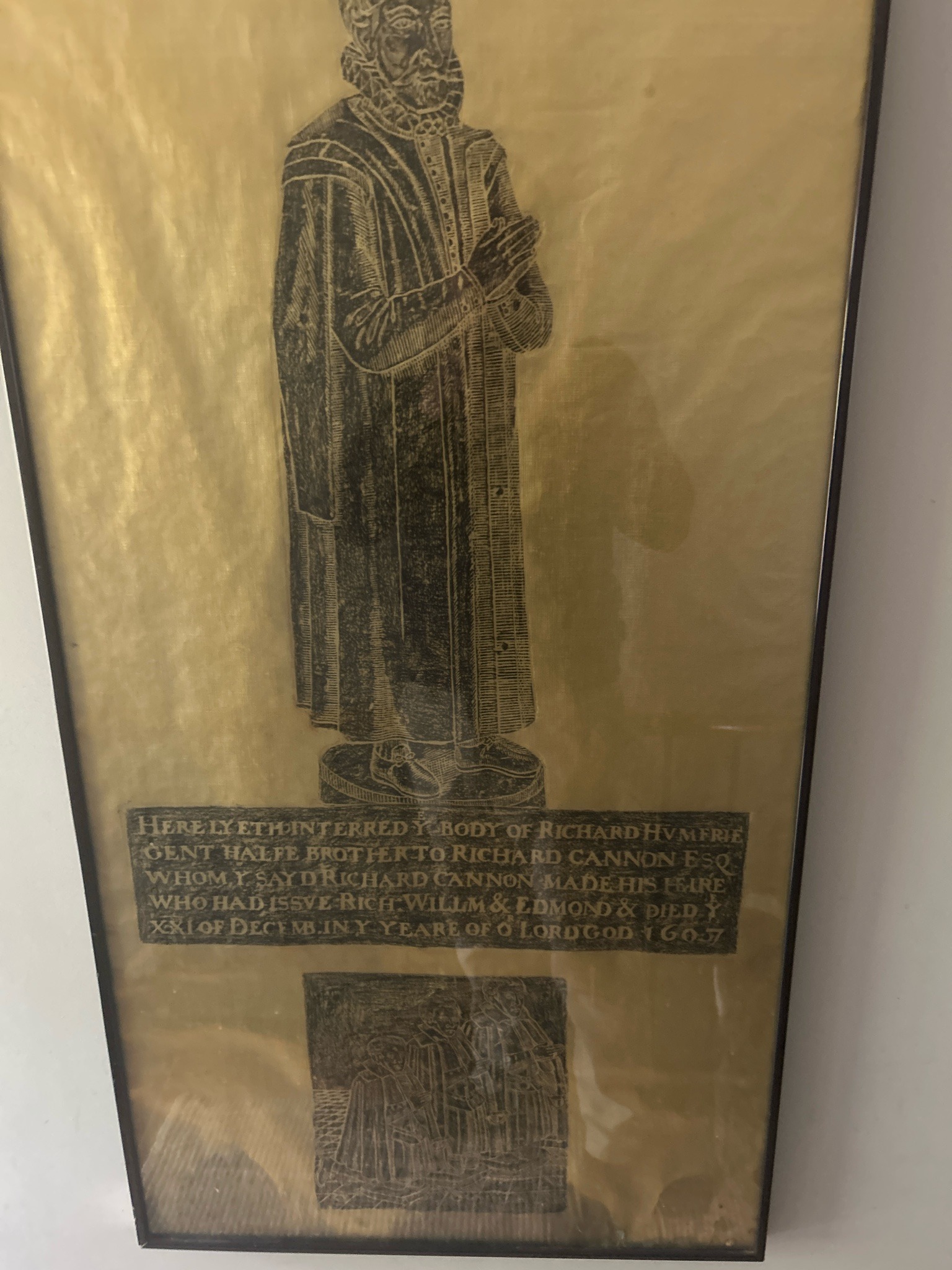
Brass Rubbing of Richard Humfrie (1607)

Antique Reproductions / Commemorative Art

AI Estimated Value

·Not an official valuation·Verify before acting

$100.00 - $175.00

As of June 17, 2026

AI Item Analysis

·AI can make mistakes·Verify before acting
This item is a framed brass rubbing depicting a commemorative monumental brass of Richard Humfrie. The artwork consists of dark pigment (likely heelball wax) transferred onto a light-tan or golden-toned paper, which exhibits significant undulating waves and cockling, suggesting it was once rolled or has reacted to humidity. The central figure is shown in stereotypical Jacobean attire, featuring a long academic or civilian robe with open sleeves and a prominent ruff collar, standing in a prayerful pose with hands clasped. Below the figure is an inscription in block capitals that reads: 'HERE LYETH INTERRED YE BODY OF RICHARD HUMFRIE GENT HALFE BROTHER TO RICHARD CANNON ESQ WHOM YE SAYD RICHARD CANNON MADE HIS HEIRE WHO HAD ISSVE RICH WILLM & EDMOND & DIED YE XXI OF DECEMB IN YE YEARE OF O LORD GOD 1607.' At the bottom, a smaller secondary rubbing shows a group of kneeling children (the heirs mentioned). The craftsmanship of the rubbing is solid, capturing the fine cross-hatching and line work of the original 17th-century metal engraving. The paper shows general yellowing and patina consistent with mid-20th-century hobbyist rubbing materials. It is housed in a simple, slim dark frame that appears to have some minor edge wear. The overall condition is fair to good, with the primary detractor being the heavy rippling of the paper substrate.

AI Appraisal Report

·AI can make mistakes·Verify before acting
I have examined the digital image of the framed brass rubbing representing the 1607 memorial of Richard Humfrie. This piece is a 20th-century commemorative reproduction, likely created during the peak of the brass-rubbing hobbyist movement in the 1960s or 70s. The execution shows proficient use of heelball wax on heavy paper, capturing the intricate Jacobean details of the ruff and academic robes with clarity. The condition is fair; while the pigment remains dark and stable, the paper substrate exhibits significant cockling and undulation. This suggests the piece was previously stored improperly or has reacted to fluctuating humidity levels within the frame, which detracts from the aesthetic value and may necessitate professional flattening or re-framing. The market for mid-century brass rubbings has softened considerably over the last two decades, shifting from high-end decor to niche historical interest. Similar rubbings of standard English gentry figures typically sell in the $75 to $200 range depending on size and frame quality. The specific genealogical interest regarding the 'Richard Cannon' connection adds slight historical appeal, but does not significantly elevate the market value over more common subjects. Authenticity of the rubbing is confirmed by the paper's visible aging and the specific style of transfer, though I must note that images alone cannot verify the absence of foxing or mold behind the glass. A full authentication would require an in-person inspection to remove the backing, check the paper type/watermark, and assess the frame's integrity. No scientific testing is required as this is a known decorative reproduction type.

Get your items appraised

Instant estimates of your treasures with AI-powered appraisals

Browse More Appraisals