Early American Pattern Glass (EAPG) Compote or Master Salt
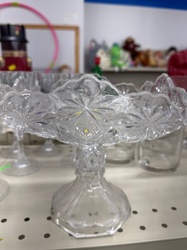
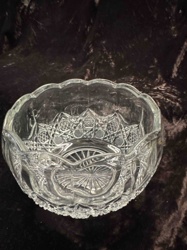
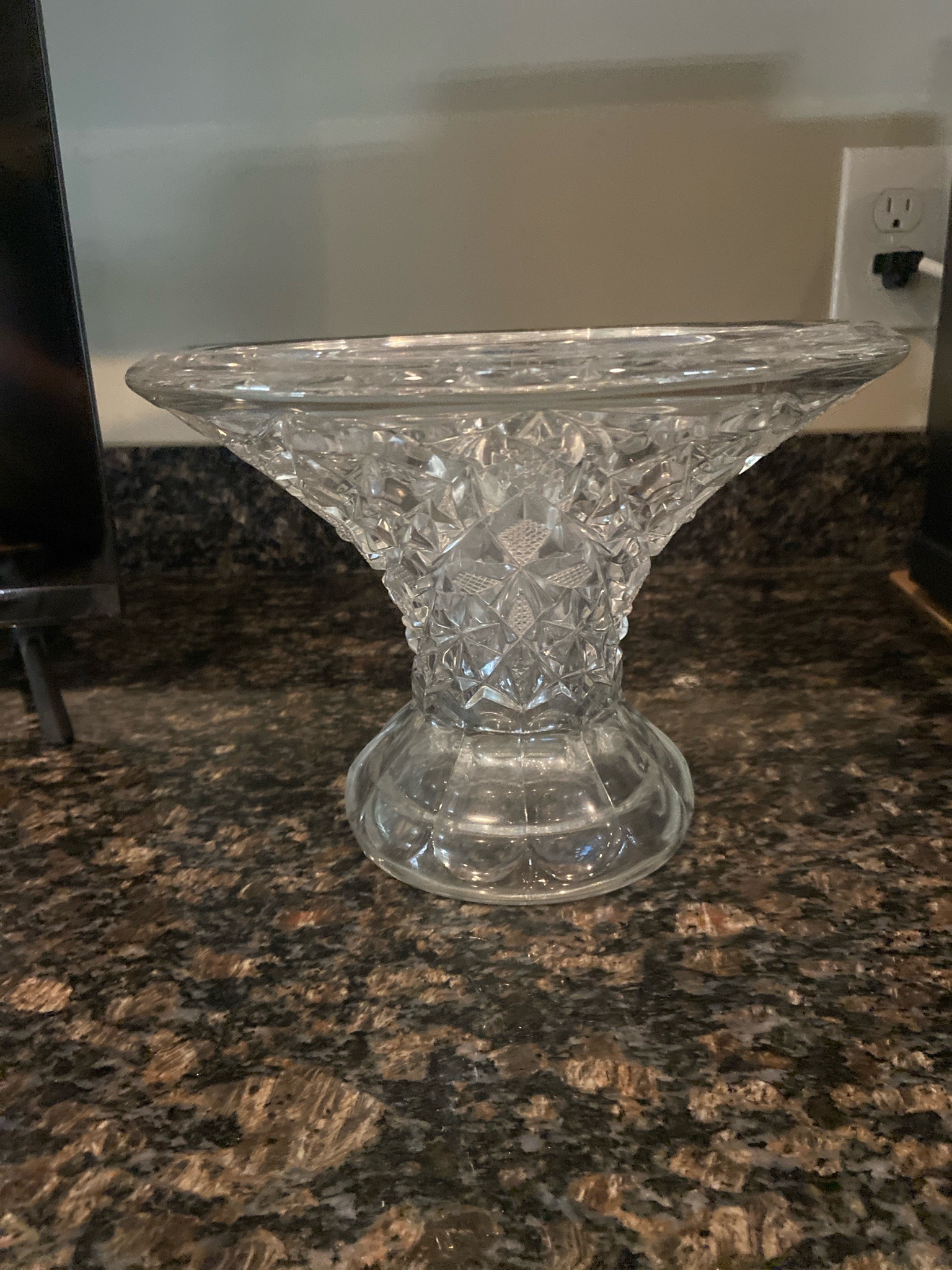
This item is a clear, pressed glass pedestal vessel, commonly referred to as a compote or a high-standard master salt, likely dating from the late 19th to early 20th century (Victorian or Edwardian era). The piece features a complex geometric pattern known in the Early American Pattern Glass (EAPG) style, specifically showing a 'Daisy and Button' or 'Cane' variant with cross-hatched diamonds and starburst motifs. The physical construction consists of a wide, flared bowl that tapers sharply into a multi-faceted stem, seated upon a weighted, domed circular base with thumbprint or panel molding. The glass exhibits high clarity with a slight greyish-blue tint common in antique flint glass or leaded compositions. Notable features include the deep pressing of the pattern which creates a high-refraction sparkle under light. Regarding condition, the piece appears structurally intact with no major cracks visible; however, consistent with its age, there is light shelf wear on the underside of the base and potential 'flea bites' or minute chips along the sharp edges of the pressed pattern. No maker's mark is visible in the provided image, which is standard for EAPG of this period, though the craftsmanship suggests a mass-produced but high-quality domestic manufacturer such as Adams & Co. or Bryce Brothers. The piece represents a transition between functional tableware and decorative art.
AI-Generated Appraisal Disclaimer
Estimated Value
$45.00 - $75.00
Basic Information
Category
Antique Glassware / Collectible Tableware
Appraised On
April 23, 2026
Estimated Value
$45.00 - $75.00
Item Description
This item is a clear, pressed glass pedestal vessel, commonly referred to as a compote or a high-standard master salt, likely dating from the late 19th to early 20th century (Victorian or Edwardian era). The piece features a complex geometric pattern known in the Early American Pattern Glass (EAPG) style, specifically showing a 'Daisy and Button' or 'Cane' variant with cross-hatched diamonds and starburst motifs. The physical construction consists of a wide, flared bowl that tapers sharply into a multi-faceted stem, seated upon a weighted, domed circular base with thumbprint or panel molding. The glass exhibits high clarity with a slight greyish-blue tint common in antique flint glass or leaded compositions. Notable features include the deep pressing of the pattern which creates a high-refraction sparkle under light. Regarding condition, the piece appears structurally intact with no major cracks visible; however, consistent with its age, there is light shelf wear on the underside of the base and potential 'flea bites' or minute chips along the sharp edges of the pressed pattern. No maker's mark is visible in the provided image, which is standard for EAPG of this period, though the craftsmanship suggests a mass-produced but high-quality domestic manufacturer such as Adams & Co. or Bryce Brothers. The piece represents a transition between functional tableware and decorative art.
Get Your Items Appraised
Instant estimates of your treasures with AI-powered instant appraisals