AI Appraisal Estimate

AI-generated estimates · not official valuations

From the user

What was submitted

Photo and notes provided by the user — not generated by AI

Submitted item photo
Submitted photo · June 27, 2026

User's notes

No additional notes provided.

AI analysis below

AI appraisal

AI analysis & estimate

AI-Generated · Verify before acting

Everything below is generated by AI for informational purposes only. AI can make mistakes — the AI may misidentify items or misattribute them (artist, maker, brand, designer, origin, era). This is not an official valuation and should not be used for insurance, sale, tax, estate, legal, or lending purposes — or any decision requiring a certified appraisal. It is not an authoritative claim about any person, brand, or rights holder — do not share or rely on it as a factual statement about a third party. Always consult qualified professionals before making financial decisions.

Read the full disclaimer

AI Identification

·Not independently authenticated·Verify before acting

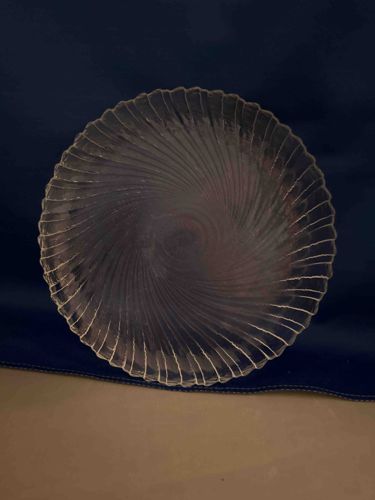
Vintage Swirl Pattern Clear Pressed Glass Plate

Vintage Glassware

AI Estimated Value

·Not an official valuation·Verify before acting

$15-25

As of June 27, 2026

AI Item Analysis

·AI can make mistakes·Verify before acting
This is a circular pressed glass plate or platter featuring a distinctive radial swirl or spiral ribbing pattern that originates from the center and extends to the outer edge. The material is a colorless, transparent glass, likely soda-lime glass, which was common in mid-century American tableware production. The plate features a scalloped or crimped rim that follows the terminal points of the internal ribbing, adding a decorative texture to the perimeter. This specific design is highly reminiscent of the 'Coronation' or 'Swirl' patterns produced by companies like Federal Glass or Anchor Hocking during the Depression era through the mid-20th century. The piece demonstrates good clarity and consistent thickness throughout the body. Upon inspection, the glass appears to be in very good condition with no visible cracks, large chips, or deep scratches, though minor shelf wear on the base and faint surface utensils marks are common for utilitarian pieces of this age. The craftsmanship is typical of high-volume mass-produced glass from the 1940s-1960s, where multi-part molds were used to achieve the intricate geometric textures. There are no obvious maker's marks or signatures visible from the top-down perspective, which is standard for this type of glassware. The play of light through the ribbed surfaces creates a dynamic visual effect, enhancing its appeal as both a functional serving piece and a collectible decorative object from the American glassmaking heritage.

AI Appraisal Report

·AI can make mistakes·Verify before acting
I have performed a visual examination of this clear pressed glass plate featuring a radial swirl pattern and a scalloped rim. This design is highly representative of American 'Depression-era' style glassware, specifically aligned with patterns produced by Federal Glass or Anchor Hocking between 1940 and 1965. The piece exhibits high clarity and the expected mold-pressed characteristics of mid-century mass-produced tableware. Based on the imagery, the condition appears Very Good, with no major chips or 'flea bites' common on these scalloped edges; however, minor surface scratches from utensil use are noted. The market for this type of glassware is currently saturated, as these sets were manufactured in high volumes. While they hold nostalgic and decorative value, they are not rare. Comparable sales on the secondary market consistently fall within the $15 to $25 range for a single serving platter. High-end retail settings might see higher prices, but private sales and auctions remain modest. It is important to note that a definitive authentication cannot be reached via photographs alone. I cannot personally verify the glass's resonance (the 'ring test'), the presence of microscopic manufacturing flaws like 'straw marks,' or the weight of the glass, which helps distinguish original Depression-era pieces from modern reproductions. A full authentication would require an in-person inspection to examine the 'seams' from the multi-part mold and to check for UV fluorescence, which can sometimes indicate the specific chemical composition of the soda-lime glass used during different production decades. No provenance documentation was provided, which would further assist in establishing a specific manufacturing date.

Get your items appraised

Instant estimates of your treasures with AI-powered appraisals

Browse More Appraisals