Prehistoric Lithic Tool (Ovoid Scraper or Biface)
Archaeological Artifacts - Lithic Tools

Prehistoric Lithic Tool (Ovoid Scraper or Biface)

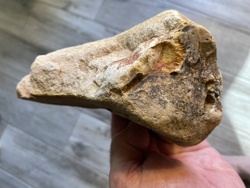
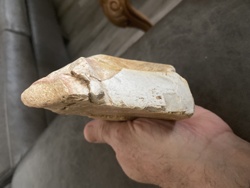
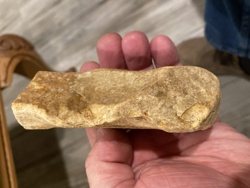
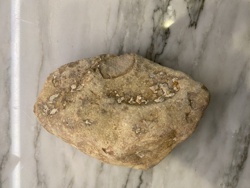
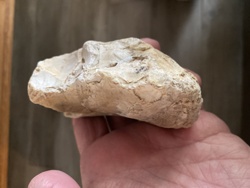
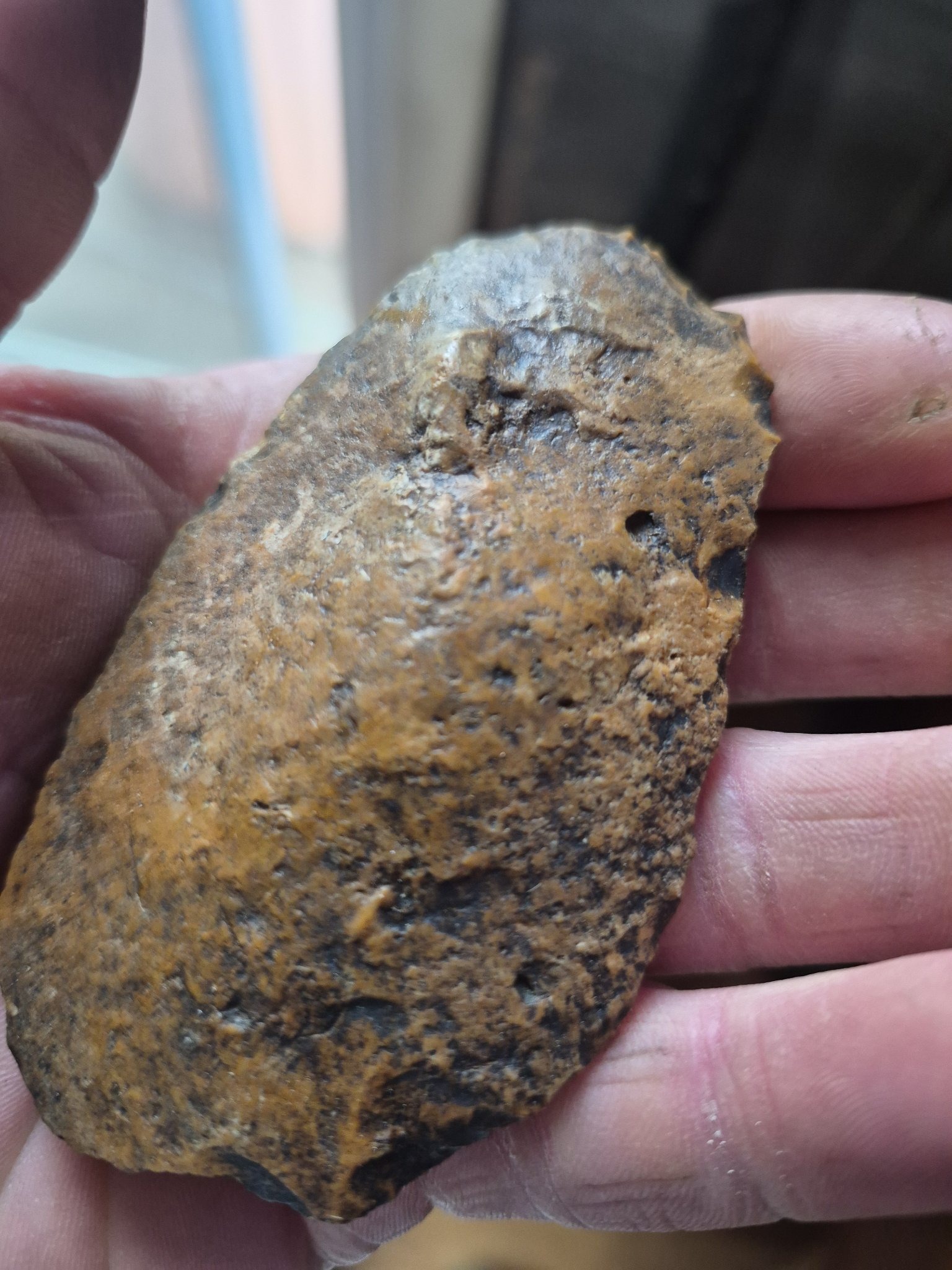
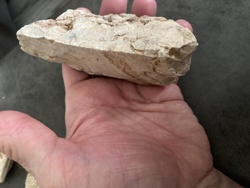
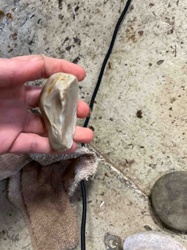
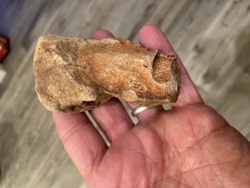
This is a prehistoric stone tool, likely a bifacial scraper or a general-purpose cutting instrument. The object measures approximately 3 to 4 inches in length and displays an ovoid or teardrop morphology. It is crafted from a high-silica lithic material, possibly chert or flint, which has developed a significant ochre-colored patina or 'desert varnish' over time due to mineral oxidation. The piece shows clear evidence of bifacial reduction, with intentional flake scars along the margins creating a functional edge. The surface exhibits heavy pitting and weathering, indicating substantial age and exposure to the elements. Notably, the flake scars are softened by 'tumble wear' or erosion, suggesting it may have been recovered from a riverine or desert pavement context. There are visible step fractures and remnants of the original cortex on the higher facets of the tool. No modern tool marks or signatures are present, consistent with an ancient origin dating anywhere from the Paleolithic to the Neolithic period depending on the regional context of recovery. The craftsmanship shows a skilled hand capable of percussion flaking to achieve a balanced, ergonomic form suitable for skinning or scraping tasks.
Estimated Value

$150 - $350

Basic Information

Category

Archaeological Artifacts - Lithic Tools

Appraised On

May 11, 2026

Estimated Value

$150 - $350

Item Description

This is a prehistoric stone tool, likely a bifacial scraper or a general-purpose cutting instrument. The object measures approximately 3 to 4 inches in length and displays an ovoid or teardrop morphology. It is crafted from a high-silica lithic material, possibly chert or flint, which has developed a significant ochre-colored patina or 'desert varnish' over time due to mineral oxidation. The piece shows clear evidence of bifacial reduction, with intentional flake scars along the margins creating a functional edge. The surface exhibits heavy pitting and weathering, indicating substantial age and exposure to the elements. Notably, the flake scars are softened by 'tumble wear' or erosion, suggesting it may have been recovered from a riverine or desert pavement context. There are visible step fractures and remnants of the original cortex on the higher facets of the tool. No modern tool marks or signatures are present, consistent with an ancient origin dating anywhere from the Paleolithic to the Neolithic period depending on the regional context of recovery. The craftsmanship shows a skilled hand capable of percussion flaking to achieve a balanced, ergonomic form suitable for skinning or scraping tasks.
Get Your Items Appraised

Instant estimates of your treasures with AI-powered instant appraisals

Browse More Appraisals