Vintage Imari-Style Hexagonal Porcelain Ginger Jar
Antique/Vintage Ceramics and Decorative Art

Vintage Imari-Style Hexagonal Porcelain Ginger Jar

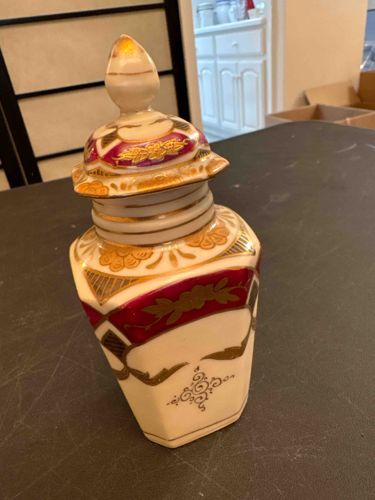
This is a decorative hexagonal-shaped porcelain ginger jar with a matching domed lid topped with a pointed finial. The vessel features a striking color palette of cream-colored white porcelain glazed with deep ruby red (cranberry) panels and extensive gilding in gold leaf. The ornamentation includes hand-painted or stencil-applied floral motifs, including chrysanthemums and foliate patterns, reminiscent of Japanese Imari or European Royal Crown Derby patterns. The neck is characterized by horizontal gilded bands, while the body displays a complex arrangement of geometric fretwork and scrolling gold scrollwork. Condition is generally good, though there is visible 'rubbing' or wear to the gold gilt on the finial and along the sharp edges of the hexagonal body, which is common with age and handling. There are no immediate signs of cracks or structural repairs visible from the angle provided. The piece likely dates from the late 19th to mid-20th century, following the aesthetic movement's interest in Asian-inspired ceramics. The quality is indicative of fine earthenware or bone china, likely manufactured in a renowned ceramic center such as Staffordshire, England, or Japan for the export market.
Estimated Value

$100 - $175

Basic Information

Category

Antique/Vintage Ceramics and Decorative Art

Appraised On

December 20, 2025

Estimated Value

$100 - $175

Item Description

This is a decorative hexagonal-shaped porcelain ginger jar with a matching domed lid topped with a pointed finial. The vessel features a striking color palette of cream-colored white porcelain glazed with deep ruby red (cranberry) panels and extensive gilding in gold leaf. The ornamentation includes hand-painted or stencil-applied floral motifs, including chrysanthemums and foliate patterns, reminiscent of Japanese Imari or European Royal Crown Derby patterns. The neck is characterized by horizontal gilded bands, while the body displays a complex arrangement of geometric fretwork and scrolling gold scrollwork. Condition is generally good, though there is visible 'rubbing' or wear to the gold gilt on the finial and along the sharp edges of the hexagonal body, which is common with age and handling. There are no immediate signs of cracks or structural repairs visible from the angle provided. The piece likely dates from the late 19th to mid-20th century, following the aesthetic movement's interest in Asian-inspired ceramics. The quality is indicative of fine earthenware or bone china, likely manufactured in a renowned ceramic center such as Staffordshire, England, or Japan for the export market.
Get Your Items Appraised

Instant estimates of your treasures with AI-powered instant appraisals

Browse More Appraisals