Paleolithic Biface Chert Hand Axe Scraper
Prehistoric Artifacts and Lithics

Paleolithic Biface Chert Hand Axe Scraper

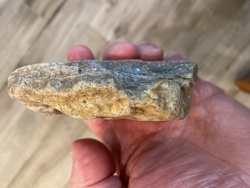
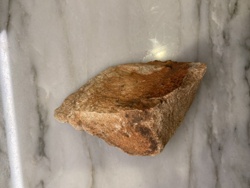
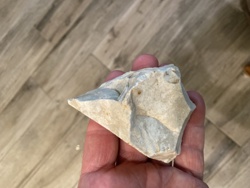
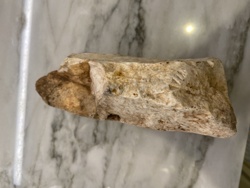
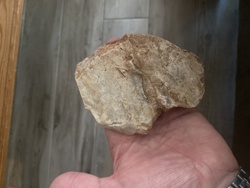
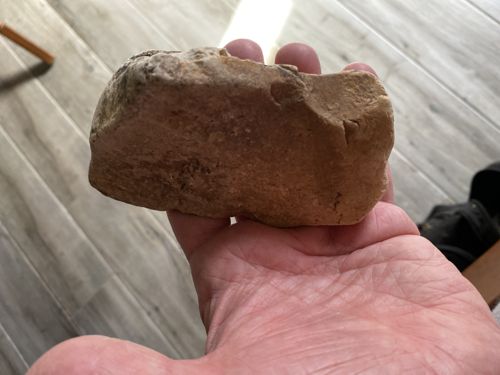
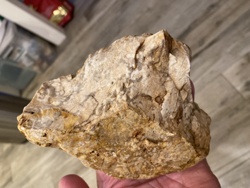
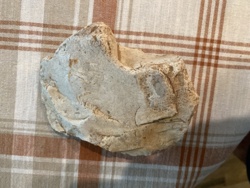
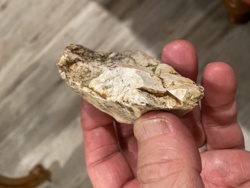
This artifact is a Paleolithic-style biface tool, measuring approximately 4.5 inches in length and 2.5 inches in width. It is fashioned from chert, a hard, sedimentary rock frequently utilized in lithic technology. The item displays an earthy, brownish-tan coloration with a matte, weathered surface texture consistent with long-term environmental exposure. Physically, the tool features a robust, somewhat rectangular but organically shaped body that is thick enough to be held securely in the palm. There is evidence of percussion flaking along the edges, creating a functional, albeit weathered, cutting or scraping margin. This suggests a dual-purpose utility as both a hand axe for heavy-duty tasks and a scraper for processing hides or wood. The condition is heavily weathered, exhibiting significant find-site patina that softens the original sharp flake scars, which is common for authentic prehistoric stone tools. No modern tool marks or signatures are present. The craftsmanship reflects an early lithic stage where utility was prioritized over symmetrical aesthetics. Its origin is Guthrie, Oklahoma, which places it within the cultural context of North American indigenous lithic traditions, potentially dating back several thousand years. The lack of recent fractures indicates its age and stability as an archaeological specimen.
Estimated Value

$40 - $75

Basic Information

Category

Prehistoric Artifacts and Lithics

Appraised On

February 19, 2026

Estimated Value

$40 - $75

Additional Details Provided By Owner

User Provided Information

Paleolithic chert Bi face hand axe scraper tool found in Guthrie OK 4.5" x 2.5"

Item Description

This artifact is a Paleolithic-style biface tool, measuring approximately 4.5 inches in length and 2.5 inches in width. It is fashioned from chert, a hard, sedimentary rock frequently utilized in lithic technology. The item displays an earthy, brownish-tan coloration with a matte, weathered surface texture consistent with long-term environmental exposure. Physically, the tool features a robust, somewhat rectangular but organically shaped body that is thick enough to be held securely in the palm. There is evidence of percussion flaking along the edges, creating a functional, albeit weathered, cutting or scraping margin. This suggests a dual-purpose utility as both a hand axe for heavy-duty tasks and a scraper for processing hides or wood. The condition is heavily weathered, exhibiting significant find-site patina that softens the original sharp flake scars, which is common for authentic prehistoric stone tools. No modern tool marks or signatures are present. The craftsmanship reflects an early lithic stage where utility was prioritized over symmetrical aesthetics. Its origin is Guthrie, Oklahoma, which places it within the cultural context of North American indigenous lithic traditions, potentially dating back several thousand years. The lack of recent fractures indicates its age and stability as an archaeological specimen.
Get Your Items Appraised

Instant estimates of your treasures with AI-powered instant appraisals

Browse More Appraisals